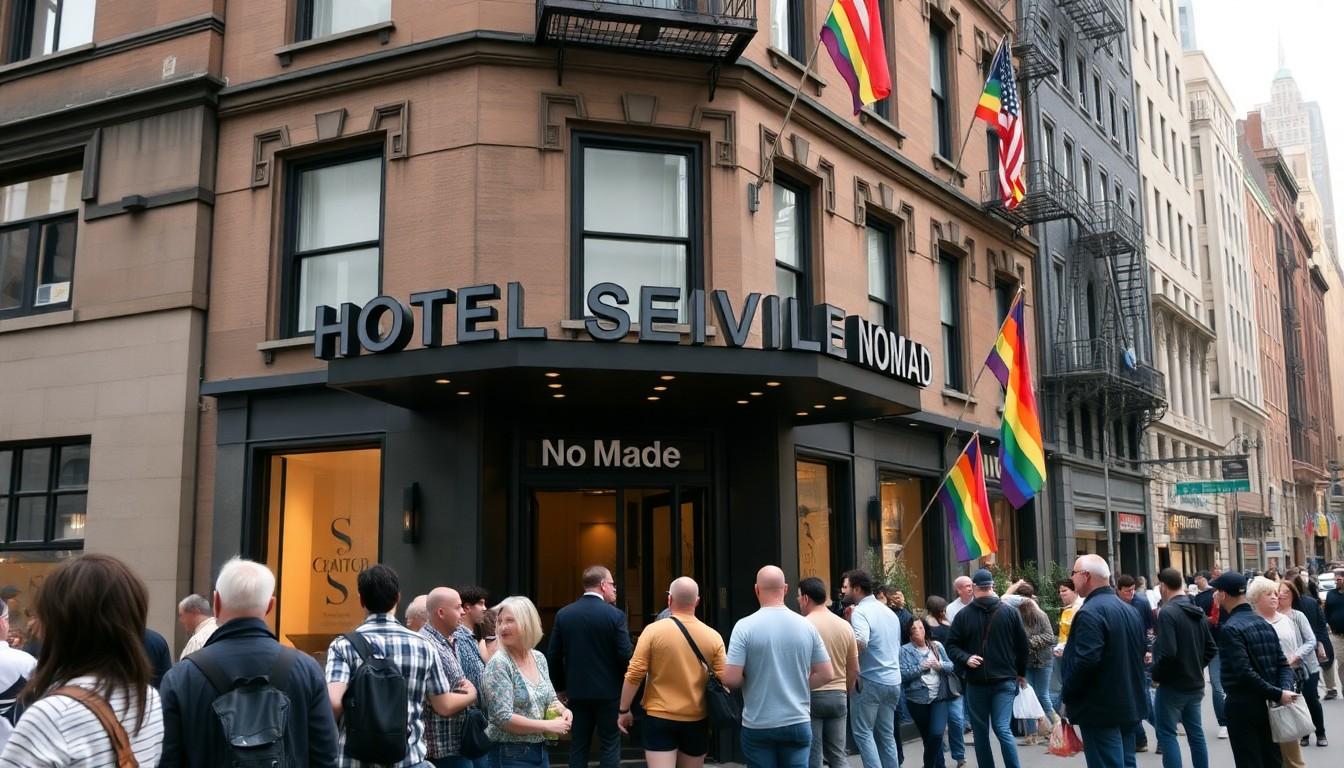
Travellers are pairing Fire Island Pines with Manhattan and Brooklyn for a queer New York escape that shifts from barefoot beach days to late-night dance floors. The route matters because it reveals a city beyond the usual sightseeing checklist, combining LGBTQ+ history, social spaces and the easy thrill of finding somewhere that feels wonderfully, unmistakably yours.
Essential Takeaways
- Fire Island Pines brings the escape: Expect boardwalks, beaches, pool gatherings and virtually no cars.
- The island carries deep LGBTQ+ history: Fire Island communities have long offered safety, connection and freedom.
- Manhattan keeps the nightlife moving: Chelsea and Hell's Kitchen cover everything from sports bars to high-energy clubs.
- Brooklyn adds a moodier edge: Williamsburg blends listening bars, cocktails, DJs and queer dance floors.
- Plan around the pace: The best trips balance quiet mornings with late nights, rather than trying to do everything at once.
Fire Island Pines feels like another world
The strongest impression arrives before the first drink. As the ferry leaves the mainland behind, New York's noise gives way to salt air, wooden walkways and the gentle clatter of luggage carts. Fire Island Pines feels less like a conventional resort than a self-contained queer village, where people move between homes, beaches and parties on foot.
That sense of separation is part of its appeal. According to the Fire Island Association, the Pines is one of several distinct communities on the island, with its own character, traditions and waterfront life. The result is a holiday setting that feels intimate without being dull, especially when the afternoon starts quietly and somehow ends with music drifting from a nearby deck.
The island's gay history adds weight beneath the glamour. History.com has documented Fire Island's importance as an LGBTQ+ refuge, particularly during periods when queer people had far fewer opportunities to socialise openly and safely. Today, the swimwear may be tiny and the houses impressively modern, but the underlying idea remains powerful: a place where people can relax without explaining themselves.
A queer holiday with real historical roots
Fire Island Pines didn't become significant overnight. The Pines History Project traces the community's development through decades of organising, property ownership and social life, while archival records show how residents built an enduring community in a setting that was once considerably harder to reach.
That history is easy to miss if you only arrive for the parties. Look beyond the polished holiday homes and you'll find a story about chosen family, self-expression and collective resilience. Even the island's famously relaxed atmosphere feels more meaningful when you understand how unusual that freedom once was.
For visitors, the practical lesson is simple: leave room for context. Walk the boardwalks slowly, talk to residents where appropriate and resist treating the Pines as merely a photogenic backdrop. The best memories often come from noticing how a community works, not just where the best party happens.
From afternoon tea to full-volume nightlife
The Pines' social rhythm builds gradually. The day may begin beside a pool or on the broad Atlantic beach, then gather pace around the Waterfront as visitors and residents move between venues. The well-known Tea Dance tradition turns this progression into a loose social ritual, with conversation, music and dancing taking over as the afternoon wears on.
The Fire Island Pines Property Owners Association archive records the community's long-running organisational history, helping explain why these gatherings feel more embedded than an ordinary bar crawl. They're not simply a sequence of venues. They're part of the island's shared calendar, where introductions matter and plans can change several times before sunset.
If you're visiting for the first time, don't over-schedule. Start with a relaxed drink, follow the crowd and keep your evening flexible. On Fire Island, the most memorable invitation is often the one you weren't expecting, although comfortable shoes are still a very good idea.
Manhattan brings the spectacle
Back on the mainland, the mood changes quickly. Manhattan offers a denser, louder version of queer nightlife, with Chelsea and Hell's Kitchen providing plenty of options within a relatively compact area. Sports bars, drag venues and late-night clubs make it easy to build an evening around your energy level.
Boxers is a straightforward starting point for casual drinks and people-watching, while The Eagle offers a darker, more club-focused atmosphere. HUSH adds cocktails, performances and a polished but playful feel. Together, these venues show why Manhattan remains such a reliable choice for LGBTQ+ travellers: you can arrive with no fixed plan and still find somewhere lively.
The trick is choosing the right moment. A friendly bar suits the first night, when jet lag may still be hovering, while a full club works better once you've found your feet. And if you do attempt a late finish after a day on Fire Island, expect tomorrow morning to be more aspirational than productive.
Brooklyn adds the after-dark edge
Brooklyn changes the texture again. In Williamsburg, the pace can feel less tourist-facing and more locally woven, with intimate rooms, vinyl soundtracks and parties that don't always advertise themselves loudly. That's part of the attraction, particularly for travellers who want a queer night out with a little more discovery.
A listening bar such as Mr. Melo offers a softer opening, pairing carefully made drinks with music and food. Later, a venue such as ANIMAL can shift the evening towards DJs and dancing, bringing together neighbourhood regulars, club kids and visitors. The contrast works because it gives the night a narrative rather than sending you straight into maximum volume.
This is also where practical planning helps. Check event listings before travelling, allow time for the subway and avoid assuming every venue will suit the same crowd or dress code. Brooklyn rewards curiosity, but it also rewards having a phone charged enough to find your way home.
Build the trip around contrast
The most appealing LGBTQ+ New York itinerary isn't just a list of famous venues. It's a sequence of different sensations: ferry wind and warm sand, crowded dance floors, quiet cocktails and skyline views from a comfortable hotel room. Fire Island provides the pause, Manhattan supplies the grand performance and Brooklyn brings the surprise.
That balance is what makes the trip feel restorative rather than relentlessly busy. Give the beach a full day, keep one Manhattan evening spontaneous and save energy for Brooklyn after dark. You don't need to prove you've conquered the city; you just need enough space to enjoy it.
For queer travellers, that freedom is the real luxury. New York can be glamorous, messy, exhausting and deeply welcoming, sometimes within the same few hours. The best holiday lets all of those versions coexist.
It's a city break with sand on its feet and glitter in its wake.
Source Reference Map
Story idea inspired by: [1]
Sources by paragraph:
- Paragraph 1: [2], [4]
- Paragraph 2: [3], [4]
- Paragraph 3: [2], [6]
- Paragraph 4: [3], [5]
- Paragraph 5: [5], [7]
- Paragraph 6: [2], [3]
- Paragraph 7: [4], [6]
- Paragraph 8: [3], [5]
- Paragraph 9: [2], [4]
- Paragraph 10: [6], [7]
- Paragraph 11: [3], [4]
- Paragraph 12: [5], [7]
- Paragraph 13: [2], [3]
- Paragraph 14: [4], [6]
- Paragraph 15: [3], [5]