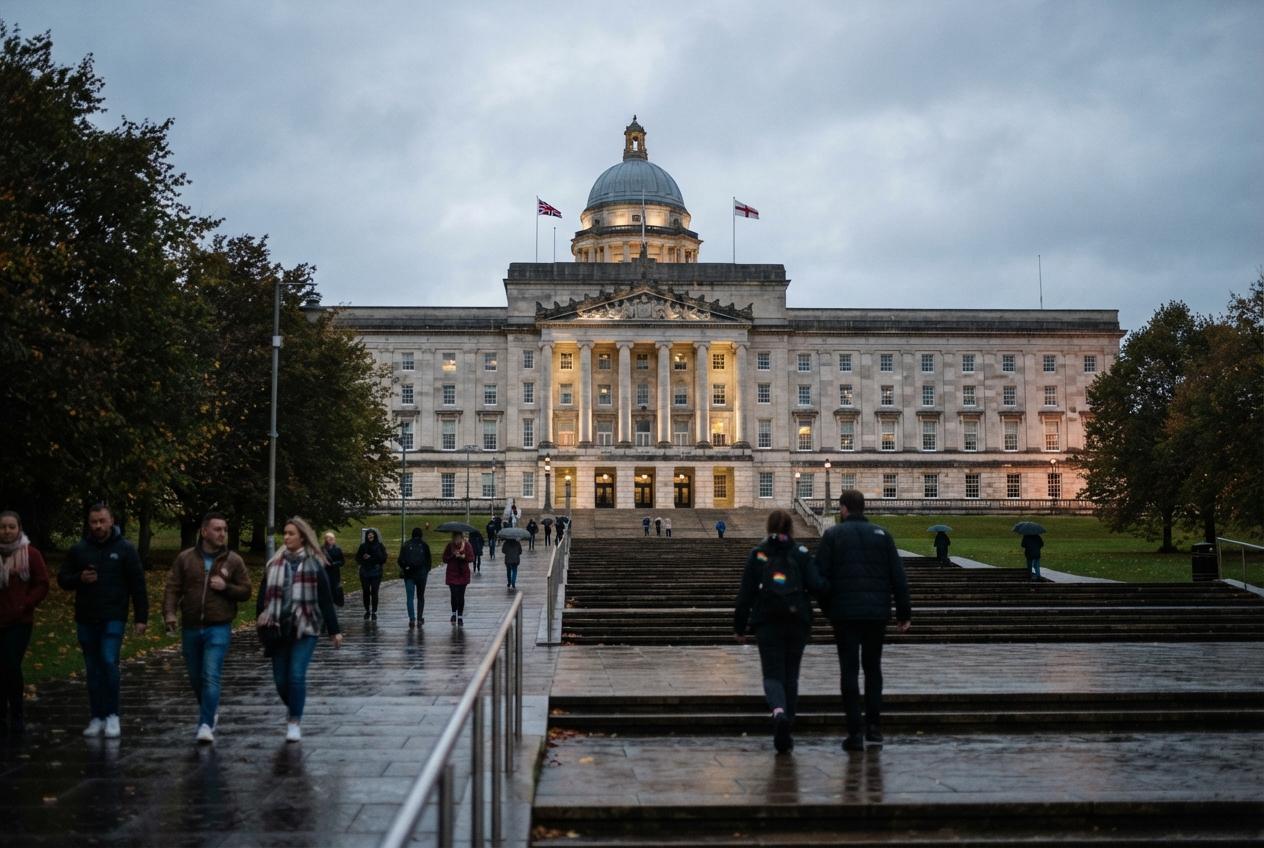
Stormont is debating a proposed ban on conversion practices, with West Tyrone MLA Paul Boggs sharing his experience of homophobia and urging lawmakers to protect LGBTQIA+ people. The legislation has attracted strong support, but also warnings from critics who fear it could affect parents, pastors and legitimate conversations about identity.
Essential Takeaways
- Personal testimony: Paul Boggs described the fear and distress he experienced while struggling with his sexuality.
- Proposed law: The Conversion Practices (Criminalisation) Bill aims to outlaw attempts to suppress or change someone’s sexual orientation or gender identity.
- Supporters’ view: Campaigners say these practices reinforce the damaging idea that LGBTQIA+ people need to be changed.
- Critics’ concern: Opponents argue the wording could unintentionally criminalise conversations involving families, faith leaders or pastoral support.
- The wider issue: The debate reflects Northern Ireland’s continuing argument over equality, personal freedom and protection from harm.
Paul Boggs puts lived experience at the centre
The most striking element of the Stormont debate was its personal note. Paul Boggs spoke about coming to terms with his sexuality during his teens and early twenties, describing how open hostility can deepen fear, anxiety and isolation.
His comments carried particular weight because he represents West Tyrone, including rural communities where socially conservative attitudes have historically been more visible. The Derry Journal reported that Boggs believes those attitudes are changing, although progress has not been even or effortless.
That distinction matters. Legal reform can change what institutions permit, but it can't instantly remove the shame or suspicion that people may encounter at home, in school, at work or within religious communities.
What would the proposed ban cover?
The legislation before the Assembly is designed to criminalise conversion practices, broadly understood as efforts to suppress or change a person's sexual orientation or gender identity. The Assembly's bill information sets out the formal parliamentary route and scrutiny surrounding the proposal.
Supporters, including Alliance MLA Eóin Tennyson, argue that the law is needed because these practices can be coercive, degrading and psychologically damaging. The Alliance has described its proposals as essential protection for LGBTQIA+ people, rather than an attempt to police ordinary discussion or private belief.
The argument is partly about language. Calling something a treatment or intervention can suggest that LGBTQIA+ identities are illnesses or problems. For many campaigners, that implication is precisely what the law must reject.
Why supporters say legislation is necessary
Campaigners say conversion practices don't always look dramatic from the outside. They may involve pressure from relatives, religious instruction, counselling, prayer or repeated messages that a person's identity is sinful, unhealthy or unacceptable.
That range makes the issue difficult to legislate. A ban must be strong enough to deter coercion while clear enough to distinguish harmful conduct from a respectful conversation, including someone freely seeking advice about their identity.
The Independent has reported on the wider UK debate, where supporters have pressed for action while lawmakers and legal experts have wrestled with how such offences should be defined. The basic principle is straightforward: people shouldn't be forced to become someone else. Turning that principle into workable law is the complicated part.
Critics warn about unintended consequences
Not everyone involved in the debate agrees that the proposed approach is safe or proportionate. A barrister cited by CARE warned that the bill could potentially affect parents and pastors, particularly where conversations involve religious teaching, family guidance or a person's own request for help.
The Irish News has also reported legal criticism of the proposals, highlighting concerns about the scope of criminalisation and the risk of uncertainty. Those objections don't necessarily dismiss the harm associated with coercive practices, but they do raise an important question: how can lawmakers protect vulnerable people without criminalising good-faith support?
That test will be crucial as the bill progresses. Clear definitions, protections for consent and careful attention to evidence will matter just as much as the headline promise of a ban.
The debate reflects a broader equality question
For Boggs, this is about more than one piece of legislation. His message is that LGBTQIA+ people shouldn't have to defend their right to exist, particularly in places where social pressure can feel close and personal.
The Stormont debate also shows how Northern Ireland's equality arguments continue to develop. The ITV report on proceedings illustrates the political attention around conversion practices, while the Assembly's scrutiny process will determine how the proposal is examined in detail.
There is a human reality beneath the legal language. Someone questioning their identity may already feel exposed, and a hostile response can leave a lasting mark. As Boggs put it in his Assembly contribution, people don't need to be fixed. The challenge for society is to make sure it stops treating them as though they do.
A carefully written ban could offer meaningful protection, but only if it combines firm safeguards with precise drafting.
It's a small sentence with a big principle: nobody should be pressured out of who they are.
Source Reference Map
Story idea inspired by: [1]
Sources by paragraph:
- Paragraph 1: [2], [3]
- Paragraph 2: [4], [5]
- Paragraph 3: [6], [7]
- Paragraph 4: [2], [4]
- Paragraph 5: [3], [5]
- Paragraph 6: [6], [7]
- Paragraph 7: [2], [3]
- Paragraph 8: [4], [5]
- Paragraph 9: [6], [7]
- Paragraph 10: [2], [4]
- Paragraph 11: [3], [5]
- Paragraph 12: [6], [7]
- Paragraph 13: [2], [3]
- Paragraph 14: [4], [5]
- Paragraph 15: [6], [7]
- Paragraph 16: [2], [3]
- Paragraph 17: [4], [5]
- Paragraph 18: [6], [7]