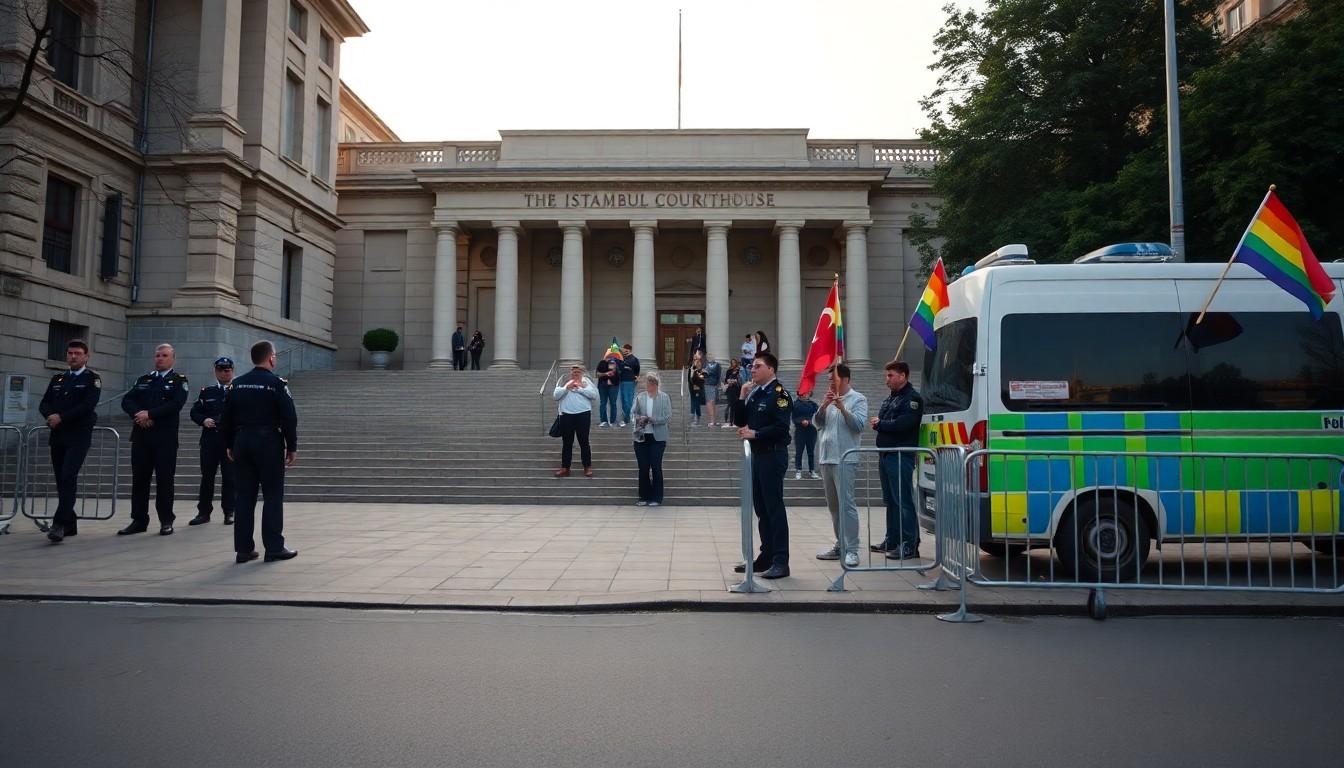
Authorities in Istanbul have extended the detention of 109 people arrested during a protest against Turkey’s latest LGBTI+ crackdown. Lawyers allege handcuffing, physical violence, discriminatory treatment and pressure to withdraw complaints, raising fresh concerns about civil liberties, press freedom and the safety of queer communities.
Essential Takeaways
- Detention extended: Authorities added 24 hours to the detention period for 109 protesters.
- Reporters detained: BirGün journalist Sarya Toprak and ARD reporter Şener Azak were among those taken into custody; Azak was later released.
- Abuse allegations: A lawyer said detainees reported prolonged restraint, insults, assaults and discriminatory treatment.
- Wider operation: Officials say proceedings involve 162 people, nine associations and 13 businesses.
- Legal pressure growing: Investigators are using expanded “obscenity” allegations against LGBTI+ people and organisations.
Detentions continue as lawyers challenge the process
The latest arrests followed a protest outside Istanbul Courthouse, where demonstrators opposed government operations aimed at LGBTI+ people. The 109 detainees were split between police facilities in Vatan Avenue, Gayrettepe and Küçükçekmece, creating a fragmented process that lawyers said made access to clients more difficult.
According to Bianet, police statements were completed early in the morning, but detainees remained in custody while prosecutors decided whether to send them to court. The extension was issued after authorities said procedures had not been completed within the original detention period.
That delay is more than an administrative detail. For families and supporters waiting outside, every extra hour brings uncertainty, while lawyers must track several locations rather than a single detention centre.
Lawyer alleges ill-treatment and pressure during questioning
Lawyer Serhat Alan said the arrests involved what he described as unlawful practices from the outset. He alleged that detainees were kept handcuffed behind their backs for extended periods, insulted, physically assaulted and treated differently because of their identity or perceived identity.
Alan also said some detainees were pressured to undergo medical examinations while police officers were present. He argued that this undermined both privacy and the credibility of any medical record documenting injuries.
The lawyer further alleged that officers at the Gayrettepe facility tried to prevent torture claims from being recorded in official statements. These are serious allegations, and an independent investigation would be needed to establish what happened.
Journalists and lawyers caught in a widening crackdown
The detention of reporters has sharpened concerns about the space available for independent coverage. BirGün journalist Sarya Toprak was detained, while ARD reporter Şener Azak was later released, according to Bianet.
The protest itself came after raids targeting board members of Kaos GL Association. Police also searched the organisation's office and seized digital material, while other LGBTI+ groups and venues were reportedly targeted.
This combination of arrests, raids and digital seizures can have a chilling effect well beyond those directly detained. Organisations may become more cautious, journalists may hesitate before covering protests, and community venues can feel watched rather than safe.
What the new “obscenity” cases mean
The operations have been linked to investigations into alleged “obscenity”, a charge whose reported use has expanded beyond plainly sexual material. Authorities have reportedly questioned people about images and statements that are not explicitly sexual, including photographs of same-sex couples kissing.
That wider interpretation matters because it makes ordinary visibility potentially risky. A social media post, campaign image or community event can become part of a criminal investigation if officials treat identity, expression or representation as evidence of wrongdoing.
According to Bianet, Justice Minister Akın Gürlek said proceedings had begun against 162 people, nine associations and 13 businesses. The scale suggests this is not an isolated protest-related case, but part of a broader campaign affecting Turkey's LGBTI+ community.
Why the case matters beyond Istanbul
Turkey's LGBTI+ community has faced mounting political pressure, but the latest operation appears notable for its size and legal reach. It touches activists, journalists, associations, businesses and people whose alleged offence may be no more than public expression.
For supporters, the immediate priority is access to lawyers, medical care and a fair judicial process. For observers abroad, the case offers another measure of how assembly rights, media freedom and minority protections are functioning in practice.
What happens next will depend on prosecutors and the courts, but the allegations have already intensified scrutiny. For many queer people in Turkey, the message feels stark: visibility itself is being treated as a threat.
It's a small number on paper, but a much larger warning for civil rights.
Source Reference Map
Story idea inspired by: [1]
Sources by paragraph:
- Paragraph 1: ,
- Paragraph 2: ,
- Paragraph 3: ,
- Paragraph 4: ,
- Paragraph 5: ,
- Paragraph 6: ,
- Paragraph 7: ,
- Paragraph 8: ,
- Paragraph 9: ,
- Paragraph 10: ,
- Paragraph 11: ,
- Paragraph 12: ,
- Paragraph 13: ,
- Paragraph 14: ,
- Paragraph 15: ,
- Paragraph 16: ,