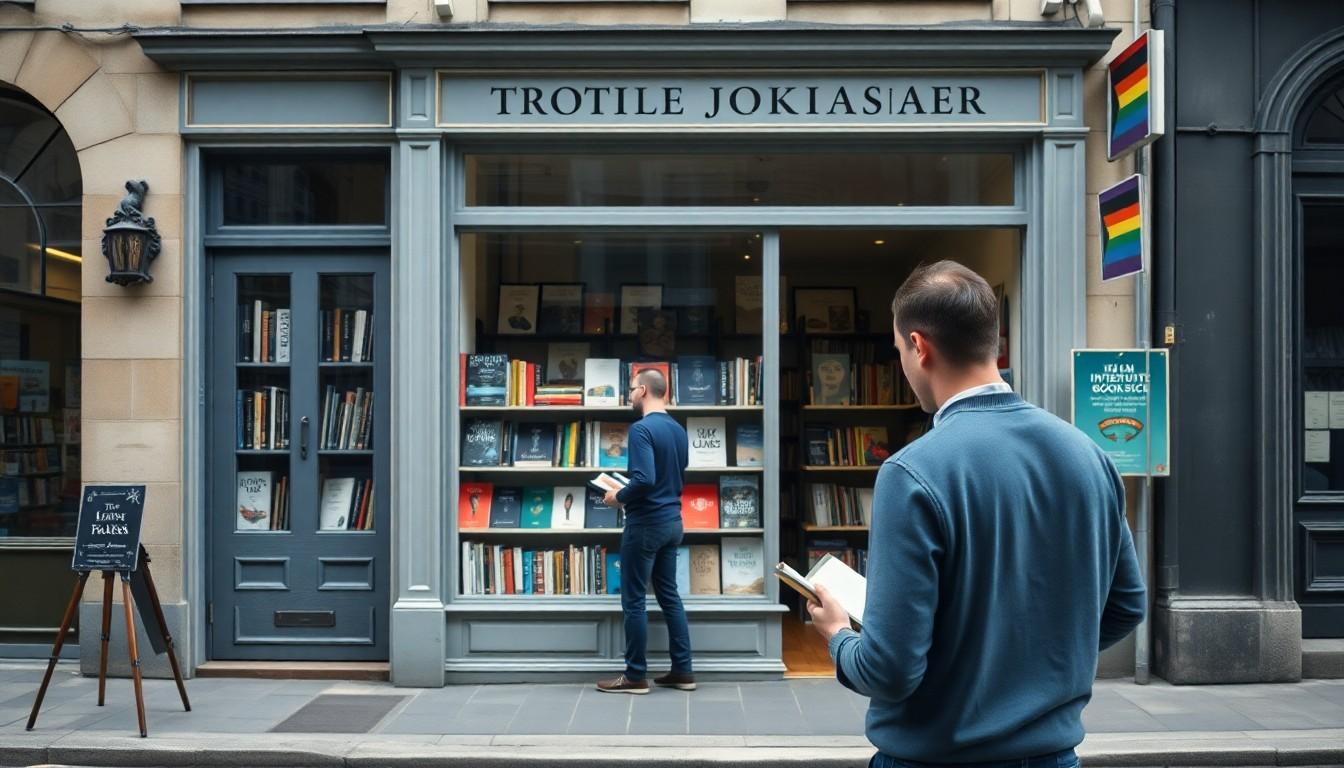
Readers across Europe are being invited into a new collection of bisexual Christian life stories, created to challenge church silence and make space for identities too often misunderstood. The book brings together personal accounts of faith, relationships and belonging, while offering churches, researchers and LGBTQIA+ communities a more honest view of bisexual lives.
Essential Takeaways
- A missing perspective: The collection focuses specifically on bisexual Christians, rather than folding their experiences into broader LGBTQIA+ narratives.
- European voices: Stories reflect different countries, denominations, genders, relationships and personal journeys.
- Faith and identity can coexist: The contributors describe bisexuality and Christianity as connected parts of life, not opposing forces.
- Designed for wider access: The book is available in print for EUR45, with a free PDF option.
- A community-led project: Its message echoes the Open Table Network's work creating explicitly LGBTQIA+-inclusive Christian spaces.
Why bisexual Christian stories have been left unheard
The book begins with a problem that sounds simple but has lasting consequences: bisexual people are often missing from conversations about both Christianity and sexuality. According to Open Table Network, this silence has made it harder for researchers to gather accurate information and easier for churches to overlook bi-specific concerns.
That gap matters because bisexual Christians can face a double sense of uncertainty. In a church setting, they may be assumed to be heterosexual when partnered with someone of another gender, or gay when partnered with someone of the same gender. In queer spaces, meanwhile, they can still encounter doubts about whether bisexuality is a complete or legitimate identity.
The result is a quiet pressure to simplify yourself for other people's comfort. It's a familiar story in many communities, but one that rarely gets the attention it deserves.
A collection built around real lives
The project was created by Carol Joyner and José after they connected through Joyner's earlier writing on bisexual Christians in Europe. Their shared spiritual, political and academic outlook led to the new volume, which gathers first-person accounts from across the continent.
Open Table's wider work centres on safe, affirming Christian communities for LGBTQIA+ people. That setting gives the collection a practical foundation, rather than treating bisexuality as an abstract theological question. The stories are about ordinary lives, including relationships, coming out, church participation, rejection and the search for somewhere to belong.
The range is part of the book's value. Bisexual Christians aren't one tidy group with one shared experience, and the contributors' different backgrounds underline that point without needing to shout it.
Faith, sexuality and the problem with neat categories
Much of the public conversation around queer Christianity has focused on same-gender marriage, while discussions of identity in church life have increasingly included gender. Those issues remain important, but they don't describe everything bisexual Christians encounter.
The collection explores questions of visibility, identity in different-gender and same-gender relationships, and the particular choices involved in coming out. It also looks at how people maintain a sense of self when others interpret their sexuality according to their current partner.
Open Table's mission and community work reflect a broader movement towards explicitly inclusive Christian spaces. Its member profile in the Consortium directory and listings of affirming churches point to a growing network, although the existence of welcoming communities doesn't mean every bisexual Christian has easy access to one.
Why personal testimony can change the conversation
Statistics can show patterns, but personal stories reveal what those patterns feel like. A contributor describing uncertainty, relief or renewed confidence can make an overlooked issue much harder to dismiss.
The book also offers a useful challenge to assumptions within queer and Christian communities. Bisexuality isn't simply a halfway point between heterosexuality and homosexuality, nor does it disappear when someone's relationship changes. That may sound obvious, but many people still have to explain it repeatedly.
There is hope here, too. The collection doesn't present faith as something bisexual Christians must abandon, or bisexual identity as something they must hide. Instead, it shows how the two can sit together, sometimes uneasily, but also with strength and joy.
An accessible resource for churches and readers
The book has clear appeal for bisexual Christians who want to see their experiences reflected, but its audience is wider. Church leaders, pastoral workers, researchers and allies could all use it as a starting point for better questions and more attentive support.
For readers choosing between the print edition and the free PDF, the digital version makes the material easier to share with study groups, church teams and community organisations. The printed book, priced at EUR45, may suit readers who want a lasting reference for personal or professional use.
The wider lesson is straightforward: inclusion works best when people are not merely welcomed in theory, but recognised in the detail of their lives. That is where this collection feels most useful, and most human.
Bisexual Christian stories deserve to be heard in full, not translated into someone else's category.
Source Reference Map
Story idea inspired by: [1]
Sources by paragraph:
- Paragraph 1: [2], [4]
- Paragraph 2: [3], [5]
- Paragraph 3: [6], [7]
- Paragraph 4: [2], [3]
- Paragraph 5: [4], [5]
- Paragraph 6: [2], [6]
- Paragraph 7: [3], [7]
- Paragraph 8: [2], [4]
- Paragraph 9: [5], [6]
- Paragraph 10: [2], [3]
- Paragraph 11: [4], [7]
- Paragraph 12: [2], [5]
- Paragraph 13: [3], [6]
- Paragraph 14: [2], [4]
- Paragraph 15: [5], [7]
- Paragraph 16: [2], [3]
- Paragraph 17: [4], [6]
- Paragraph 18: [2], [5]