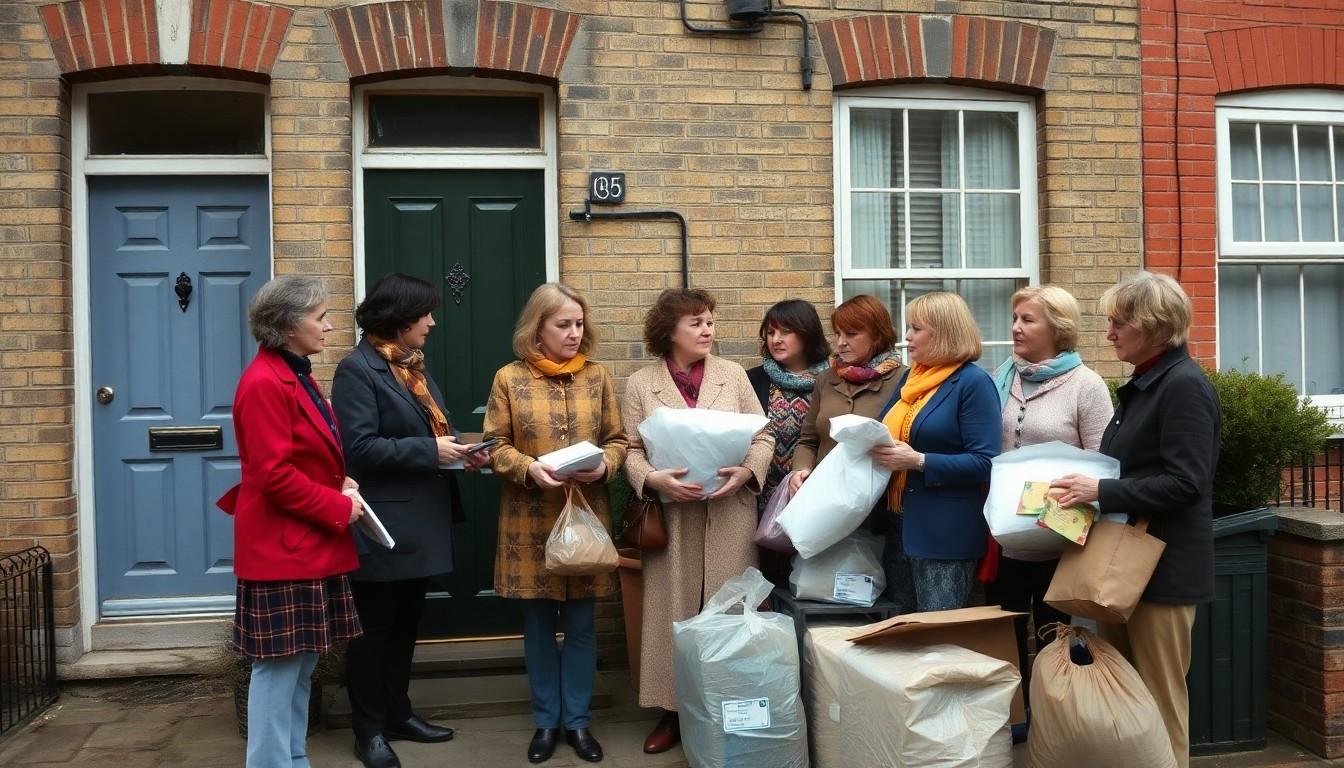
Audiences are being drawn to Mammy’s House, a new London play about Irish queer people, chosen family and lesbian solidarity during the Aids crisis. Set in Camden in 1985, the production brings a largely overlooked chapter of LGBTQIA+ history to the stage, making its story of care and resistance feel strikingly urgent today.
Essential Takeaways
- A historic setting: The play takes place in Camden in 1985, as the Aids crisis reshapes queer life in London.
- An overlooked perspective: It highlights the support offered by lesbians to gay men and other queer people.
- Chosen family at the centre: One Camden home becomes a refuge filled with food, friendship and practical care.
- A story rooted in research: The production draws on extensive research into Irish migration and LGBTQIA+ life.
- A timely message: Its focus on solidarity speaks directly to younger LGBTQIA+ audiences.
A Camden home becomes a refuge
The strongest image in Mammy’s House is also its simplest: a home where someone can knock, come in and feel safe. Set in Camden in 1985, the play follows Irish queer people who have made a life together in London while the Aids crisis begins to cast a long shadow over their community.
The title refers to the familiar Irish idea of “Mammy’s house”, a place where there’s always food, warmth and somebody ready to look after you. In the play, that domestic comfort becomes a powerful form of resistance. According to Irish in Britain, the production centres on a community-built refuge rather than treating the crisis as distant historical background.
At the heart of the story is Barry, known affectionately as “Mammy”. His home offers more than shelter. It becomes a chosen family, a place where people can be vulnerable without being abandoned.
The lesbians who refused to look away
Mammy’s House is particularly notable for putting lesbian solidarity at the centre of the story. The Aids crisis is often remembered through the experiences of gay men, but the production asks audiences to consider the women who organised, fundraised, protested and provided hands-on care.
Coverage in QX Magazine describes the play as an account of Irish queer resilience in 1980s London, while The Irish World highlights its focus on the community networks that helped people survive. That support could be practical and immediate, from raising money and organising blood drives to accompanying men home when attacks became a frighteningly common threat.
It’s a reminder that solidarity wasn’t just a slogan. In many cases, it meant turning up late at night, opening the front door, or standing beside someone when their own family had disappeared.
Why London mattered to Irish queer people
For many Irish LGBTQIA+ migrants, London offered freedoms and services that were unavailable at home. Homosexuality remained illegal in Ireland until 1993, and the country didn’t have a dedicated Aids clinic until that same year. London, by contrast, could provide access to healthcare alongside a larger and more visible queer community.
The production’s research also reflects the scale of Irish involvement in London’s Aids wards. Irish people reportedly accounted for a substantial share of patients on some wards during the 1980s, a statistic that gives Mammy’s House an especially important migrant perspective.
Playstosee’s review places the play within this wider social history, showing how migration, secrecy and public health collided. The result isn’t simply a period drama. It’s a story about the places people go when home has failed them.
Giving Irish women room in the history
The play also tackles the ways Irish women’s sexuality was controlled or erased. Its creators argue that women in Ireland were often denied space to express desire, identity or difference, whether they were gay or straight. That silence makes the lesbian characters’ presence in Mammy’s House all the more significant.
British Theatre Guide and London Theatre Reviews both list the production as a work shaped by LGBTQIA+ history and community memory. The play’s approach feels deliberately intimate, allowing political questions to emerge through conversations, friendships and the rhythms of shared domestic life.
That closeness matters. History can become abstract when it’s reduced to dates and statistics, but a crowded kitchen, a worried phone call or a quiet act of care can make the past feel startlingly near.
A message for the next queer generation
Mammy’s House has already attracted support from prominent figures including Russell T Davies, while audience and industry responses have praised its focus on a story that rarely receives this much attention on stage. The production’s appeal lies partly in its warmth, but also in its insistence that today’s freedoms were hard won.
Its message is aimed at younger LGBTQIA+ people as much as anyone. The play suggests that knowing queer history isn’t about living in the past. It’s about understanding how communities survived, who showed up and why solidarity still matters.
There’s something quietly moving about that idea. In a story shaped by crisis, the lasting image isn’t only illness or fear, but people making room for one another.
A small house becomes a lasting monument to queer care.
Source Reference Map
Story idea inspired by: [1]
Sources by paragraph:
- Paragraph 1: [2], [4]
- Paragraph 2: [3], [5]
- Paragraph 3: [6], [7]
- Paragraph 4: [2], [3]
- Paragraph 5: [4], [5]
- Paragraph 6: [6], [7]
- Paragraph 7: [2], [4]
- Paragraph 8: [3], [5]
- Paragraph 9: [6], [7]
- Paragraph 10: [2], [3]
- Paragraph 11: [4], [5]
- Paragraph 12: [6], [7]
- Paragraph 13: [2], [4]
- Paragraph 14: [3], [5]
- Paragraph 15: [6], [7]
- Paragraph 16: [2], [3]
- Paragraph 17: [4], [5]
- Paragraph 18: [6], [7]