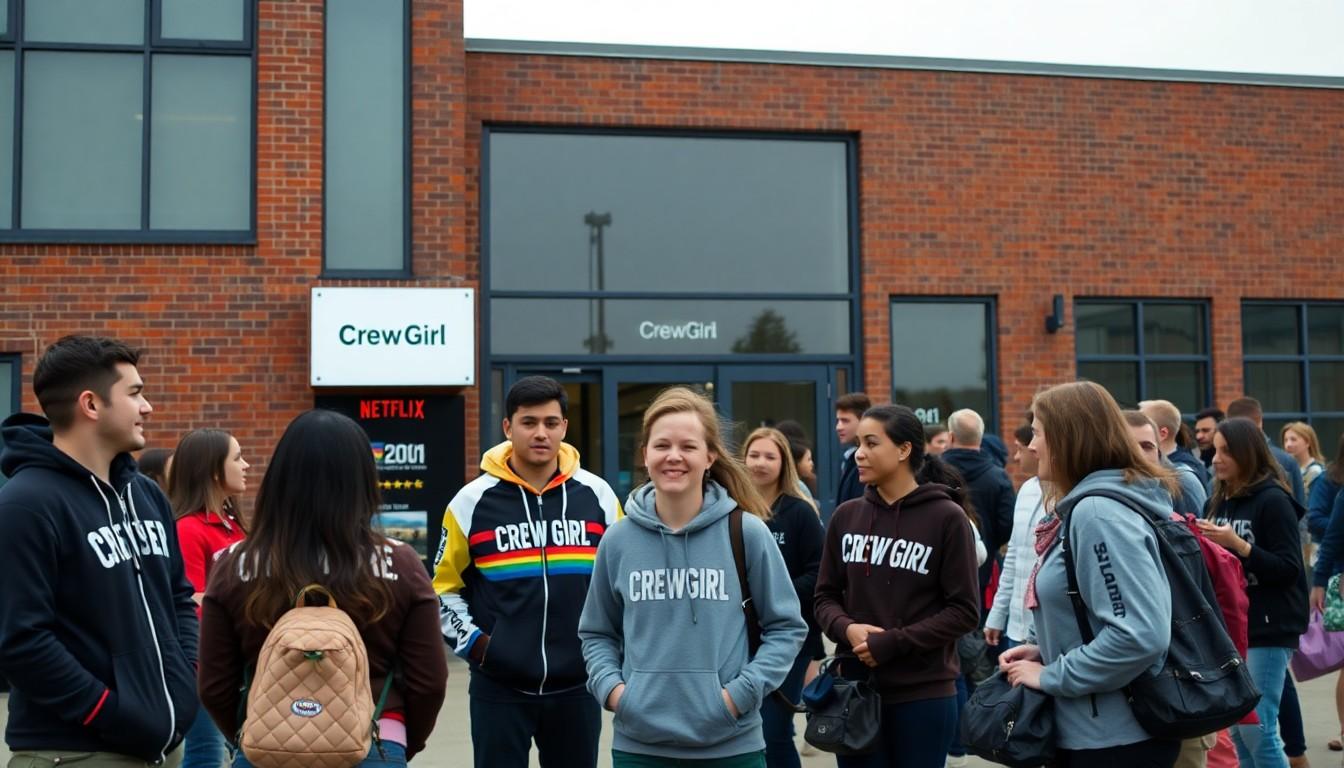
Viewers are discovering Jude Wilson in Netflix’s Crew Girl, a teen rowing drama where queer athlete Baloo is openly gay, comfortably accepted and free to pursue romance. The role marks a bright change of pace after Fellow Travelers, giving young LGBTQ+ audiences a sports story built around belonging rather than secrecy.
Essential Takeaways
- A quietly radical role: Baloo’s sexuality is known, accepted and never treated as a crisis.
- Romance on the water: His storyline includes feelings for an athlete from a rival school.
- A striking contrast: Wilson moves from the emotional weight of Fellow Travelers to a lighter teen drama.
- Representation with room to breathe: Baloo gets friendship, humour, sport and a love story.
- Training adds realism: The young cast undertook rowing preparation to make the crew scenes convincing.
Baloo is out, and nobody makes a fuss
The most powerful thing about Baloo might be how ordinary his life is allowed to feel. He’s part of the boys’ rowing team at elite Easton Prep, spends time with his teammates and develops a crush across the school rivalry. His sexuality is part of the picture, but it isn’t the whole frame.
That matters because queer characters in teen television have often been pushed towards confession, bullying or coming-out storylines. Crew Girl takes a different route. Baloo is already out, his friends accept him and the plot can focus on the messy, exciting business of being a teenager. According to The Pink Times, Wilson sees that openness as central to the character’s appeal. [4]
There’s something refreshingly unforced about it. Baloo isn’t delivering a lesson every time he appears on screen. He’s simply one of the boys, with a team around him and a rival who catches his eye.
A queer romance with a sports heartbeat
Crew Girl follows 16-year-old Teagan Tao, played by Miku Martineau, after a family scandal sends her to a new town and into an all-boys rowing programme. That central setup brings plenty of school drama, but Baloo’s story adds a separate queer romance to the mix.
His connection with a competitor from another school gives the series an enjoyable spark. Rivalries are already wonderfully suited to television, with their uniforms, tense races and charged sideline glances. Add a budding romance and suddenly every regatta feels just a little more dramatic.
The ensemble nature of the show is part of its attraction. Coverage from Marie Claire and TV Insider highlights the wider cast and relationship dynamics, suggesting that Crew Girl is designed as a coming-of-age drama rather than a single-issue story. [2] [7]
From Fellow Travelers to a lighter kind of visibility
Wilson’s role follows his acclaimed performance as Jerome in Fellow Travelers, a far heavier story about a young gay Black man in San Francisco during the AIDS crisis. That character’s journey carried fear, illness and historical trauma, while Baloo gets to worry about sport, mates and whether a rival might feel the same way.
The difference isn’t a retreat from meaningful storytelling. It shows how much queer representation can hold. Some stories need to confront catastrophe and injustice. Others need to show a teenager enjoying the ordinary freedoms that many viewers might take for granted.
Wilson has said that messages from Fellow Travelers viewers stayed with him, particularly those who described how strongly Jerome’s story affected them. Out’s coverage of the actor’s earlier work also underlines how important that performance became in shaping his public profile. [5]
Why an openly gay athlete feels significant
Sports dramas have traditionally been fertile ground for stories about pressure, toughness and fitting in. Queer athletes, meanwhile, have often been portrayed through the lens of concealment or fear. Baloo’s presence gently flips that expectation.
He isn’t waiting for the team to discover a secret. He doesn’t need to prove that he belongs. The drama comes from the same places it does for his teammates: competition, loyalty, attraction and the occasional emotional wobble. It’s a small narrative choice with a sizeable effect.
The show’s rowing setting helps, too. Netflix reporting on the series has pointed to the cast’s training, which gives the sporting world a more convincing physical texture. Oars, water and aching shoulders make the setting feel lived-in rather than decorative. [6]
What Crew Girl says about queer storytelling now
Wilson’s comments point to a broader shift: queer characters are increasingly being given different kinds of lives on screen. They can be dealing with history, falling in love, making mistakes or just trying to survive a difficult school term. No single storyline has to represent everyone.
The showrunner’s discussion with What’s on Netflix adds context around the series’ development and its blend of teen relationships with competitive rowing. [3] That combination gives Crew Girl a useful balance. It can offer the rush of a sports show while allowing its characters to be emotionally untidy, funny and recognisable.
For younger viewers, that normality may be the most meaningful part. Seeing a queer athlete who is accepted before the first race even begins can feel quietly liberating. Sometimes the breakthrough isn’t a dramatic speech. Sometimes it’s a boy flirting with someone from the opposing crew.
Crew Girl is streaming on Netflix now.
It's a small but welcome shift when queer characters get to live, compete and fall in love without asking permission.
Source Reference Map
Story idea inspired by: [1]
Sources by paragraph: