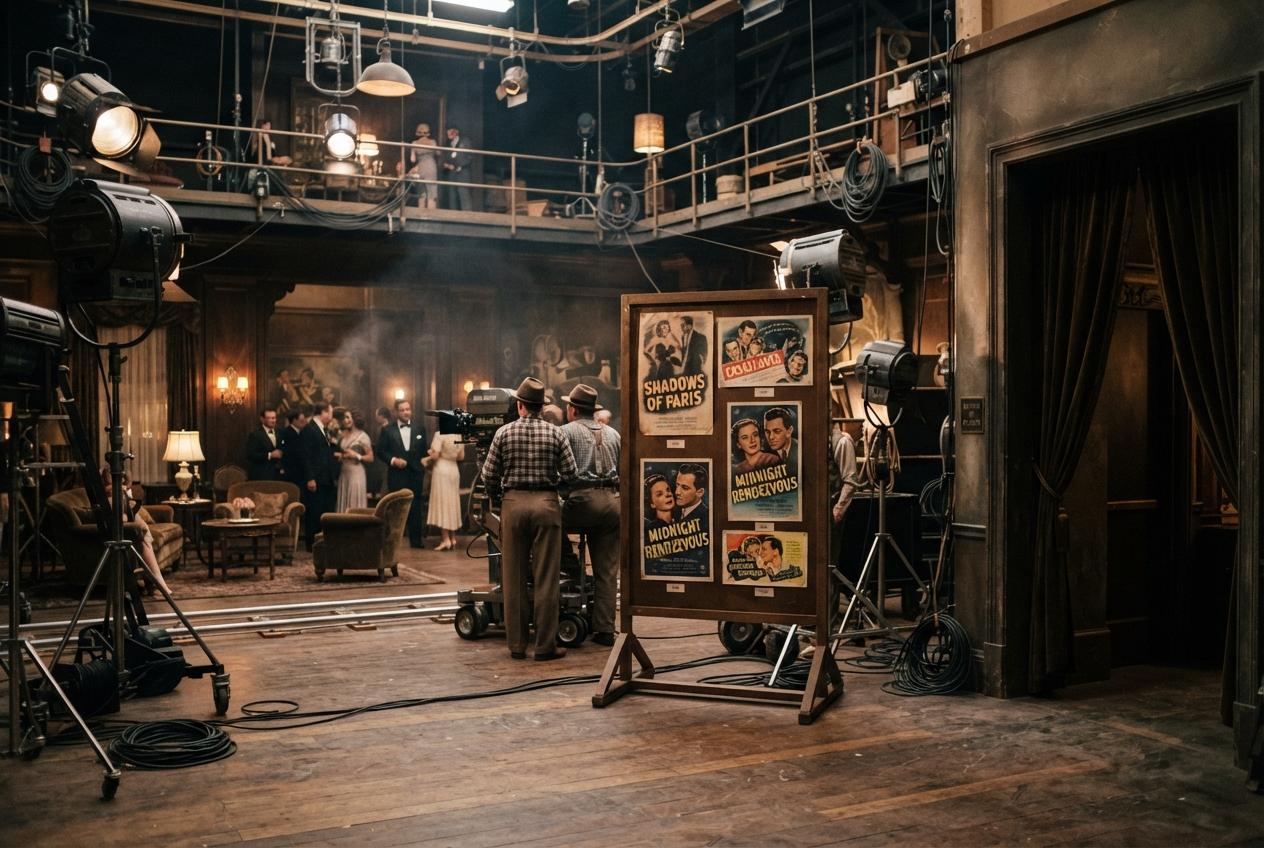
Film fans are revisiting the best queer Old Hollywood films, from Greta Garbo's regal defiance to Katharine Hepburn's gender-bending charm. These movies offer more than famous faces and exquisite costumes: they reveal coded desire, unruly women and performances that still feel thrillingly modern, whether you're planning a weekend watchlist or discovering classic cinema for the first time.
Essential Takeaways
- Start with Garbo: Queen Christina remains a landmark for gender play, romantic ambiguity and unforgettable screen presence.
- Choose Hepburn for chaos: Bringing Up Baby and Sylvia Scarlett showcase her comic timing and wonderfully unconventional energy.
- Stanwyck brings the heat: From Ball of Fire to Double Indemnity, she's magnetic, funny and frequently in control.
- Look beyond the romances: Female friendships, all-women ensembles and coded intimacy often provide the films' most compelling relationships.
- Expect uneven representation: These classics can be exhilarating, but they reflect the restrictions and stereotypes of their era.
Why queer Old Hollywood films still feel so alive
The most exciting thing about queer Old Hollywood films isn't always an openly LGBTQ+ storyline. Often, it's the glance held a second too long, the woman in a beautifully cut dinner suit or a friendship that carries more emotional charge than the official romance.
That atmosphere runs through films such as Queen Christina, where Greta Garbo plays a ruler who dresses as a man, insists on her independence and resists the expectations placed on her. As Pride has noted in its coverage of classic films featuring gay characters, older cinema often communicated queerness through suggestion, performance and carefully negotiated subtext rather than direct declarations.
This makes the films feel like cinematic treasure hunts. You can enjoy the lavish sets and sharp dialogue on the surface, while spotting the small details that seem to wink at a more complicated reading.
Garbo, Hepburn and the art of refusing the rules
Garbo's Queen Christina is the obvious starting point, but her other films deepen the picture. In Grand Hotel, she plays a fragile ballerina surrounded by glamour and despair, while Joan Crawford adds a brisk, practical counterpoint as a stenographer navigating a very different kind of power.
Hepburn, meanwhile, made unconventional women look entirely at home on screen. Bringing Up Baby turns her into a whirlwind of leopard-related mishaps, while Stage Door places her in a lively women's boarding house filled with ambition, rivalry and fast-moving banter. The chemistry between Hepburn and Ginger Rogers gives the ensemble an extra spark.
Then there's Sylvia Scarlett, perhaps the boldest choice for viewers interested in gender performance. Hepburn spends much of the film disguised as a boy, and the story's shifting identities and attractions make it gloriously strange. It isn't perfectly balanced, but its refusal to settle into one tidy category is part of the appeal.
Barbara Stanwyck makes every frame sharper
If you want a classic Hollywood star with force, wit and a slightly dangerous edge, Barbara Stanwyck is hard to beat. In Ball of Fire, she plays a streetwise singer who brings disorder and glamour into a household of sheltered academics. The result is hilarious, fast-paced and fuelled by her sheer command of the screen.
Double Indemnity offers a darker version of that energy. Stanwyck's femme fatale is wrapped in sunglasses, platinum hair and calculated charm, but the performance works because she never seems merely ornamental. She is assessing everyone in the room, and usually several moves ahead.
For something lighter, try The Mad Miss Manton. Its mystery plot and conventional romance are less memorable than the heroine's lively circle of women, who turn the investigation into a spirited group enterprise. It has the cosy feeling of a detective series that never got made, which is exactly why it remains such fun.
The women often matter more than the official love stories
Joan Crawford's filmography is packed with films where the advertised romance isn't necessarily the most interesting relationship. The Women, with its entirely female central cast, is a perfect example. Its characters are messy, competitive and wonderfully quotable, with Crawford bringing a deliciously sharp streak to the ensemble.
In When Ladies Meet, Crawford shares striking chemistry with Greer Garson, even as the plot tries to steer everyone towards conventional pairings. Their exchanges have an intimacy and admiration that linger longer than the film's more predictable male storylines.
Dorothy Arzner's Dance, Girl, Dance offers another valuable perspective. Its two ambitious dancers pursue success in different ways, and the film allows their rivalry, friendship and professional frustrations to take centre stage. Lucille Ball's brassy performance adds extra fizz, while the film's treatment of women working in entertainment still feels surprisingly pointed.
For viewers building a classic cinema watchlist, these are useful reminders that queer readings aren't limited to explicit plotlines. Sometimes the emotional centre is simply where the women are allowed to be themselves.
A practical watchlist for first-time viewers
Start with Queen Christina if you want grand costumes and bold gender play. Follow it with Bringing Up Baby for pure screwball momentum, then switch to Double Indemnity when you're in the mood for shadows, suspicion and a dangerously good pair of sunglasses.
For a more ensemble-driven evening, The Women and Stage Door work beautifully together. They offer crowded rooms, cutting dialogue and a sense that the women are building their own social universe, even when the men technically control the plot.
Silent-film enthusiasts should make time for Alla Nazimova's Salome. It's stylised, theatrical and dreamlike, with compositions that look almost hand-painted. Meanwhile, Marlene Dietrich's Witness for the Prosecution is an ideal late-night choice: a twisty courtroom thriller with a performance that remains cool, funny and completely commanding.
A small warning is worthwhile. Some films move awkwardly between progressive impulses and dated attitudes, while others rely on stereotypes or leave queer readings deliberately unresolved. That's not a reason to skip them, but it is a good reason to watch critically, discuss what you see and let the contradictions sit on the table.
Why these classics deserve another look
Research and writing on early LGBTQ+ cinema frequently point to the importance of coded representation, especially during periods when censorship limited what filmmakers could show directly. Grunge's history of early LGBTQ+ films places these examples within a much longer tradition, reminding us that queer possibility did not suddenly appear with modern cinema.
That history also explains why performance matters so much. A costume, gesture or refusal to marry can carry extraordinary weight when a script cannot name desire plainly. The result isn't always an intentional queer statement, but it can still become meaningful to audiences who recognise themselves in its margins.
A century on, these films remain imperfect, glamorous and wonderfully open to interpretation. The best ones don't just preserve old stars; they give today's viewers room to argue, laugh, swoon and see something new in a familiar frame.
Pick a classic, settle in and let the subtext do some of the talking.
Source Reference Map
Story idea inspired by: [1]
Sources by paragraph:
- Paragraph 1: [2], [3]
- Paragraph 2: [4], [7]
- Paragraph 3: [5], [6]
- Paragraph 4: [3], [4]
- Paragraph 5: [2], [6]
- Paragraph 6: [2], [3]
- Paragraph 7: [2], [4]
- Paragraph 8: [2], [5]
- Paragraph 9: [3], [4]
- Paragraph 10: [2], [6]
- Paragraph 11: [2], [3]
- Paragraph 12: [4], [5]
- Paragraph 13: [2], [3]
- Paragraph 14: [4], [7]
- Paragraph 15: [5], [6]