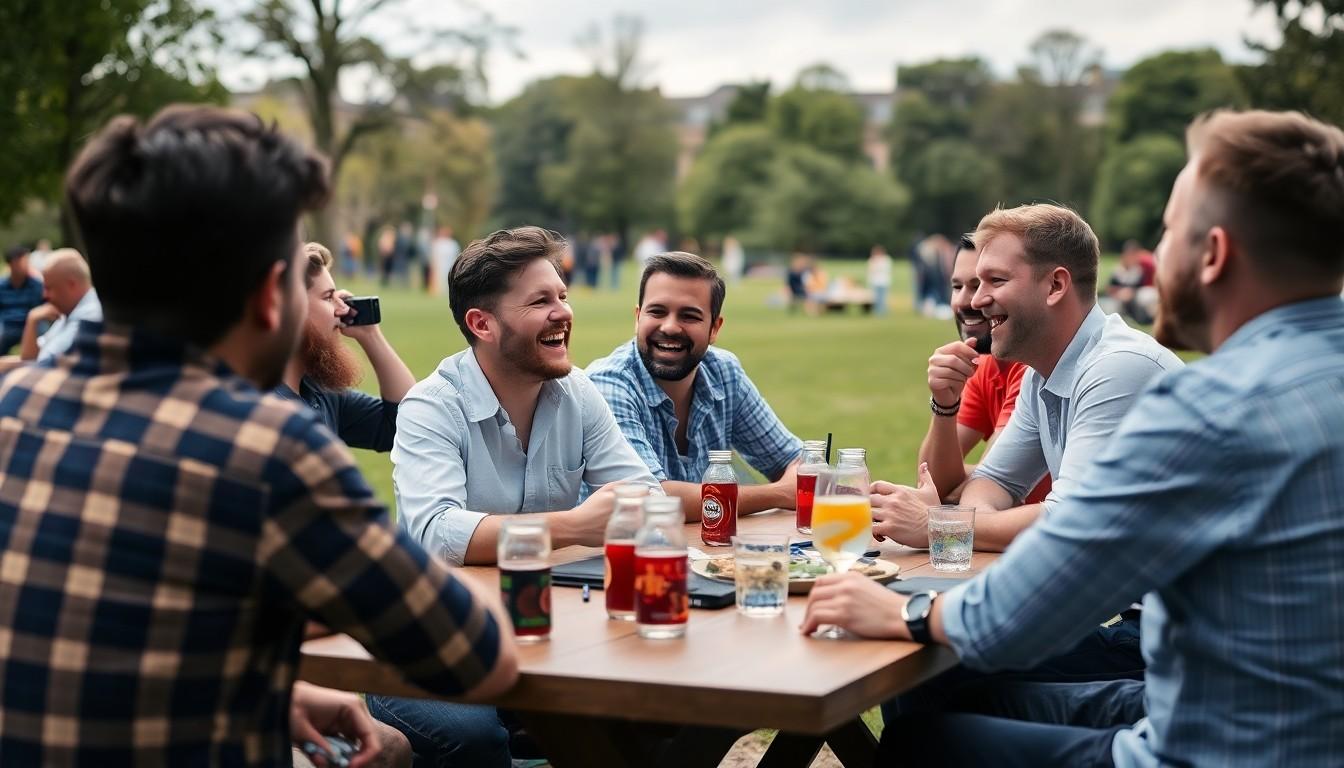
Gay men seeking friendship without romantic pressure are finding a fresh option in No Sex Gay Weekend, a growing meetup concept with events in the UK and beyond. The idea is simple: create welcoming social time where nobody has to flirt, cruise or explain why they're single, while still leaving room for fun, spontaneity and a little mischief.
Essential Takeaways
- Friendship comes first: The events are designed around meeting people, not finding dates or sexual partners.
- It isn't anti-sex: The founder describes the concept as a temporary social setting, not a lifestyle rule.
- The format is growing: No Sex Gay Weekend has run dozens of events and attracted hundreds of attendees.
- Low-pressure socialising matters: Removing assumed sexual expectations can make introductions feel easier and warmer.
- Madrid remains part of the conversation: Gay-friendly venues such as Naked Bar offer a livelier contrast to the group's quieter meetups.
A social weekend without the usual pressure
The most striking thing about No Sex Gay Weekend isn't the prohibition in its name. It's the relief that can come from knowing nobody expects the evening to become a date, a hookup or an audition for one.
Founder Chris came up with the idea after a holiday in southern Spain left him distracted by dating-app scrolling and the constant possibility of meeting someone. According to Queerty, the experience made it difficult to enjoy the setting itself, prompting him to imagine a gay gathering built around connection rather than pursuit.
That distinction matters. Many queer venues are welcoming but still carry an unspoken script: arrive, assess the room, flirt, and see where the night goes. This concept simply puts that script to one side for a while.
What happens at No Sex Gay Weekend events?
The group organises social gatherings, picnics and residential weekends where attendees can meet new people without needing a shared hobby or professional network as an introduction. The official No Sex Gay Weekend website presents the idea as a community-led way to spend time together, with friendship as the central purpose.
That broad invitation may be its cleverest feature. A sports club gives people an activity to discuss, while a book group offers an instant topic. Here, the common ground is more basic but arguably more useful: everyone has turned up hoping to connect.
The events aren't intended to police private lives. Queerty reported that cruising is discouraged during the organised weekend, but the founder is clear that the group isn't a campaign against sex. In other words, the boundary applies to the event's atmosphere, not to anyone's identity or choices.
Why the idea has attracted attention
The name has inevitably become a magnet for jokes, especially online. Some reactions frame the concept as secretly erotic, while others worry that it risks shaming ordinary queer desire. Those responses reveal how unusual it can seem to create a gay social space where sex isn't the organising principle.
Still, the concept has found an audience. Queerty reported that an early poll showed strong interest, followed by around 30 events and more than 700 attendees. That momentum suggests the demand isn't necessarily for a permanently sexless community, but for occasional breathing space from expectation.
The wider social trend is easy to recognise. People increasingly want communities that feel intentional, bounded and emotionally manageable, whether that's a sober night, a phone-free supper or a meetup where dating is off the table. No Sex Gay Weekend applies that same logic to queer social life.
Is a platonic gay space really necessary?
Critics have pointed out that gay men already meet through clubs, sports teams, gaming groups and community organisations. That's true, and it would be unfair to suggest queer life is nothing but nightlife and hookups.
The difference is that those settings usually have another purpose. No Sex Gay Weekend is built around meeting people themselves, which can be surprisingly difficult once school, work and existing friendship circles take over. The absence of a required interest makes the event feel more open, even if it also makes the first conversation slightly scarier.
For anyone who finds conventional gay venues loud, flirt-heavy or exhausting, the appeal is practical rather than ideological. You can chat, eat, wander around or sit quietly without having to signal what you want next. That can be a small freedom, but it often makes people more willing to be themselves.
Choosing between a quiet meetup and a lively night out
No Sex Gay Weekend isn't designed to replace bars, clubs or holidays. In fact, its founder's recommendation of Naked Bar in Madrid shows that a low-pressure social weekend can coexist perfectly well with a more traditional gay night out.
Venue listings describe Naked Bar as part of Madrid's LGBTQ+ nightlife, while GayMap and other local directories offer practical information for visitors comparing venues. That makes the city an interesting backdrop: one moment might involve a relaxed group activity, and the next could lead to drinks somewhere louder and more playful.
The useful question for attendees is what kind of energy they want. Check the event details, understand the ground rules, and choose a gathering that matches your comfort level. If you're a fast socialiser, you may enjoy the freedom; if you're shy, having a clear no-pressure framework can make the first hello much easier.
A modest idea with a surprisingly large appeal
The strength of No Sex Gay Weekend is its modesty. It doesn't claim to solve loneliness, reform nightlife or speak for every gay man. It simply offers a defined setting where friendship gets top billing.
That may be why the idea resonates. For some people, the most attractive part of a weekend away is not the promise of romance but the chance to laugh with strangers, return home feeling lighter and discover that connection doesn't always need a hidden agenda.
It's a small social experiment, but one that gives friendship room to breathe.
Source Reference Map
Story idea inspired by: [1]
Sources by paragraph:
- Paragraph 1: [2], [3]
- Paragraph 2: [2], [3]
- Paragraph 3: [2], [4]
- Paragraph 4: [2], [3]
- Paragraph 5: [3], [7]
- Paragraph 6: [2], [3]
- Paragraph 7: [2], [6]
- Paragraph 8: [2], [3]
- Paragraph 9: [2], [4]
- Paragraph 10: [2], [3]
- Paragraph 11: [2], [5]
- Paragraph 12: [4], [6]
- Paragraph 13: [2], [3]
- Paragraph 14: [2], [7]
- Paragraph 15: [2], [3]