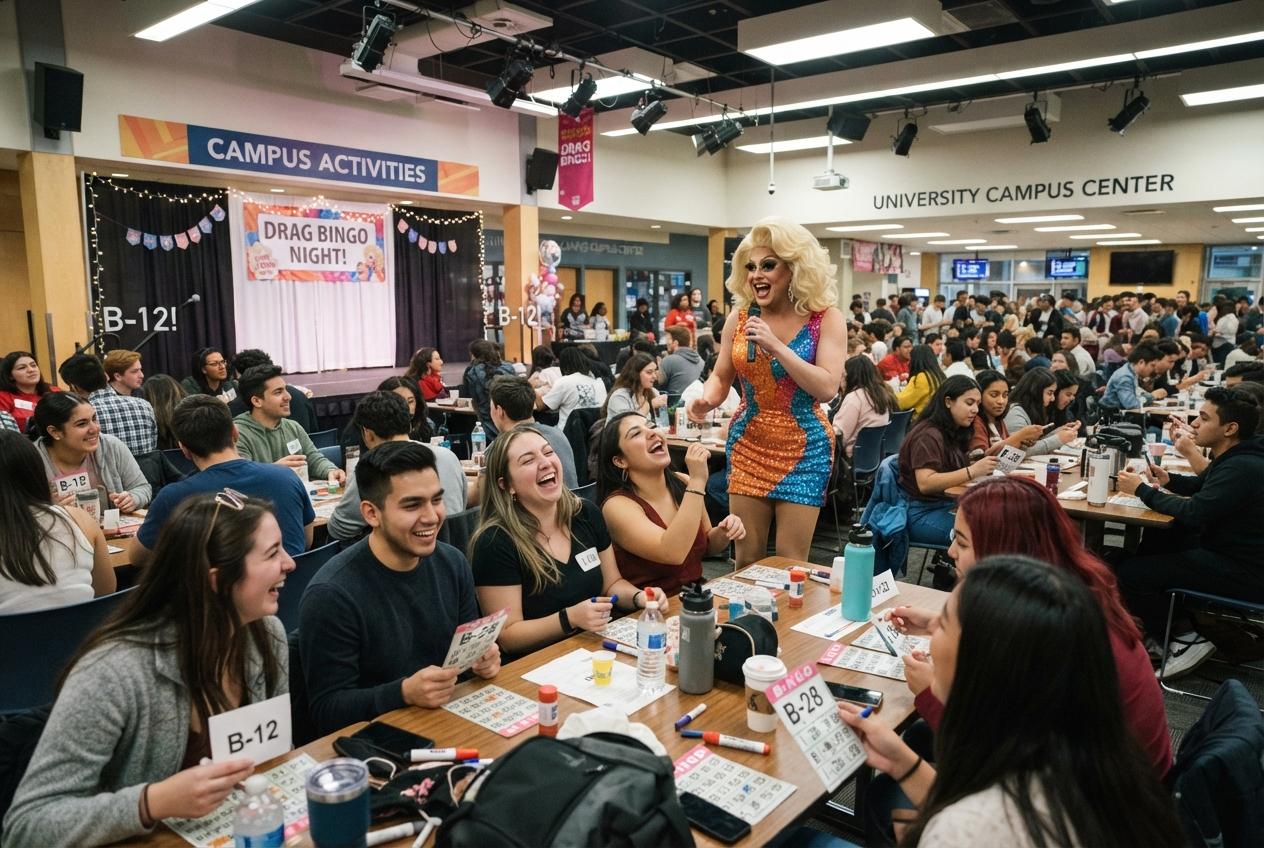
Students arriving at the University of Wisconsin-Madison were offered hundreds of ways to settle into campus life, including a drag show linked to welcome-week festivities. The event has prompted fresh questions about student programming, funding and how universities balance inclusion, entertainment and differing expectations among new arrivals.
Essential Takeaways
- Welcome-week setting: The performance formed part of Wisconsin Welcome, a multi-week programme for first-year and transfer students.
- Campus involvement: The event was associated with the university's new student office and Gender and Sexuality Campus Center.
- Reported humour: Student media described adult-themed jokes and audience participation during the show.
- Broader support network: UW-Madison's LGBT Campus Center lists student organisations, events and educational resources for students.
- Funding question: The university did not publicly identify which funding source paid for the performance.
A lively start to campus life
The most striking detail from the reported performance wasn't the stage lighting or the crowd's energy, but the tone of its humour. According to The Madison Federalist, one performer used sexualised jokes while leading a bingo-style game, including references to "good Christian values" and audience members' sexuality.
That has placed a familiar university tradition, welcome week, under a sharper spotlight. New students are usually looking for friends, clubs and a sense of belonging, and campuses often use entertainment to help break the ice. Still, a show with adult comedy can feel very different depending on who is watching and what they expected from an official university programme.
UW-Madison's welcome materials describe the event period as a chance for new students to discover Madison, meet fellow Badgers and find their campus community. The university's transfer programme also promotes dedicated activities to help students make that transition. [6], [7]
What Wisconsin Welcome is designed to do
Welcome programmes are sprawling by nature. They can include orientation sessions, society fairs, sporting events, social gatherings and activities run by student groups or community partners. The appeal is obvious: a busy timetable gives students several low-pressure chances to meet people before lectures and seminars properly begin.
UW-Madison says Wisconsin Welcome offers more than 400 events across multiple weeks. That variety matters because no single activity will suit everyone. One student might prefer a quiet campus tour, while another will happily join a packed performance with music, jokes and a little theatrical sparkle. [6], [7]
The university's LGBT Campus Center provides another part of that wider social landscape, with information about student organisations and ways to get involved. Its public resources show how identity-based communities fit into the university's broader support and engagement structure. [3], [4]
Inclusion, entertainment and the question of fit
Supporters of events like this are likely to see them as a straightforward way to welcome LGBTQ+ students and signal that they belong on campus. A drag show can be colourful, funny and genuinely social, particularly for students arriving in a new city and searching for familiar communities.
The tension comes when an event is presented within an official welcome programme rather than as a clearly labelled, optional club activity. Adult humour may be perfectly acceptable in a student venue, but organisers still need to make the format clear so attendees can decide whether it's right for them. A simple description can prevent a great deal of confusion.
That distinction also matters for families and students with different religious or cultural expectations. Inclusivity works best when it expands choice rather than making one style of entertainment feel compulsory. The university's LGBT resources include both community opportunities and educational provision, suggesting that the wider offer is broader than a single performance. [3], [4], [5]
Funding questions are now part of the story
The event's financial arrangements have attracted attention because public universities regularly face scrutiny over student fees and programme budgets. The College Fix reported that a campus spokesperson described Wisconsin Welcome as being organised and funded by a mix of university departments, student organisations and community organisations, but did not specify which pool paid for the drag show.
That lack of detail leaves the most practical question unanswered. Was the performance covered by a central welcome budget, a student organisation, a campus centre or another partner? Transparency would help students understand how decisions are made, particularly when compulsory fees or public resources may be involved.
The issue sits alongside debate over Sex Out Loud, a student group whose website presents sexual-health and student-focused programming. The College Fix previously reported that the group received a substantial allocation from the Associated Students of Madison Student Services Finance Committee for the 2026-27 academic year. [2]
How universities can avoid the next campus row
The easiest fix is usually better signposting. Event listings should state the intended audience, the type of humour, any adult content and whether attendance is optional. That lets students make informed choices without treating every disagreement as a crisis.
Organisers can also separate welcome events by tone and purpose. A drag performance may sit comfortably alongside a club fair or nightlife event, while orientation sessions should remain focused on practical support and campus navigation. Clear branding helps students know whether they're attending an official information session, a student-led social event or a community performance.
For UW-Madison, the debate is unlikely to be about one bingo game alone. It's about what a university believes welcome should look like, who gets to shape that experience and how openly the costs are explained. A little clarity would make the whole conversation less heated.
Welcome works best when students know exactly what they're joining and why.
Source Reference Map
Story idea inspired by: [1]
Sources by paragraph:
- Paragraph 1: [1], [6]
- Paragraph 2: [1], [7]
- Paragraph 3: [6], [7]
- Paragraph 4: [3], [4]
- Paragraph 5: [1], [3]
- Paragraph 6: [3], [4], [5]
- Paragraph 7: [1], [2]
- Paragraph 8: [1], [2]
- Paragraph 9: [2]
- Paragraph 10: [2], [3]
- Paragraph 11: [3], [4], [5]
- Paragraph 12: [1], [6]
- Paragraph 13: [1], [2]
- Paragraph 14: [2], [3]
- Paragraph 15: [1], [6]
- Paragraph 16: [1], [3], [4]
- Paragraph 17: [1], [2]
- Paragraph 18: [1], [6]
- Paragraph 19: [1], [2]
- Paragraph 20: [3], [4], [5]