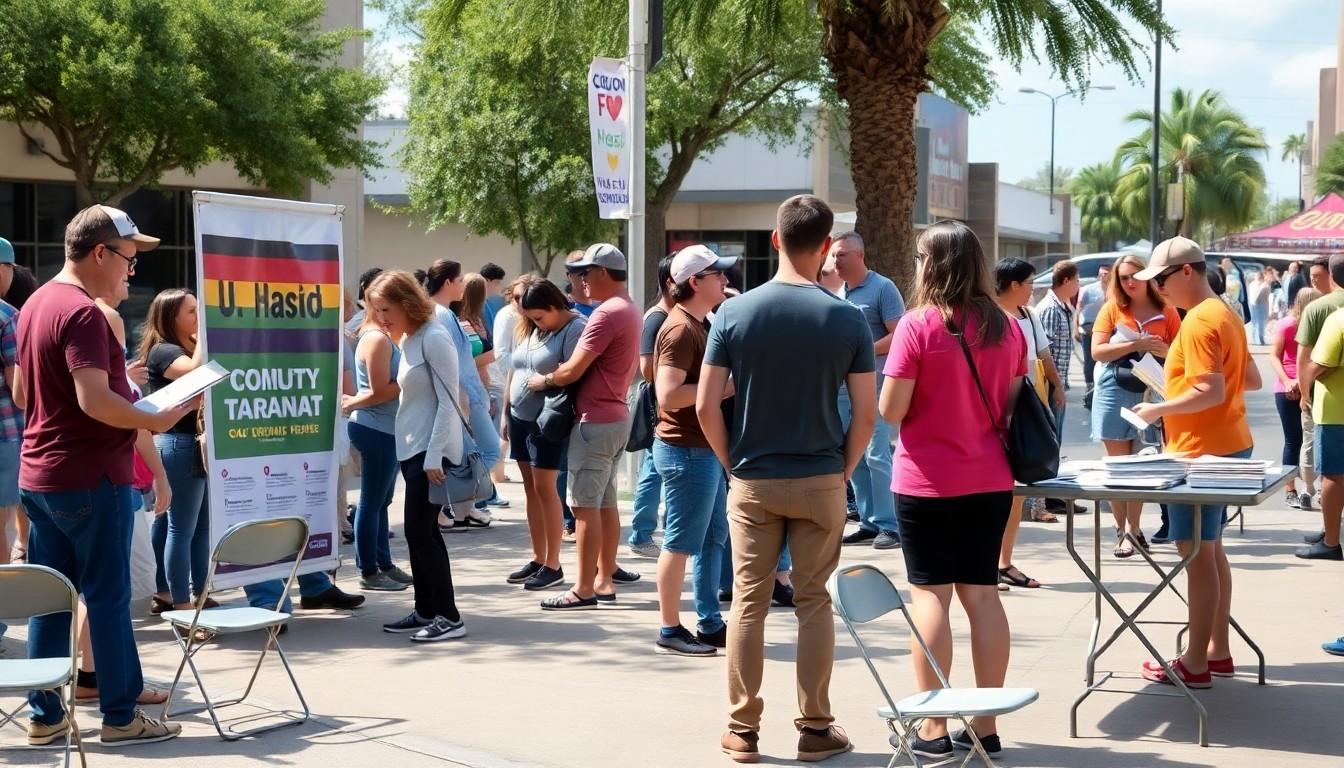
Organisers and LGBTQ+ residents in Tucson are weighing what should follow the collapse of the city’s long-running Pride organisation. With grassroots events, established nonprofits and a possible free festival all in the mix, the debate is no longer simply about staging a celebration, but deciding who should lead it and how money, accountability and community voice will be handled.
Essential Takeaways
- A historic organisation has ended: Tucson Pride’s nearly five-decade run came to a close after financial and organisational difficulties.
- Several models are emerging: Possible replacements range from independent events to a large festival run by an established nonprofit.
- Trust is central: Organisers know transparent finances and clear oversight will matter as much as entertainment.
- Smaller events have momentum: Community forums have shown meaningful support for year-round, grassroots programming.
- Free access is being considered: One proposed festival would avoid admission charges and rely on vendors and sponsorships.
Tucson Pride’s collapse left more than an empty date
The loss of Tucson Pride isn’t just the cancellation of a festival. It’s the disappearance of an organisation that had helped define the city’s LGBTQ+ public life for almost 50 years, dating back to Arizona’s first Pride celebration in 1977.
According to Lookout News, years of financial strain and leadership problems came to a head after a poorly attended 2024 event left the organisation with substantial debt. A postponed 2025 celebration was eventually abandoned, and the board dissolved the organisation soon afterwards. The practical result was stark: no established group, no annual flagship event and no obvious successor. [6]
Yet the community itself didn’t vanish. Tucson saw a busy run of queer gatherings after the shutdown, suggesting that the appetite for connection remains strong, even if enthusiasm for one central institution has cooled. That distinction matters, because a festival can fail while the culture around it keeps moving. [3]
The grassroots option has real energy
One of the fastest responses came from a loose group of promoters, DJs and arts organisers who assembled Loud & Proud in less than a month. The event drew more than 500 people, according to organisers, and paid local queer performers while directing remaining proceeds to community causes. That’s an encouraging result, especially given the short preparation time. [7]
But speed and enthusiasm don’t automatically create durable governance. The collective initially had no legal structure, board or dedicated bank account, and a later event was cancelled after weak interest. For attendees, that may feel like a minor scheduling hiccup. For sponsors, vendors and performers, it raises bigger questions about contracts, insurance and who ultimately carries responsibility. [2]
The group plans to develop a new event and is considering formalising itself as a limited liability company. That could make operations simpler, but it wouldn’t necessarily provide the public reporting or independent oversight many residents now want. The lesson is familiar: a warm, welcoming event still needs a sturdy administrative backbone. [1]
Could an established nonprofit take the lead?
Fluxx Productions is among the strongest candidates to produce a new large-scale Tucson Pride. It already runs LGBTQ+ events and services, holds nonprofit status and has experience with sizeable public programmes. Its proposed Desert Pride Tucson would sit within Fluxx but operate with separate financial arrangements, according to the organisation. [4]
The planned approach is deliberately designed to address past concerns. Fluxx says it would publish financial information and attendance figures through its existing reporting, while admission would be free. Funding would come from vendor charges and corporate sponsorship, with any surplus reserved for future events. On paper, that offers both accessibility and continuity. [5]
Still, the organisation faces a delicate balancing act. A new festival needs a recognisable organiser, but some community members may resist anything that feels like one group claiming ownership of Pride. Fluxx has said it wants collaboration rather than control, which sounds sensible. The hard part will be turning that message into visible, shared decision-making. [1]
Many residents may prefer a season, not a spectacle
Community discussions have pointed towards a different future: a spread of smaller gatherings throughout the year, supported by transparent nonprofit governance. At one forum, participants narrowly favoured that approach over recreating the previous large annual festival. [1]
There’s an appealing practicality to this model. Smaller events can be more accessible to people who dislike crowds, work irregular hours or don’t feel represented by a single headline celebration. They can also make room for arts, health, trans-led programming, youth events and social gatherings without forcing every part of Tucson’s queer community into one afternoon.
The trade-off is visibility. A major festival creates a powerful public statement, attracts visitors and gives sponsors a clear platform. A calendar of independent events may better reflect the community’s variety, but it could be harder to fund, promote and coordinate. Tucson may eventually choose a hybrid: several organisers, one shared season and perhaps a free flagship day. [2]
What should organisers prove before asking for support?
The most useful test isn’t simply whether an event looks busy. Potential organisers should be able to explain who controls the money, how performers and suppliers are paid, what happens if sponsorship falls through and where surplus funds go.
Residents should also look for basics such as published budgets or impact reports, clear safeguarding policies, accessible venues and realistic plans for extreme heat. Tucson’s weather is not a small logistical detail. Timing, shade, water, transport and indoor options can determine whether a celebration feels welcoming or exhausting.
Southern Arizona AIDS Foundation has offered to discuss fiscal sponsorship, but its leadership has warned that funding a health-services organisation and funding a festival are very different tasks. That caution is healthy. Pride needs celebration, but it also needs the kind of sober planning that stops a joyful weekend becoming another financial crisis. [1]
The next Tucson Pride will need to earn confidence
A replacement festival may arrive, or Tucson could embrace a more decentralised Pride calendar. Either way, the community now has a rare opportunity to rethink what the event is for, rather than automatically rebuilding the old version.
That means listening before launching, publishing the numbers and making room for more than one idea of celebration. People may still want music, dancing and a colourful public gathering, but they also want proof that the organisation behind it is dependable.
Tucson’s next chapter won’t be judged only by attendance. It’ll be judged by whether people feel respected, included and confident about where their support goes.
A stronger Pride may begin not with one giant festival, but with trust rebuilt one event at a time.
Source Reference Map
Story idea inspired by: [1]
Sources by paragraph: