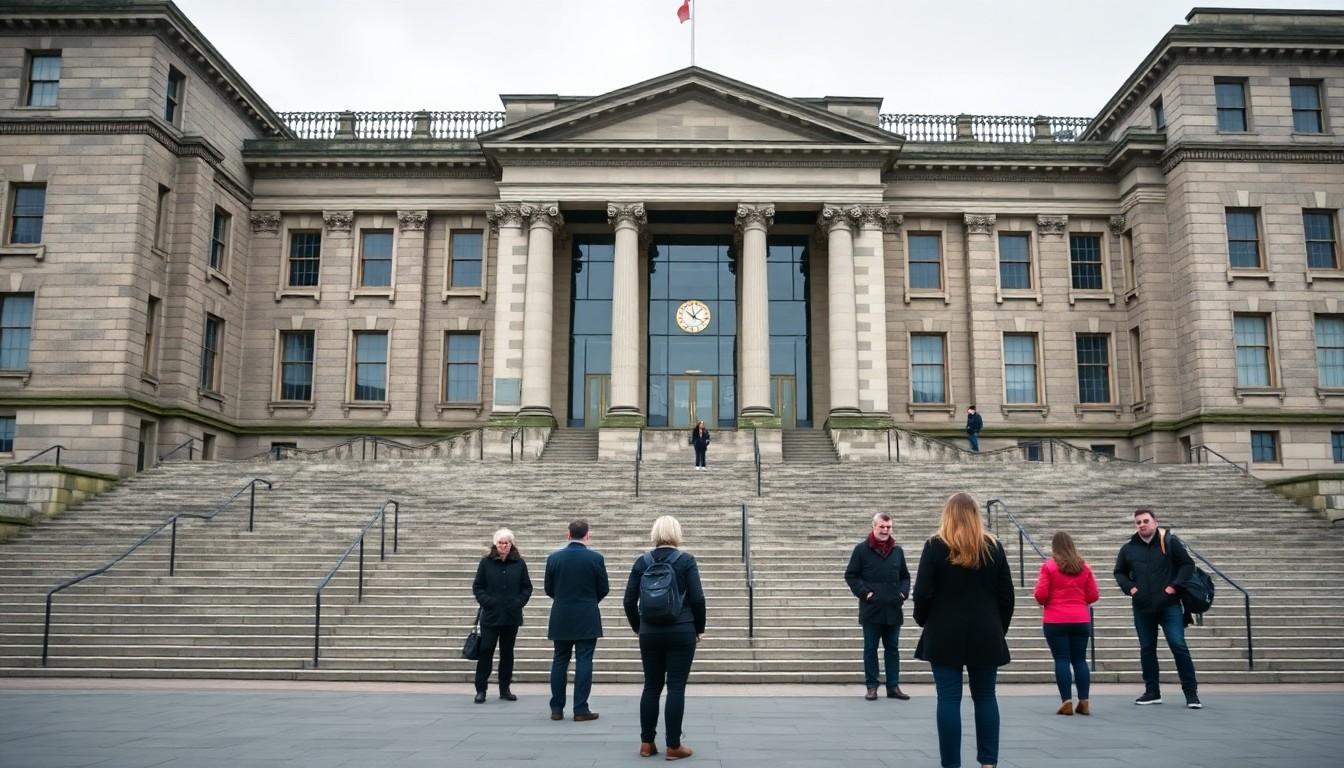
Stormont MLAs are sharply divided over an Alliance proposal to criminalise conversion practices in Northern Ireland, with supporters highlighting protection from abuse and opponents warning that unclear wording could affect parents, teachers and faith leaders. The argument now centres on how gender identity would be defined in law.
Essential Takeaways
- The proposal: The Bill targets practices intended to change or suppress sexual orientation or gender identity.
- The central dispute: Unionist MLAs say gender identity isn't clearly defined enough for criminal law.
- Family concerns: Critics fear ordinary conversations between parents and children could trigger complaints or investigations.
- Supporters' case: Amnesty argues the law should cover harmful religious practices linked to conversion attempts.
- Why it matters: The debate pits protection from coercion against concerns about free speech, religion and family life.
Stormont's conversion practices debate turns on one phrase
The most contentious words in the debate aren't necessarily "conversion practices". They're "gender identity". At Stormont, that phrase has become the hinge on which arguments about criminal liability, parental guidance and personal freedom are turning.
Alliance MLA Eóin Tennyson's Conversion Practices (Criminalisation) Bill would outlaw behaviour aimed at changing or suppressing someone's sexual orientation or gender identity. Supporters say that's a necessary safeguard against degrading or coercive treatment, while critics say the proposal risks placing a subjective concept at the centre of criminal law.
According to UTV, the Assembly debate exposed a deep divide over whether the Bill's wording gives people enough certainty about what conduct could be investigated. That's a serious question when the possible consequences include prosecution and imprisonment.
Why parents and churches are raising the alarm
Opposition has focused heavily on family conversations. Critics argue that a parent trying to discuss a child's feelings, offer advice or express a religious view could face uncertainty about where lawful support ends and prohibited conduct begins.
The Daily Sceptic reported warnings that parents, preachers and teachers could be caught by the legislation. Those claims have helped shift the conversation away from the most extreme forms of coercion and towards everyday interactions around the kitchen table, in classrooms and inside places of worship.
The concern isn't simply whether the Bill contains defences. As UUP leader Jon Burrows argued during the Assembly debate, a defence may only become relevant after a complaint has been made and investigated. For families, that possibility alone could make sensitive conversations feel legally risky.
Supporters say protection must include religious settings
Campaigners backing stronger legislation say the focus should remain on harm, not on ordinary disagreement or respectful discussion. Amnesty has argued that a ban in Northern Ireland must include harmful religious practices, particularly where prayer, counselling or spiritual authority is used to pressure someone to change who they are.
That distinction matters. A law can protect freedom of belief while still addressing intimidation, manipulation and degrading treatment, but its definitions need to be clear enough for people to understand the boundary.
The challenge is especially sharp in a society where churches and community organisations play a visible role in pastoral care. Supporters believe faith settings shouldn't receive a blanket exemption; opponents fear that legitimate religious expression could be drawn into criminal investigations.
The legal uncertainty is driving the political row
Unionist MLAs have questioned whether the Assembly should advance legislation containing a term they say isn't properly defined. Phillip Brett argued that personal self-description shouldn't automatically form the basis for investigating or prosecuting another citizen.
Diane Dodds also raised the absence of an equality impact assessment, according to reporting carried by the News Letter. The Bill's explanatory notes say engagement with the Equality Commission did not identify potential adverse effects and suggested the proposal could benefit some groups, but that hasn't settled the political argument.
Christian Concern has separately warned that the Bill could embed self-identification in law and create uncertainty for parents and professionals. Whether those fears are legally justified will depend on the final wording, but politically they're proving difficult to brush aside.
What happens next for the Bill?
The debate is still at the scrutiny stage, so the text could be amended as MLAs examine definitions, safeguards and enforcement. The most important questions are likely to include how intent would be established, what counts as coercion, and how the law would distinguish harmful conduct from discussion, advice or prayer.
Supporters will want the legislation to avoid loopholes that allow damaging practices to continue under softer labels. Critics will press for precise language, clear exemptions where appropriate and stronger evidence that ordinary family and faith conversations won't be chilled.
Northern Ireland's argument reflects a wider dilemma: people need protection from abuse, but criminal law must also be predictable. Getting that balance right won't be helped by slogans on either side. It will require careful drafting, open scrutiny and a willingness to test every clause against real life.
It's a debate where clarity matters as much as compassion.
Source Reference Map
Story idea inspired by: [1]
Sources by paragraph:
- Paragraph 1: [2], [6]
- Paragraph 2: [3], [4]
- Paragraph 3: [7], [5]
- Paragraph 4: [2], [4]
- Paragraph 5: [3], [7]
- Paragraph 6: [5], [2]
- Paragraph 7: [1], [6]
- Paragraph 8: [7], [3]
- Paragraph 9: [2], [4]
- Paragraph 10: [1], [6]
- Paragraph 11: [5], [7]
- Paragraph 12: [2], [3]
- Paragraph 13: [4], [6]
- Paragraph 14: [1], [5]
- Paragraph 15: [2], [7]
- Paragraph 16: [3], [4]
- Paragraph 17: [5], [6]