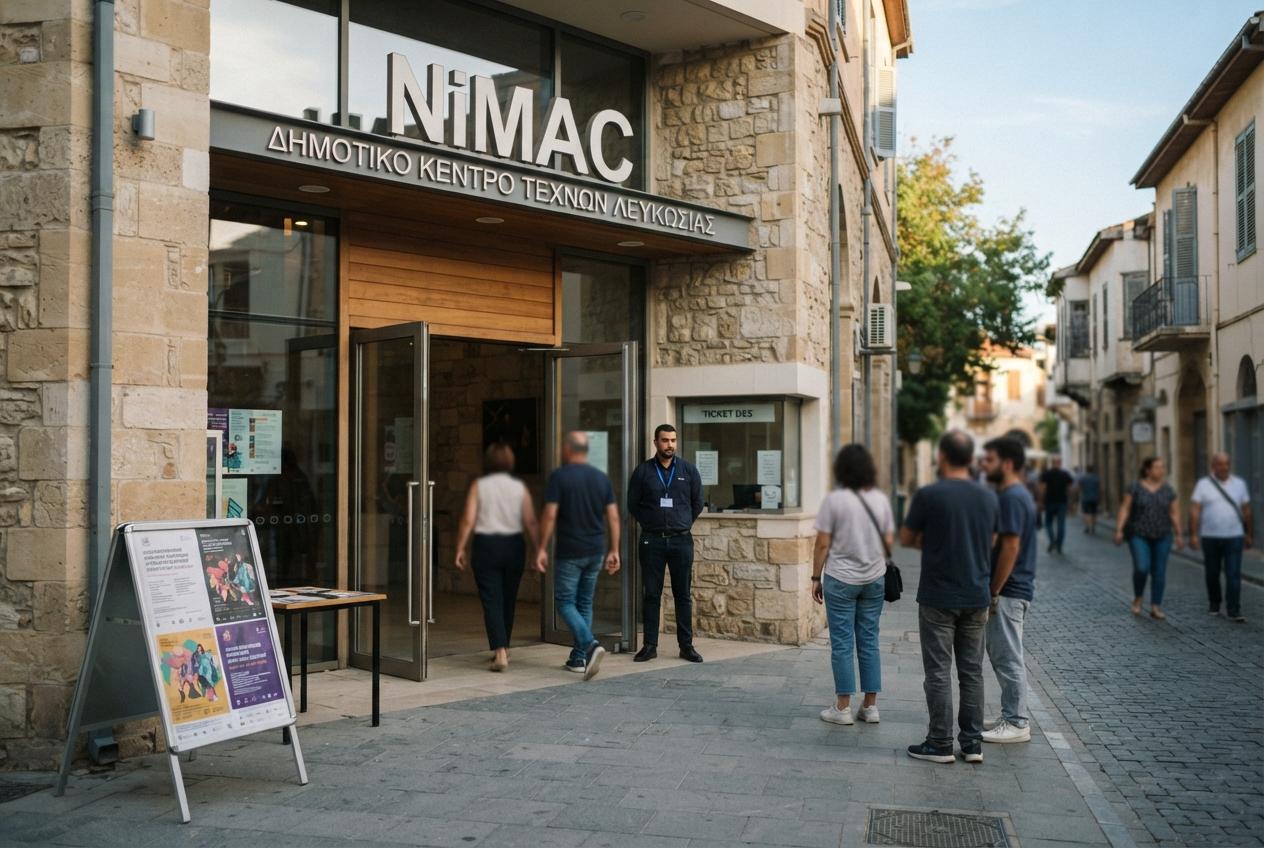
Audiences across Cyprus are getting ready for Queer Wave 2026, a film festival pairing international queer cinema with performances, exhibitions and cross-community conversations. Returning to Nicosia’s NiMAC from 18 to 27 September, the event matters because it offers stories and perspectives that mainstream screens have too often left out.
Essential Takeaways
- A growing festival: Queer Wave began online during the pandemic and has expanded into a wider cultural event.
- More than films: The programme includes screenings, live performances, visual art and side events.
- A broad audience: Organisers say the festival attracts everyone from Gen Z viewers to people aged 70 and above.
- A bicommunal focus: Turkish Cypriot artists and audiences remain an important part of its mission.
- A space for questions: The festival aims to unsettle fixed assumptions rather than provide tidy answers.
Queer cinema finally has room to breathe
There’s something quietly powerful about finding a film that makes a familiar world look different. That sense of discovery sits at the heart of Queer Wave, Cyprus’s LGBTQIA+ film festival, which returns to NiMAC in Nicosia this September.
According to the festival’s organisers, Queer Wave 2026 will run from 18 to 27 September, bringing together films, performances and accompanying events. The festival has grown from a pandemic-era online edition into a more established cultural platform, with a programme designed to reach beyond specialist audiences.
That wider appeal matters. Queer cinema isn’t simply a category for people who already identify as queer. It can also be an invitation to reconsider the assumptions many of us carry about love, family, gender, bodies and belonging.
From quantum physics to a new film culture
The festival’s artistic director, Diego Armando Aparicio, arrived at cinema by a less-than-obvious route. After studying physics in London, completing a master’s in quantum technologies and working in medical physics, he found himself increasingly drawn towards alternative film festivals and the different realities they put on screen.
That personal journey helped shape Queer Wave. Rather than treating queer as a fixed label, Aparicio describes it as something that keeps changing according to place, history and lived experience. In Cyprus, he argues, sexuality and gender are also shaped by class, heritage, race and geography.
The idea gives the festival a distinctive edge. It isn’t only interested in representation as a tick-box exercise. Instead, it asks what happens when a film refuses neat categories, or when a story makes its audience sit with uncertainty for a while.
A festival that keeps expanding
Queer Wave’s first edition took place online in 2020, when the pandemic made conventional screenings impossible. Since then, its programme has widened to include drag artists, musicians and visual artists, helping it connect with communities beyond the usual film crowd.
Earlier festival editions have included major international titles. Queer Cyprus and Rialto Theatre, for instance, highlighted the 2022 launch with Flee, the Oscar-nominated animated documentary about a refugee’s journey. That choice reflected the festival’s interest in films where sexuality, migration, identity and displacement overlap.
Industry details suggest the 2026 edition is also benefiting from stronger organisational foundations. Politis reported that the festival is returning to NiMAC, while Queer Wave’s team information underlines the collaborative network behind the event. That professional growth may sound unglamorous, but it’s crucial: ambitious cultural work needs time, paid labour and a team large enough to handle it properly.
Why the audience keeps getting wider
The festival’s appeal now stretches well beyond one age group. Younger viewers, particularly those from Gen Z, are engaging with queer subjects more openly, while older audiences are also turning up for films and conversations that may not have been readily available to them before.
That mixture gives Queer Wave an atmosphere quite unlike a narrowly defined campaign event. A packed screening can bring together students, artists, long-standing LGBTQIA+ activists and curious newcomers who simply want to see something they wouldn’t find at a multiplex.
The programme also reflects a more expansive understanding of queer cinema. It includes stories involving trans lives, sapphic relationships, femininities and intersectional experiences, rather than relying on a single familiar template. In practical terms, that means audiences can expect variety in tone as well as subject, from intimate dramas to challenging, formally adventurous work.
A meeting point across Cyprus
Queer Wave’s bicommunal character is one of its most meaningful features. The festival has worked to include Turkish Cypriot filmmakers, musicians and artists, treating collaboration across the island’s communities as part of its cultural purpose rather than an optional extra.
The challenge became especially clear during the online 2020 edition, when film rights did not always allow access across all parts of Cyprus. That technical obstacle exposed a deeper issue: even digital culture can reproduce the island’s divisions unless organisers actively work around them.
The festival’s history of protest and vandalism also shows why this visibility still matters. Queer Cyprus and Oualla reported damage to Queer Wave banners in Kaymakli, with supporters making clear that intimidation would not silence the event. The reaction is a reminder that cultural space can feel both welcoming and contested at the same time.
Come for the films, leave with questions
A strong festival doesn’t need to tell viewers what to think. It can simply place an unexpected story in front of them and allow the discomfort, empathy or curiosity to unfold.
That seems to be Queer Wave’s ambition. Its artistic director has spoken about selecting films for their emotional force, authenticity and ability to leave audiences thinking after the credits. The most effective choices may not be the easiest ones, but they can open conversations that commercial cinema often avoids.
For anyone planning a visit, the simplest approach is to browse the full programme at queerwave.com, choose a mix of familiar and unfamiliar subjects, and leave room for a surprise. Your first choice might be a film. Your most lasting takeaway could be a question.
It's a small but significant space for stories that Cyprus still needs to see.
Source Reference Map
Story idea inspired by: [1]
Sources by paragraph:
- Paragraph 1: [6], [7]
- Paragraph 2: [2], [3]
- Paragraph 3: [6], [7]
- Paragraph 4: [2], [3]
- Paragraph 5: [6], [7]
- Paragraph 6: [2], [3]
- Paragraph 7: [6], [7]
- Paragraph 8: [4], [5]
- Paragraph 9: [4], [5]
- Paragraph 10: [6], [7]
- Paragraph 11: [2], [3]
- Paragraph 12: [6], [7]
- Paragraph 13: [4], [5]
- Paragraph 14: [6], [7]
- Paragraph 15: [2], [3]
- Paragraph 16: [6], [7]