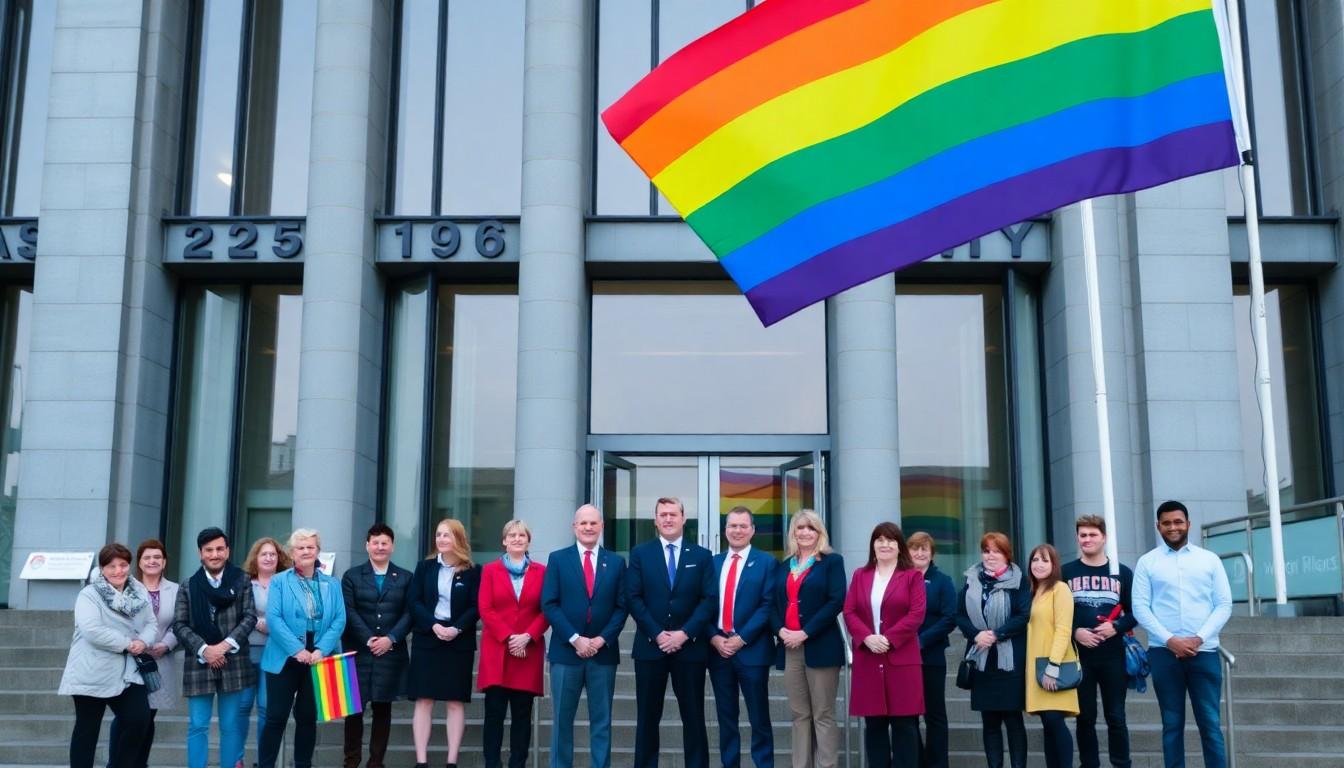
Stormont members are preparing to debate Northern Ireland's proposed conversion practices ban, a landmark move supporters say could protect LGBT people from coercive harm. But with unionist opposition and concerns about free speech, the bill's first major test is likely to be as politically charged as the issue itself.
Essential Takeaways
- First Stormont debate: Assembly members are set to consider the private member's bill for the first time.
- Possible prison sentence: The proposed law could bring penalties of up to two years in prison.
- Support and opposition: Sinn Fein and the SDLP are expected to back it, while the DUP has raised concerns about civil liberties.
- Central dispute: Supporters focus on protection from abuse; critics fear the law could criminalise legitimate conversations.
- Wider context: UK government proposals also describe conversion practices as harmful and seek stronger safeguards for LGBT people.
Stormont faces a defining vote on conversion practices
The bill's arrival at the Assembly puts a deeply personal issue into a formal political arena. At its heart is a question that has troubled lawmakers across the UK: when does an attempt to influence someone's sexuality or gender identity become coercion, abuse or a criminal act?
Alliance deputy leader Eoin Tennyson brought forward the private member's legislation. Supporters say it would give people protection from practices intended to change or suppress who they are, rather than policing ordinary discussion or personal advice. The Northern Ireland Assembly's bill information sets out the measure's progress and legislative detail. (Northern Ireland Assembly)
The proposed maximum sentence of two years in prison gives the debate a serious edge. This isn't simply a statement of intent, but a proposal with potentially life-changing consequences for anyone found guilty. (BBC News)
Why supporters say new protection is needed
Advocates argue that conversion practices can involve pressure, manipulation and emotional harm, often directed at people who are already vulnerable. Government consultation material has recorded experiences in which individuals described attempts to alter their sexual orientation or gender identity as damaging and distressing. (UK Government)
The language matters. Supporters aren't presenting the bill as a ban on every conversation about identity, faith or personal change. Instead, they say the focus should be on conduct that is coercive, abusive or deliberately designed to suppress a person's identity.
UK government proposals have similarly framed a conversion practices ban as a measure to protect LGBT people from abuse. The challenge, however, is turning that principle into wording that is clear enough for courts, families, therapists and community organisations to understand. (UK Government)
Critics warn of unintended consequences
The Democratic Unionist Party has described the bill as a threat to freedom, reflecting wider concerns that the legislation could reach beyond abusive conduct. Critics fear people might be investigated or prosecuted for offering counselling, discussing religious beliefs or helping someone explore difficult questions about identity.
That concern is also tied to how consent is understood. Opponents argue that gay and trans people should be free to make decisions about their own lives, including decisions that others might regard as unwise or outdated. The government's draft impact assessments show why issues around rights, definitions and enforcement have been central to the policy debate. (UK Government)
For supporters, that argument risks placing too much weight on a person's apparent agreement in situations where pressure or dependency may be involved. For critics, it raises the opposite fear: that the state could decide which conversations are acceptable. That tension will sit at the centre of Stormont's scrutiny.
What the bill could mean in practice
The key test will be the definition of conversion practices. A law that is too broad could chill legitimate conversations, while one that is too narrow might leave people exposed to coercion disguised as counselling, pastoral care or personal guidance.
The UK government's draft legislation and assessments offer useful context, particularly around how policymakers have considered equality impacts and possible effects on different groups. Those documents underline the importance of safeguards, precise language and clear enforcement guidance. (UK Government)
Anyone following the debate should look beyond the headline penalty and examine the bill's definitions, exemptions and evidence requirements. In practice, those details will determine whether the legislation targets abusive behaviour without sweeping ordinary support, questioning or healthcare into the same category.
A political test as well as a legal one
Unionist parties are expected to oppose the proposal, while Sinn Fein and the SDLP are believed to support it. That makes the debate a useful gauge of how Stormont parties approach LGBT rights, personal liberty and criminal law in a period when social issues remain politically sensitive. (BBC News)
The bill is being advanced by an Alliance politician, but its outcome will depend on a coalition of support that crosses party and community lines. That won't be easy. Conversion practices have strong emotional and religious associations, and the arguments are rarely as tidy as the slogans.
Still, supporters believe the central principle is straightforward: no one should be pressured or abused for being LGBT. Critics will insist that protection must not come at the cost of freedom. Stormont's task is to decide whether the proposed wording can hold both ideas together.
The first debate won't settle the issue, but it will show whether Northern Ireland is ready to move from broad agreement that abuse is wrong to a precise legal response.
It's a closely watched step towards deciding where protection ends and criminalisation begins.
Source Reference Map
Story idea inspired by: [1]
Sources by paragraph:
- Paragraph 1: [2], [4]
- Paragraph 2: [3], [7]
- Paragraph 3: [1], [2]
- Paragraph 4: [4], [5]
- Paragraph 5: [6], [7]
- Paragraph 6: [3], [6]
- Paragraph 7: [4], [5]
- Paragraph 8: [3], [6]
- Paragraph 9: [2], [5]
- Paragraph 10: [1], [4]
- Paragraph 11: [2], [3]
- Paragraph 12: [5], [6]
- Paragraph 13: [1], [2]
- Paragraph 14: [3], [7]
- Paragraph 15: [4], [6]
- Paragraph 16: [2], [5]
- Paragraph 17: [1], [4]
- Paragraph 18: [3], [7]