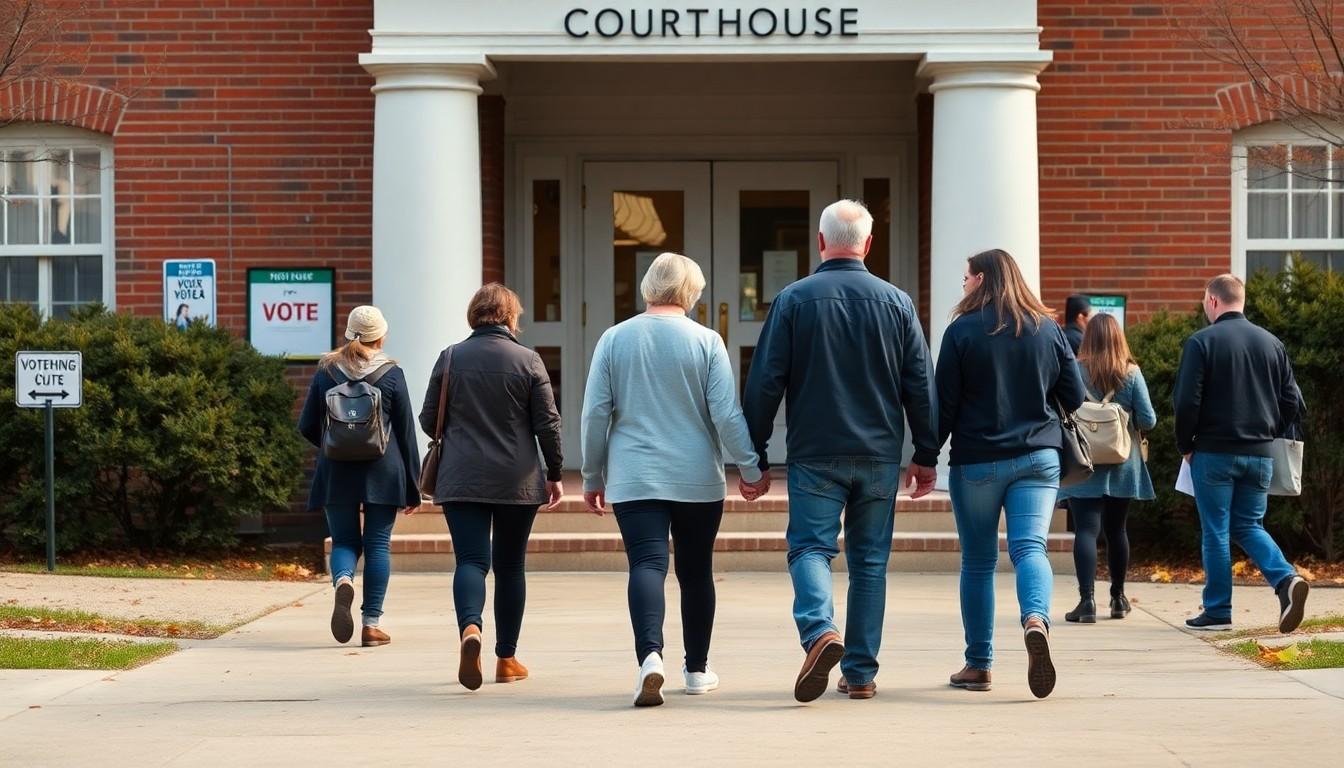
Virginia voters will decide whether to remove the state’s unenforceable same-sex marriage ban and affirm marriage rights for all consenting adults. The proposed constitutional amendment follows years of campaigning, shifting public opinion and renewed concern over the future of marriage equality, giving couples and advocates a chance to replace a dormant restriction with an explicit protection.
Essential Takeaways
- The ballot question: Voters will decide whether to repeal Virginia’s constitutional ban on same-sex marriage.
- What would change: The amendment would affirm marriage between two consenting adults, regardless of sex, gender or race.
- Why now: The existing ban has been unenforceable since 2014, but it remains written into the state constitution.
- The wider concern: Advocates worry that a future Supreme Court reversal of federal protections could expose dormant state bans.
- When to vote: Early voting begins on Friday, with Election Day on 3 November.
Virginia's dormant marriage ban is finally back in focus
For Bob Connelly and Bob Witeck, the word “husband” always felt right, even when Virginia law refused to recognise their relationship that way. They met in 1994, built a life together in Arlington and waited two decades before they could make that title official.
The couple married in 2014, after a federal judge struck down Virginia’s same-sex marriage prohibition. Their wedding took place on the anniversary of the day they met, a neat piece of timing that made an already emotional moment feel even more personal. The wider campaign to remove the old ban now draws on stories like theirs, according to The 19th News.
Virginia’s prohibition has had no legal force since 2014, and the Supreme Court’s 2015 decision in Obergefell v. Hodges established a nationwide right to marry for same-sex couples. Yet the wording remains embedded in the state constitution. That legal limbo can feel less like history and more like a loose wire left exposed.
What the proposed amendment would do
The proposed measure would repeal Virginia’s constitutional definition of marriage as being only between a man and a woman. It would also establish an affirmative right to marry for two consenting adults, without regard to sex, gender or race.
That distinction matters. Removing discriminatory language is one thing; replacing it with clear, positive protection is another. Campaigners argue that an express right would offer stronger reassurance than simply relying on a court ruling that could one day be reconsidered.
The proposal reached the ballot after gaining approval in the legislature through the constitutional amendment process. Virginia requires proposed amendments to pass both the House and Senate twice before voters can decide, according to the legislative tracking information published by Keeping Law Simple.
Why advocates say the timing matters
Supporters aren't treating the vote as a ceremonial tidy-up. They point to the Supreme Court’s current conservative majority, the reversal of the federal abortion right in Dobbs v. Jackson Women’s Health Organization and past criticism of Obergefell from Justices Clarence Thomas and Samuel Alito.
The Respect for Marriage Act, passed with bipartisan backing in 2022, requires states to recognise existing same-sex and interracial marriages. But advocates say it doesn't create exactly the same security as a state constitution that expressly protects marriage equality. If the legal landscape shifts, dormant state bans could become politically and legally important again.
The Movement Advancement Project has identified similar unenforceable bans in 24 states. Nevada, California, Colorado and Hawaii have already removed theirs, part of a broader effort to clear out what campaigners describe as “zombie laws”. According to the organisation, concern about the durability of Obergefell has encouraged more states to revisit language that had been left untouched.
A campaign shaped by changing public opinion
The amendment has attracted support from marriage-equality organisations and Democratic lawmakers, including Mark Sickles, who helped introduce the proposal. Sickles has described the process as a full-circle moment after witnessing Virginia approve its marriage ban in 2006.
At that time, 57 percent of voters backed the restriction. The political mood has changed considerably since then. Gallup found that 65 percent of Americans supported same-sex marriage in June, although supporters in Virginia still expect a serious campaign against the proposal.
The Family Foundation, which supported the original ban, is opposing repeal. Its arguments connect the amendment with wider disputes over transgender rights, girls’ sport and religious freedom, while other opponents are presenting it alongside a separate reproductive-rights measure. That strategy could make a straightforward question about marriage rights feel more tangled on the campaign trail.
Couples see more than symbolism on the ballot
For Sidrah Marotti and Wynn Maravilla, a newly engaged couple living in Richmond, the continued presence of Virginia’s ban came as a surprise. They had assumed that marriage equality was settled because Obergefell had been part of their adult lives.
Their reaction captures the generational shift around the issue. Younger couples may know marriage equality as the normal legal backdrop to their relationships, rather than remembering the uncertainty that came before it. But Marotti said the security still feels fragile, particularly because court precedent is doing the work that constitutional language could do more directly.
That unease is shared by campaigners who want Virginia to join the states that have removed their bans. The vote won't rewrite the couples’ personal histories, but it could change the legal message future couples receive when they look at the state constitution. Sometimes a symbolic line matters precisely because people shouldn't have to wonder whether it might come back.
What Virginia voters need to know
Early voting begins on Friday, and Election Day is 3 November. Voters should check their registration, polling arrangements and the precise wording of the proposed amendment before casting a ballot, particularly because the marriage question appears alongside other high-profile measures.
The practical issue is simple: Virginia's current ban cannot be enforced, but repeal would remove it from the constitution and replace it with an explicit guarantee. For couples planning a wedding, already married or simply looking for legal certainty, that difference carries real emotional weight.
Virginia has long traded on the slogan “Virginia is for lovers”. This vote asks whether the state’s constitutional language should finally catch up with it.
A clear vote could turn an unenforceable ban into a piece of history.
Source Reference Map
Story idea inspired by: [1]
Sources by paragraph:
- Paragraph 1: [2], [3]
- Paragraph 2: [4], [5]
- Paragraph 3: [6], [7]
- Paragraph 4: [2], [5]
- Paragraph 5: [3], [6]
- Paragraph 6: [4], [7]
- Paragraph 7: [2], [5]
- Paragraph 8: [3], [6]
- Paragraph 9: [4], [7]
- Paragraph 10: [2], [5]
- Paragraph 11: [3], [6]
- Paragraph 12: [4], [7]
- Paragraph 13: [2], [5]
- Paragraph 14: [3], [6]
- Paragraph 15: [4], [7]