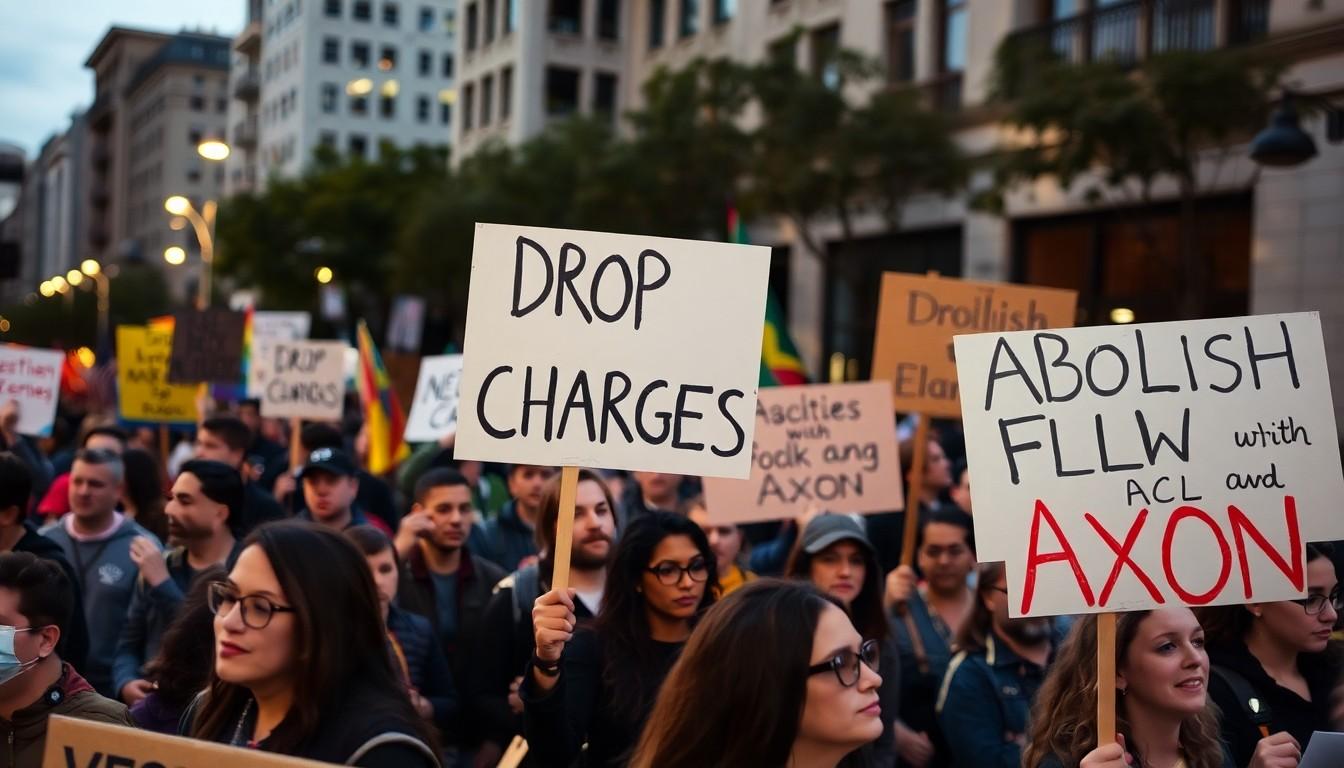
Protesters in San Francisco are calling for charges to be dropped and policing technology to be abolished at a demonstration linked to Brooke Jenkins and Manny Yekutiel. The action reflects wider anger over alleged sexual assault, political accountability and the city’s growing reliance on surveillance tools such as Flock and Axon.
Essential Takeaways
- Protest planned: Organisers listed 5.30pm on 21 September at 16th Street and Valencia.
- Main demands: The action calls for charges to be dropped, Brooke Jenkins to be abolished from office and policing technologies to be scrapped.
- Wider controversy: Manny Yekutiel has faced public allegations of sexual assault, which he has denied.
- Political pressure: Coverage has examined how local Democrats handled the allegations and whether the party could endorse Yekutiel.
- Safety advice: Organisers asked attendees to wear masks and prepare to make noise.
Why the protest is gaining attention
The planned demonstration is set to combine two highly charged San Francisco debates: police accountability and the treatment of sexual-assault allegations in political circles. Its organisers are urging supporters to gather near 16th Street and Valencia, framing the event as a direct challenge to what they describe as an increasingly punitive vision of public safety.
That language is deliberately confrontational. It speaks to activists who argue that safety cannot be separated from the conduct of police, prosecutors and political institutions. Reports by the San Francisco Standard have separately detailed allegations involving Yekutiel, bringing fresh scrutiny to the people and organisations around him. [2], [4]
The protest announcement also refers to arrests at Trans March and Stud Alley, although the post doesn't provide an independent account of those incidents. For readers trying to understand the dispute, that distinction matters: the event is an activist call to action, not a neutral incident report.
The allegations surrounding Manny Yekutiel
The controversy around Yekutiel centres on an allegation dating back to 2020. The San Francisco Standard reported that a political activist accused him of sexual assault, while later coverage examined the response to the complaint and the handling of an assault hotline report. [3], [5]
Yekutiel has denied the allegation. The case has nevertheless continued to attract attention because it sits at the intersection of nightlife, local politics and party organisation. A civic venue can be a warm, informal space, but that familiarity can also make questions about power, access and accountability feel especially uncomfortable.
The reporting has also raised questions about whether political bodies can investigate claims fairly when the person involved is part of the local political ecosystem. The San Francisco Chronicle has covered the allegations and their impact on Yekutiel's public profile, while Standard reporting has explored the Democratic Party's internal review. [6], [7]
Why Brooke Jenkins and policing technology are part of the same argument
The protest is also aimed at District Attorney Brooke Jenkins, whose approach to public safety has made her a lightning rod for critics of tough-on-crime politics. Organisers accuse her office and the wider criminal justice system of using prosecution and surveillance in ways that disproportionately harm queer and trans people.
Flock cameras and Axon systems have become shorthand in the announcement for a broader concern: that policing is becoming more data-driven without necessarily becoming more accountable. These tools can help investigators piece together events, but campaigners worry about retention, access and the possibility that surveillance expands faster than public oversight.
That debate is bigger than one rally. People want safer streets, but they also want to know who controls the footage, how long it is kept and what safeguards exist when the technology is used around protests. Those are practical questions, not merely slogans.
What attendees and observers should know
The organisers listed a 5.30pm start at 16th Street and Valencia, and encouraged participants to wear masks and make noise. Anyone considering attending should check for last-minute updates, travel disruption and any guidance from the organisers before setting out.
It’s also worth remembering that a protest announcement reflects the views of the group issuing it. The allegations involving Yekutiel remain allegations, and coverage from the Standard and Chronicle should be read alongside responses from the people named. That doesn't lessen the seriousness of the claims, but it keeps the facts and the rhetoric in their proper lanes.
For local residents, the event may mean temporary congestion and a visible police presence. For activists, it represents a chance to connect individual cases to a broader demand for institutional change.
A test of political accountability
The strongest thread running through the story is not simply whether one event is noisy or disruptive. It’s whether San Francisco’s political institutions can respond credibly when allegations involve well-connected figures, while also addressing public concerns about policing and surveillance.
The Democratic Party’s handling of the matter has already faced scrutiny, according to reporting from the San Francisco Standard. Any future endorsement or investigation is likely to be judged not only on its outcome, but on how transparent and independent the process appears. [2], [7]
That’s why the demonstration may resonate beyond its stated meeting point. In a city accustomed to fierce political arguments, the harder question is whether public safety can include both protection from violence and protection from unchecked power.
Explore the claims, responses and protest details carefully before deciding how you’ll engage.
Source Reference Map
Story idea inspired by: [1]
Sources by paragraph: