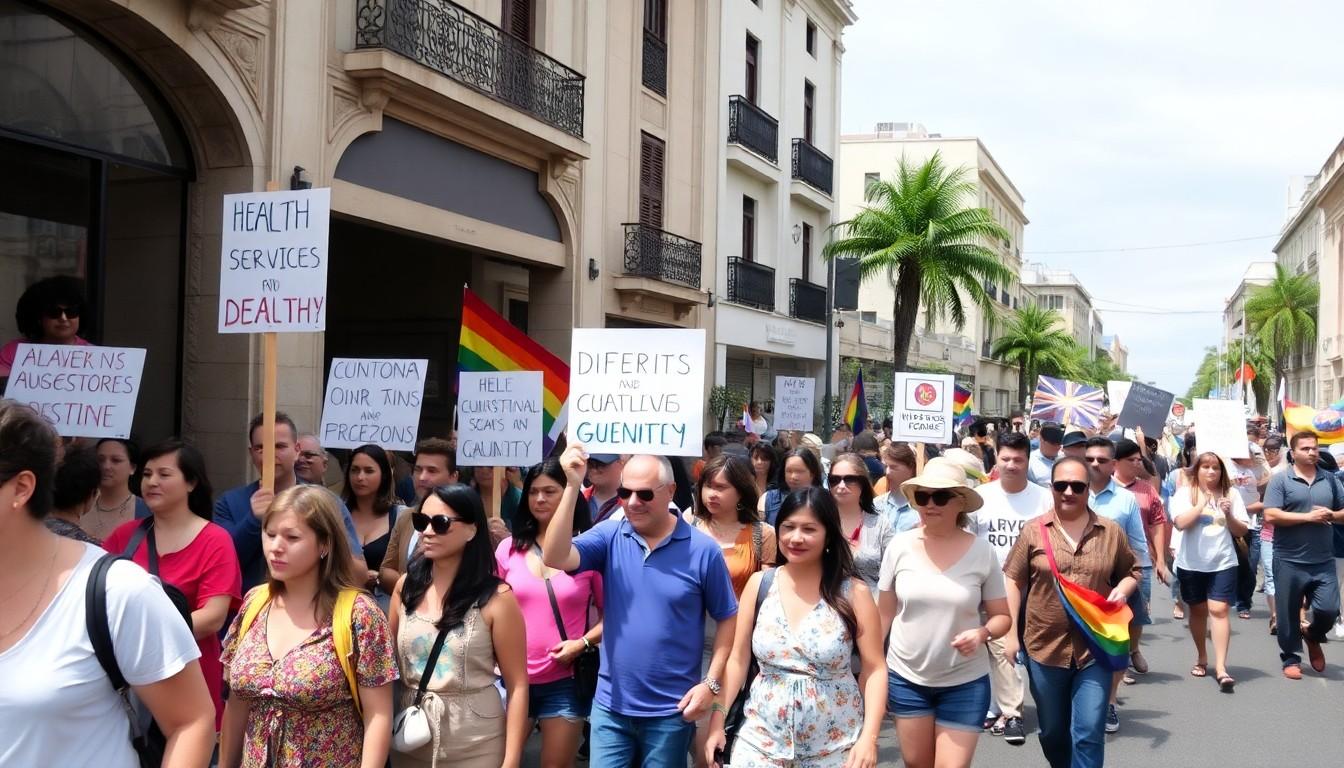
Campaigners, families and allies gathered in San Carlos, Uruguay, for the sixth Diversity March, calling for visibility, equality and stronger protection of LGBTI+ rights amid growing concern about hate speech and regional setbacks. The event combined protest, health support, music and community solidarity.
Essential Takeaways
- A visible show of solidarity: The march brought together LGBTI+ campaigners, families and supporters in central San Carlos.
- Resistance was the message: Organisers warned about hate speech, online disinformation and threats to human rights.
- Health support was available: Attendees could access sexual health information and rapid HIV and syphilis testing.
- Rights remain a priority: Speakers called for trans employment quotas, healthcare access and rights-based education.
- Community came first: Music, crafts, fundraising and local organisations made the event feel welcoming as well as political.
San Carlos turns visibility into action
San Carlos filled with colour and music as campaigners took part in the sixth Diversity March, organised by Rainbow Families and Coordinadora Carolinos Diversos. The procession began at Artigas Square before moving through the town centre and returning for performances and the reading of the organisers' statement.
The atmosphere was celebratory, but the purpose was serious. According to local coverage, this year's theme, "Diversity in Resistance, visible and with a voice", reflected concern over a louder anti-LGBTI+ climate in parts of the region and beyond.
That balance matters. Pride events can be joyful and still carry a clear warning: rights aren't self-sustaining, and visibility remains a form of protection. Related reporting from Montevideo.com.uy also placed the San Carlos gathering within Uruguay's wider national Pride calendar.
Why organisers chose a message of resistance
Juan Martín Sánchez of Rainbow Families said the slogan responded to the spread of hate speech and policies that could weaken human rights protections. He also pointed to the role of social media, where automated accounts and misleading narratives can amplify hostility quickly.
Uruguay's institutional situation was described as relatively stable, but campaigners remain uneasy about online abuse and political rhetoric. The concern isn't abstract. When false claims repeatedly portray minorities as dangerous or less deserving, they can make discrimination appear normal.
The march therefore offered a straightforward answer: stay visible, organise locally and challenge misinformation before it hardens into policy. Coverage from Portada and FM Gente similarly presented the event as a significant community gathering rather than a symbolic parade alone.
Healthcare and employment stay high on the agenda
The organisers' platform also highlighted practical barriers facing trans people. These included delays affecting gender-affirming surgery, the need to enforce employment quotas under Uruguay's comprehensive trans law and the importance of widening opportunities in the private sector.
A sexual health stand run by San Carlos Hospital and local primary care services offered information and rapid tests for HIV and syphilis. It was a useful reminder that community events can connect people with services they may otherwise struggle to find or approach.
Education was another central demand, with calls for adequate funding and a stronger human-rights perspective. The platform also raised mental health and suicide rates in Maldonado, linking equality work with broader public health concerns.
A march with music, memory and mutual aid
The programme stretched well beyond the procession. Craft stalls, performances and local dance brought a warm, informal energy to the square, while a stand focused on recent historical memory kept attention on state terrorism, disappeared people and the continuing demand for truth and justice.
Performers included Clarissa Crohn Oxymoron, Luciano Estrella, the Al Alba dance academy and the tropical band Los Sabrosos. Patricia Wolf helped set the tone before the march, while DJ Leandro Collins accompanied the route.
There was also a fundraising collection for Valentino, a young child from the department who needs costly treatment for a congenital condition. That detail says a lot about the event's character: the organisers weren't treating solidarity as a slogan, but as something practical and immediate.
Local recognition and a wider national picture
The formal ceremony recognised transfeminist leader Josefina González, doctor and lecturer Daniel Turco Márquez, and teacher, writer and LGBTI+ activist Sheina Lee Leoni. Their inclusion underlined the range of people contributing to equality work, from public policy and medicine to education and activism.
Reporting by Montevideo.com.uy noted wider national interest in the San Carlos march, including the presence of the British ambassador. That attention gives the local event a broader profile, while its strongest impact remains close to home, in the networks built between residents, health workers, performers and campaigners.
For many attendees, the message was simple: celebrating progress is worthwhile, but protecting it requires continued participation. In San Carlos, that work arrived with banners, testing kits, dancing and a determined walk through town.
It's a small-city march with a big reminder: visibility is strongest when a community moves together.
Source Reference Map
Story idea inspired by: [1]
Sources by paragraph: