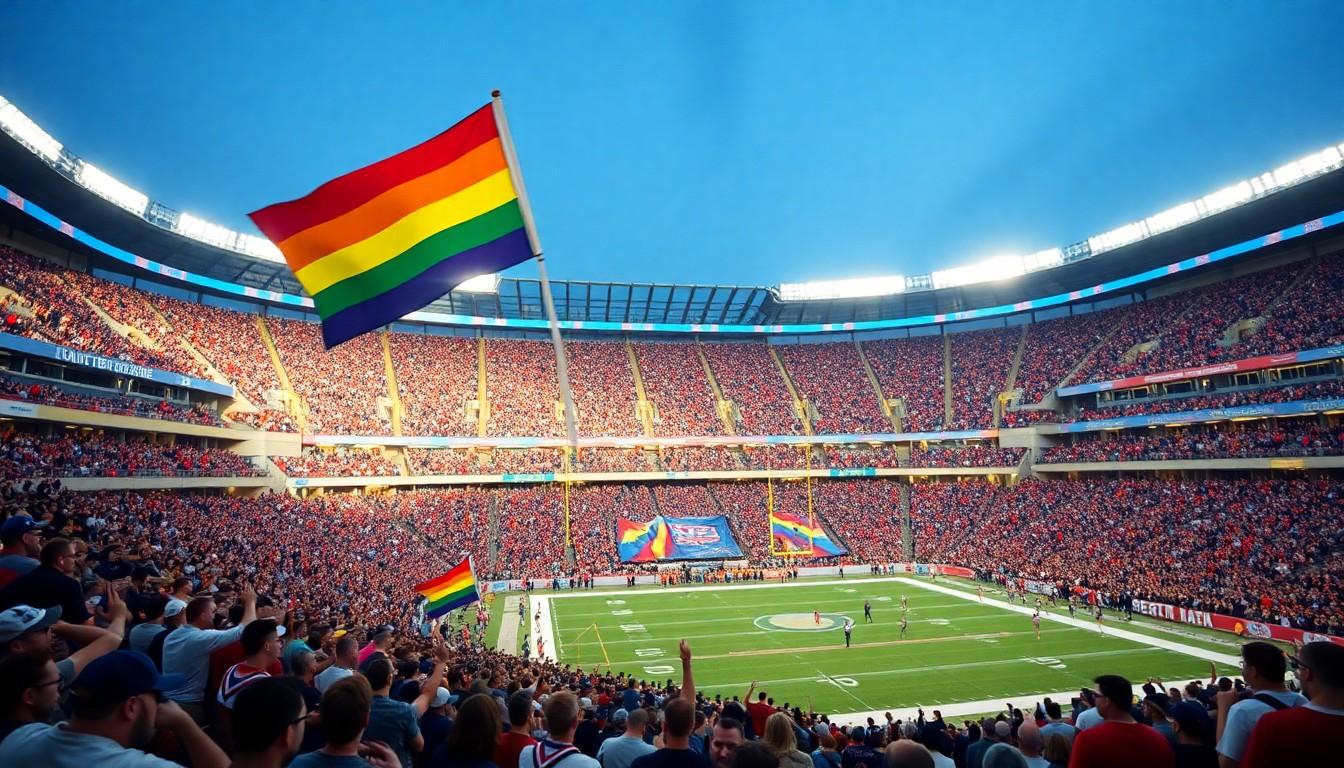
Fans are looking back at the NFL's LGBTQ+ history, from David Kopay's groundbreaking coming-out story to Michael Sam and Carl Nassib's public breakthroughs. These moments matter because they show how a league once defined by silence has slowly, unevenly, become more visible and welcoming to gay players, supporters and communities.
Essential Takeaways
- David Kopay led the way: The former NFL player became the first major American professional athlete to come out publicly as gay.
- Michael Sam made draft history: He was the first openly gay player selected in the NFL Draft.
- Carl Nassib broke new ground: His coming out made him the first openly gay active NFL player.
- Support has grown: Team owners, commissioners and LGBTQ+ flag-football communities have helped push inclusion into the spotlight.
- Progress remains incomplete: Only a small number of NFL players have come out publicly, highlighting the pressure still attached to professional sport.
David Kopay's decision changed American sport
Long before rainbow logos and inclusion campaigns became familiar sights across professional sport, David Kopay made a decision that carried enormous personal and professional risk. The former NFL running back came out publicly in 1975, becoming the first former professional athlete in a major American sport to do so.
That moment wasn't simply a football story. According to historical accounts from Axios and Queerty, Kopay faced a sporting culture where homosexuality was rarely discussed openly and where coming out could threaten a player's livelihood, reputation and relationships. His experience helped expose just how much courage was required to be visible.
Kopay's story also explains why later milestones carry such weight. Every player who stepped forward did so in a league shaped by the silence that came before him.
Michael Sam brought the issue to draft night
Michael Sam's announcement before the 2014 NFL Draft created a national conversation almost overnight. The Missouri defensive end had just been named the Southeastern Conference's co-defensive player of the year, and his decision made him the first openly gay prospect eligible for selection.
The St Louis Rams chose Sam in the seventh round, turning a personal revelation into one of the most watched moments in modern draft history. His selection was historic, but the attention surrounding it was intense, and the discussion often became bigger than his football career.
That tension still feels familiar. An athlete can want to be judged on performance, yet the significance of being first makes that almost impossible. Sam's story remains central to understanding the progress, pressure and uneven opportunity surrounding LGBTQ+ players in the NFL.
Carl Nassib made history while still active
In 2021, Carl Nassib became the first active NFL player to come out publicly as gay. The Las Vegas Raiders defensive end shared the news during Pride Month, pairing the announcement with a donation to an LGBTQ+ youth organisation.
The response from the league and teammates was largely supportive. Reporting from KESQ highlighted the significance of Nassib's announcement, while the wider reaction showed how different the public conversation had become since Kopay's era.
Still, one active player coming out publicly in a league of hundreds tells its own story. Nassib's announcement was encouraging, but it also underlined how difficult it remains for athletes to decide that openness is safe.
The NFL's support now reaches beyond the pitch
Inclusion in the NFL hasn't been limited to players. Commissioner Roger Goodell has spoken about his gay brother and used his position to argue that people connected to the league should be able to live openly. New England Patriots owner Robert Kraft has also supported LGBTQ+ flag football, including events linked to Boston's Gay Bowl.
That broader involvement matters because sport is shaped by more than match-day line-ups. Owners, coaches, broadcasters and supporters all help decide what feels normal inside a league. When senior figures show up publicly, it can make the conversation less abstract and more human.
There have been plenty of awkward, sensational and sometimes deeply silly off-field headlines along the way, too. But behind the noise is a serious shift: LGBTQ+ visibility is now part of the NFL's public identity rather than something kept entirely out of view.
What comes next for LGBTQ+ players?
The next meaningful step may be less about another headline-making first and more about making openness feel ordinary. Young players entering college football and the NFL shouldn't have to weigh their safety, contracts and careers against the simple act of telling the truth about themselves.
The available milestones suggest progress, but they also reveal the gap between institutional support and personal confidence. As coverage from Axios, Queerty and other outlets has shown, the path from Kopay to Sam and Nassib has been real, yet remarkably narrow.
For fans, the lesson is straightforward. Celebrate the breakthroughs, remember the people who took the earliest risks, and keep asking whether inclusion is reaching the changing room as well as the press release.
It's a long game, but the NFL's LGBTQ+ history is finally being played in public.
Source Reference Map
Story idea inspired by: [1]
Sources by paragraph:
- Paragraph 1: [2], [4]
- Paragraph 2: [5], [6]
- Paragraph 3: [2], [5]
- Paragraph 4: [3], [7]
- Paragraph 5: [3], [4]
- Paragraph 6: [3], [4]
- Paragraph 7: [4], [5]
- Paragraph 8: [6], [7]
- Paragraph 9: [2], [5]
- Paragraph 10: [3], [4]
- Paragraph 11: [5], [6]
- Paragraph 12: [2], [4]
- Paragraph 13: [3], [5]
- Paragraph 14: [4], [6]