Dayton-born writer Natalie Clifford Barney built a fearless lesbian life in Paris, where her poetry, romances and famous literary salon helped reshape queer cultural history. Now, as Ohio continues marking LGBTQ+ stories, her legacy is drawing fresh attention from readers, historians and visitors curious about one of the state’s most unconventional pioneers.
Essential Takeaways
- A Dayton original: Barney was born in Ohio in 1876 and later became a leading figure in Parisian literary life.
- Openly lesbian: Her writing and relationships made her sexuality unusually clear for the pre-Stonewall era.
- A cultural connector: Her long-running salon welcomed major writers and artists, while her Women’s Academy supported female authors.
- A landmark marker: Dayton’s Cooper Park marker was Ohio’s first official LGBTQ+ historical marker.
- A legacy still growing: Ohio’s Gay Ohio History Initiative is working to preserve and publicise more queer stories.
Dayton’s forgotten literary daughter deserves a second look
Long before rainbow plaques and official heritage trails, Natalie Clifford Barney was living a boldly self-defined lesbian life between Dayton and Paris. She wrote about women, loved women and gathered some of the era’s most influential literary figures around her table. The image is wonderfully vivid: a wealthy Ohio heiress in a French villa, turning private connection into public cultural force.
Her birthplace mattered, but so did what she did with the advantages she inherited. As CityBeat reported, Barney’s background gave her access to education, travel and elite social circles that were largely closed to others. Yet privilege alone doesn't explain her lasting importance. She used that access to create room for women writers and queer expression at a time when both were routinely pushed to the margins.
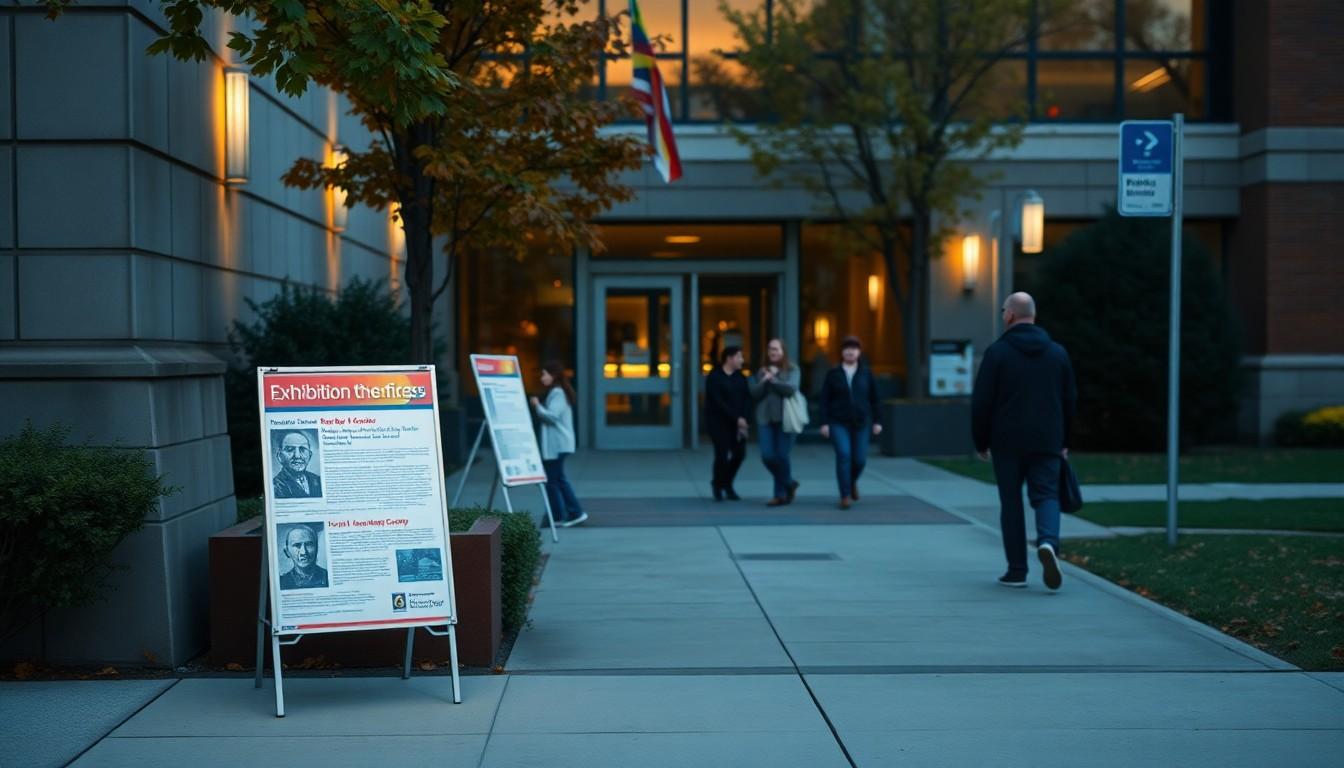
A historical marker in Dayton’s Cooper Park now points towards that story. Coverage from the Dayton Daily News records its importance as the first Ohio historical marker dedicated to an LGBTQ+ figure, giving passers-by a direct link to a life that once stretched far beyond the city.
Her lesbian identity was never merely hinted at
Barney’s early life crossed several cities, including Dayton, Cincinnati, Paris and Washington, DC. Her education in France offered space for experimentation, and accounts of her youth describe her dressing as a page and taking on a playful “husband” role with other girls. That detail feels strikingly modern, although the social world around her was anything but.
She carried that confidence into her adult writing. Her 1900 collection of sonnets addressed women through initials, turning romance into poetry while maintaining a thin veil of discretion. Later books continued to explore women’s desire, relationships and independence, helping make her own life part of a broader literary conversation.
The Advocate’s account highlights an especially memorable line from Barney: “My queerness is not a vice, is not deliberate, and harms no one.” Written in an era when public declarations of same-sex love could carry serious consequences, it sounds less like a confession than a calm refusal to apologise.
Paris became her stage, salon and sanctuary
Barney’s most influential project may not have been a single book. For roughly half a century, she hosted a literary salon at her Paris home, bringing together writers including Gertrude Stein, T.S. Eliot, F. Scott Fitzgerald, Sinclair Lewis and Sherwood Anderson. The gatherings offered conversation, collaboration and, crucially, continuity during turbulent years.
She also established a Women’s Academy for female writers, responding to the exclusion of women from other literary circles. That practical intervention matters. Barney wasn't simply enjoying the glamour of Parisian society; she was helping build an alternative network where women could be heard and taken seriously.
As CityBeat noted, her social world also fed public gossip. Her romances became part of the mythology surrounding her, while authors such as Liane de Pougy and Radclyffe Hall drew on Barney or her circle in influential lesbian fiction. The result was a curious double legacy: she was both a person and a recurring literary character.
Fame protected her, but it doesn't erase the inequality
Barney’s story is inspiring, but it shouldn't be flattened into a simple tale of individual bravery. Her wealth, race, education and social position gave her protection that many queer people did not have. She could absorb scandal, travel freely and maintain a public life in ways that would have been impossible for poorer women or those facing harsher discrimination.
That privilege makes her choices more complicated, not less meaningful. The point isn't that Barney represented every lesbian of her time. She didn't. Rather, she shows how one person with unusual resources could turn personal freedom into cultural infrastructure.
The Ohio History Connection’s Gay Ohio History Initiative places her marker within a wider effort to document queer lives across the state. Its work suggests that LGBTQ+ history isn't limited to famous names; it also lives in local archives, neighbourhoods and family memories.
Why Ohio is marking more queer history
The Barney marker opened the door for further recognition. According to the Ohio History Connection, the Marking Diverse Ohio project aims to create at least 10 additional historical markers celebrating the state’s LGBTQ+ past. That matters because public history changes what people notice when they walk through familiar places.
For visitors, the Cooper Park marker offers a small but worthwhile stop in Dayton. It works as a prompt rather than a full biography: look her up, visit a library collection, read her poetry or explore the writers who moved through her salon. A plaque can only hold so many words, after all.
The renewed attention around Barney’s 150th birthday also shows how anniversaries can reopen overlooked stories. Her life wasn't tidy, universally representative or free from privilege. But it was audacious, productive and unmistakably queer, which is precisely why it still catches the imagination.
Her story is a reminder that queer history can begin with one person refusing to live quietly.
Source Reference Map
Story idea inspired by: [1]
Sources by paragraph:
- Paragraph 1: [2], [4]
- Paragraph 2: [4], [5]
- Paragraph 3: [5], [6]
- Paragraph 4: [2], [4]
- Paragraph 5: [2], [4]
- Paragraph 6: [2], [4]
- Paragraph 7: [2], [4]
- Paragraph 8: [2], [4]
- Paragraph 9: [4], [5]
- Paragraph 10: [3], [4]
- Paragraph 11: [3], [7]
- Paragraph 12: [3], [6]
- Paragraph 13: [3], [4]
- Paragraph 14: [3], [7]
- Paragraph 15: [3], [4]
- Paragraph 16: [2], [3]