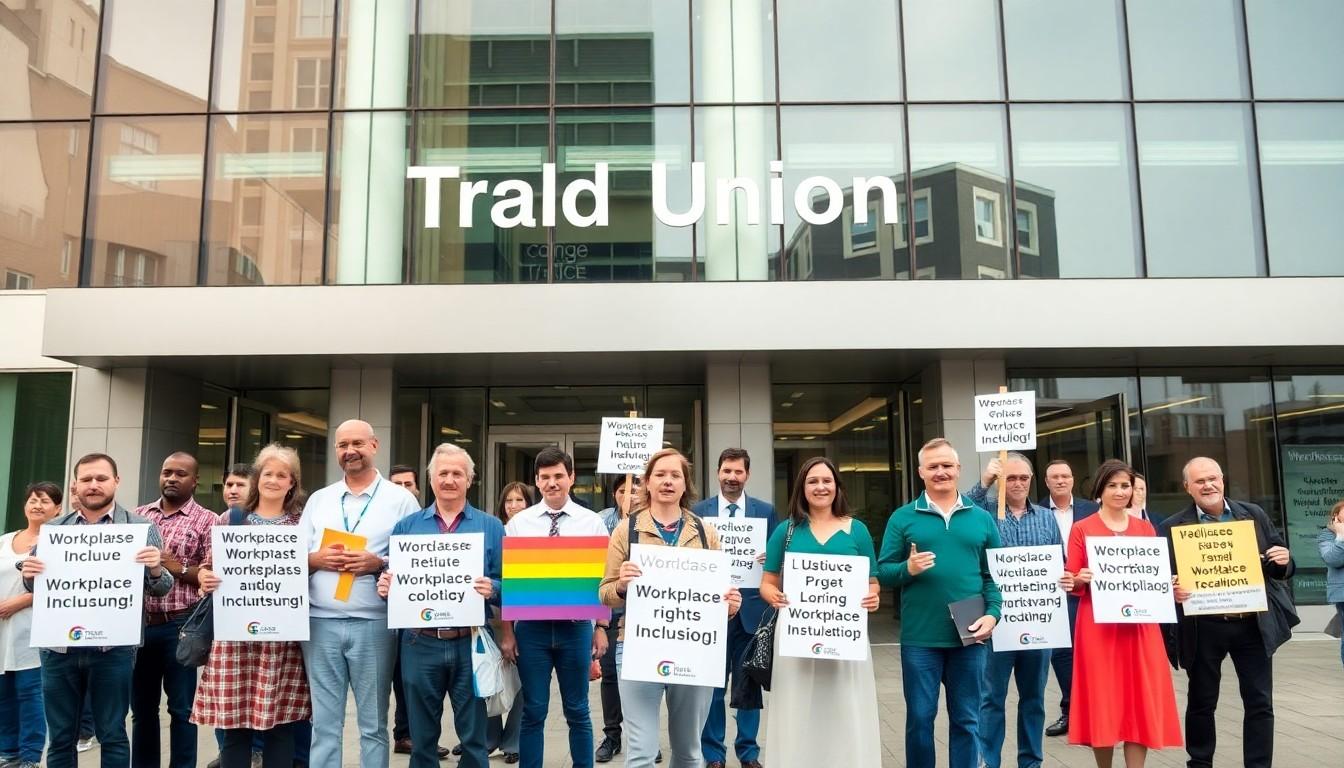
Union delegates have backed a campaign for gender self-identification and challenged new transgender guidance across Britain, arguing that the rules could affect everyday access to work and services. The vote matters because it puts trans rights, women’s rights and practical workplace protections at the centre of a growing equality debate.
Essential Takeaways
- Union backing: TUC delegates supported campaigning for a gender self-declaration process.
- Guidance criticised: The motion described the updated Equality and Human Rights Commission approach as difficult to apply and potentially exclusionary.
- Workplace concerns: Supporters warned that trans, non-binary and gender non-conforming workers could face greater discrimination.
- Legal tension: The debate follows a Supreme Court ruling on the meaning of “woman” in equality law.
- Practical impact: Employers and unions may need clearer advice on toilets, changing areas, services and workplace inclusion.
Unions draw a line over trans rights
The vote places the trade union movement firmly behind a campaign to challenge the latest transgender guidance. Delegates argued that the approach could narrow the spaces in which trans people feel able to work, access services and participate in public life. The TUC's published position also stresses that equality protections should be applied meaningfully at work, not treated as a box-ticking exercise. [2], [7]
Maria Exall of the CWU, which moved the motion, said the guidance could damage inclusive workplaces and create opportunities for people determined to weaken equality protections. Her central argument was that supporting trans people and supporting women's rights aren't automatically opposing aims, a point echoed throughout the debate. [1], [3]
The language is deliberately forceful. Rather than asking only for clarification, the motion calls on unions to campaign against guidance they regard as exclusionary and to work with LGBT+ organisations on a wider challenge. [3], [7]
Why the EHRC guidance has become so contentious
The dispute follows a Supreme Court judgment concerning the legal meaning of “woman” under the Equality Act. The ruling prompted the EHRC to revise its advice on single-sex services, including situations involving toilets, changing facilities and other spaces where privacy or safeguarding may be considered. [4], [5]
That has created an awkward gap between legal interpretation and workplace reality. Employers still need policies that are lawful, workable and respectful, while workers need to know what to expect when using facilities or seeking support. The EHRC's guidance on gender reassignment discrimination continues to recognise protection for people undergoing, proposing or having undergone gender reassignment, but applying those protections in day-to-day settings can be complicated. [5], [6]
For union leaders, that uncertainty is the problem. They argue that unclear rules can leave managers improvising, workers feeling exposed and trans employees worrying that routine parts of working life may become confrontational. [2], [3]
Self-identification is back at the centre
The motion's call for gender self-declaration revives one of the most contested issues in UK equality politics. Supporters see it as a simpler and more dignified route for recognising gender, avoiding lengthy procedures that they say can be intrusive and burdensome. [1], [7]
Critics of self-identification have raised concerns about single-sex protections and how services should operate. The TUC's response is that these questions need careful, practical policies rather than rules that broadly shut trans people out. Its congress motion links the argument to the wider principle that trans rights are human rights. [3]
For employers, the immediate lesson is less dramatic but more useful: don't wait for a dispute before reviewing workplace policies. Clear language, confidential reporting routes and properly trained managers can prevent a legal argument from turning into a personal ordeal. [2], [6]
What this means for workplaces
The most immediate pressure will fall on employers trying to understand how the guidance applies in real settings. A sensible policy should explain how staff can raise concerns, how privacy is protected and how managers will respond consistently, without singling out trans workers for unnecessary scrutiny. [5], [6]
Unions are also likely to challenge policies they believe create blanket exclusions. The TUC has said it will comply with the law while continuing to press for meaningful representation of trans people, including non-binary and gender non-conforming workers. [2]
That balance won't be easy. The law may define boundaries, but the workplace experience often turns on tone, training and whether people feel treated with basic dignity. As anyone who has navigated a tense staff policy knows, a badly written rule can cause more trouble than the problem it was meant to solve.
A debate that is unlikely to fade
The TUC vote doesn't settle the legal argument, but it does show how strongly organised labour views the issue. Its support gives campaigners a substantial platform and signals that trans inclusion will remain part of wider union work on equality, representation and workplace rights. [1], [7]
The next stage is likely to involve further legal challenges, employer guidance and pressure on public bodies to explain how the rules should operate in practice. Until then, workers and employers face a familiar frustration: important rights are being debated in broad political terms, while people still need clear answers for ordinary working days. [2], [4]
For many trans workers, that uncertainty is more than an abstract policy concern. It's about whether a workplace feels safe, fair and genuinely open to them. [3], [6]
Clearer rules are needed, but inclusion must remain practical as well as principled.
Source Reference Map
Story idea inspired by: [1]
Sources by paragraph: