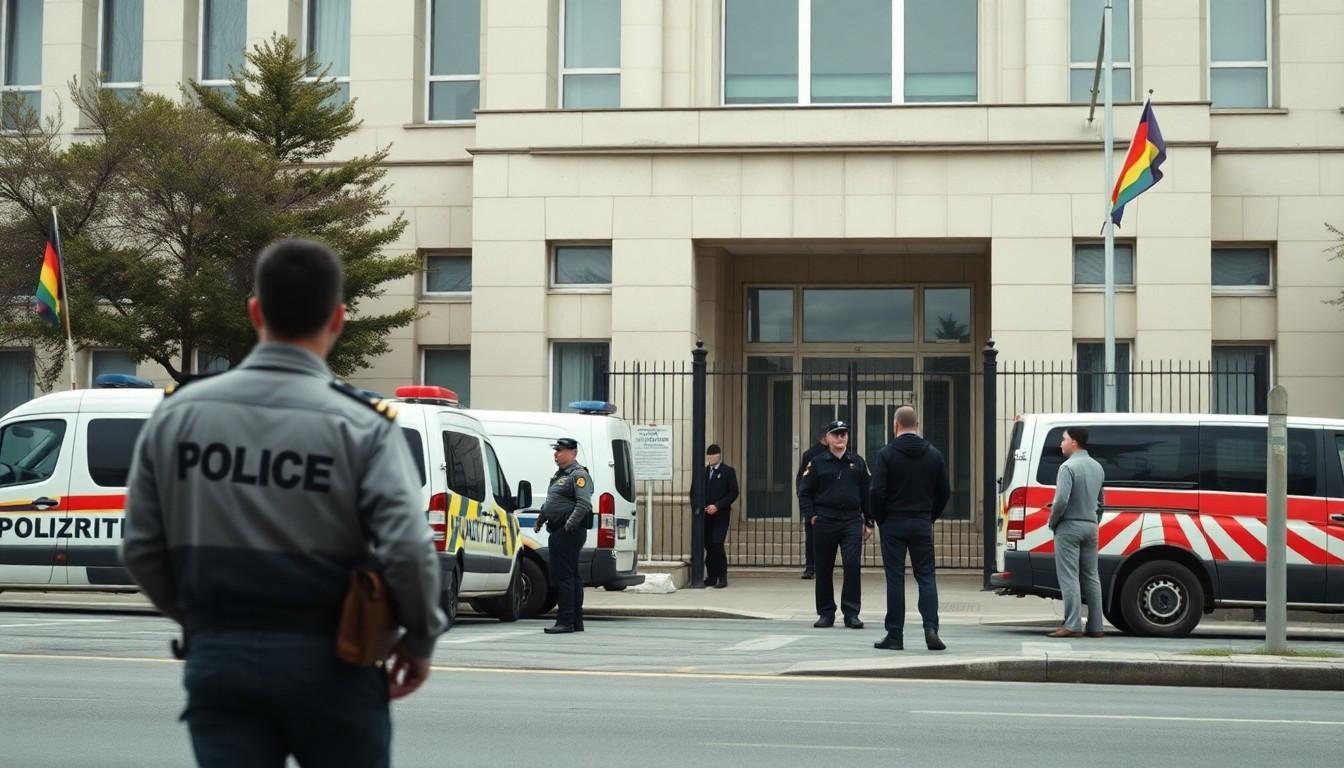
Police questioning has begun in Ankara after 21 LGBT+ activists were detained in a wide-ranging investigation involving Kaos GL, its website, social media posts and a separate Shibari Turkey account. The case has drawn attention to Turkey's treatment of LGBT+ organisations, online expression and overseas funding.
Essential Takeaways
- Questioning has started: Detainees are being asked about their roles, the organisation's work and its public communications.
- The inquiry is broad: Questions reportedly cover KaosGL.org, Instagram posts, a Marvel series, sports imagery and election-related reporting.
- Funding is under scrutiny: Investigators have asked about grants, donations, membership fees and support from municipalities or public bodies.
- The operation targets civil society: Police searched homes and the Kaos GL office, with board and supervisory members among those detained.
- Online expression is central: Social media accounts and published material appear to form a significant part of the investigation.
Police questioning puts Kaos GL's public work under the microscope
The most striking feature of the Ankara investigation is its breadth. According to Turkish media reports, detainees have been asked not only about their positions within Kaos GL but also about the association's website, Instagram account and wider activities.
The questions reportedly include requests for information about the organisation's structure, working methods and relationship with other institutions. That makes the case feel less like a narrow inquiry into one post and more like a detailed examination of an entire civil society network.
Kaos GL is one of Turkey's best-known LGBT+ organisations, with a long-running focus on cultural research, advocacy, publishing and solidarity work. The organisation's public profile is therefore inseparable from the material now being examined. (6)
Why are grants and foreign funding part of the investigation?
Several questions reportedly focus on how Kaos GL is financed. Investigators have asked about membership fees, donations, project grants, overseas support and money received from municipalities or public institutions.
Funding scrutiny isn't unusual in investigations involving charities or associations, but the detail matters here. Questions about which bodies provided support and how individual grants were used could place ordinary civil society administration alongside allegations linked to "obscenity" and possible breaches of Turkey's Associations Law.
That combination is likely to concern non-governmental organisations beyond the LGBT+ community. As MLSA Turkey has reported, the operation involved members of Kaos GL's board and supervisory board, giving the case an institutional dimension rather than focusing solely on individual activists. (4)
A Marvel series and social media imagery enter the picture
The reported questioning also reaches into popular culture and online publishing. Detainees were asked about a scene from Marvel's Agatha All Along, an image featuring two male footballers and news reports concerning campaign activity during Georgia's elections.
That range of material illustrates how quickly an online archive can become part of a legal investigation. For an organisation that publishes news, commentary and cultural material, the boundary between advocacy, journalism and general public-interest communication can become difficult to defend when authorities examine posts one by one.
The reported reference to the Shibari Turkey account adds another layer. Detainees were asked what they knew about the account and images shared on it, even though the inquiry also centres on Kaos GL. The result is a case spanning organisational records, social media and content that investigators may regard as sexually explicit. (5)
What the raids mean for Turkey's LGBT+ community
Reports say police detained 21 LGBT+ activists and searched homes, while also entering Kaos GL's office. The operation has been described by rights groups as part of a broader crackdown affecting LGBT+ organisations and online access.
The timing and scale have intensified concern among campaigners, who argue that criminal investigations and restrictions on LGBT+ expression can have a chilling effect well beyond those directly detained. When a prominent group is targeted, smaller organisations and independent publishers may think twice before producing similar work.
The Associated Press has previously reported on the increasingly restrictive environment facing LGBT+ people and groups in Turkey, where officials have used public-order and morality arguments to justify pressure on the community. (2)
The wider test for online speech and civil society
At the heart of the case is a question that reaches beyond one association: how far can authorities investigate an organisation's public output before scrutiny begins to resemble pressure on lawful expression?
The answer will depend on the formal charges, the evidence disclosed and how courts assess the material. For now, however, the reported questions show that websites, social accounts, cultural references and funding records can all become relevant in a single investigation.
For LGBT+ activists, journalists and civil society groups, the practical lesson is uncomfortable but clear. Digital posts are rarely isolated, and an organisation's public footprint can be examined as one connected record. The coming stages of the case will show whether this becomes a short-lived investigation or a deeper test of Turkey's civic space. (3)
It's a case that could shape how Turkey's LGBT+ organisations communicate, organise and fund their work.
Source Reference Map
Story idea inspired by: [1]
Sources by paragraph: