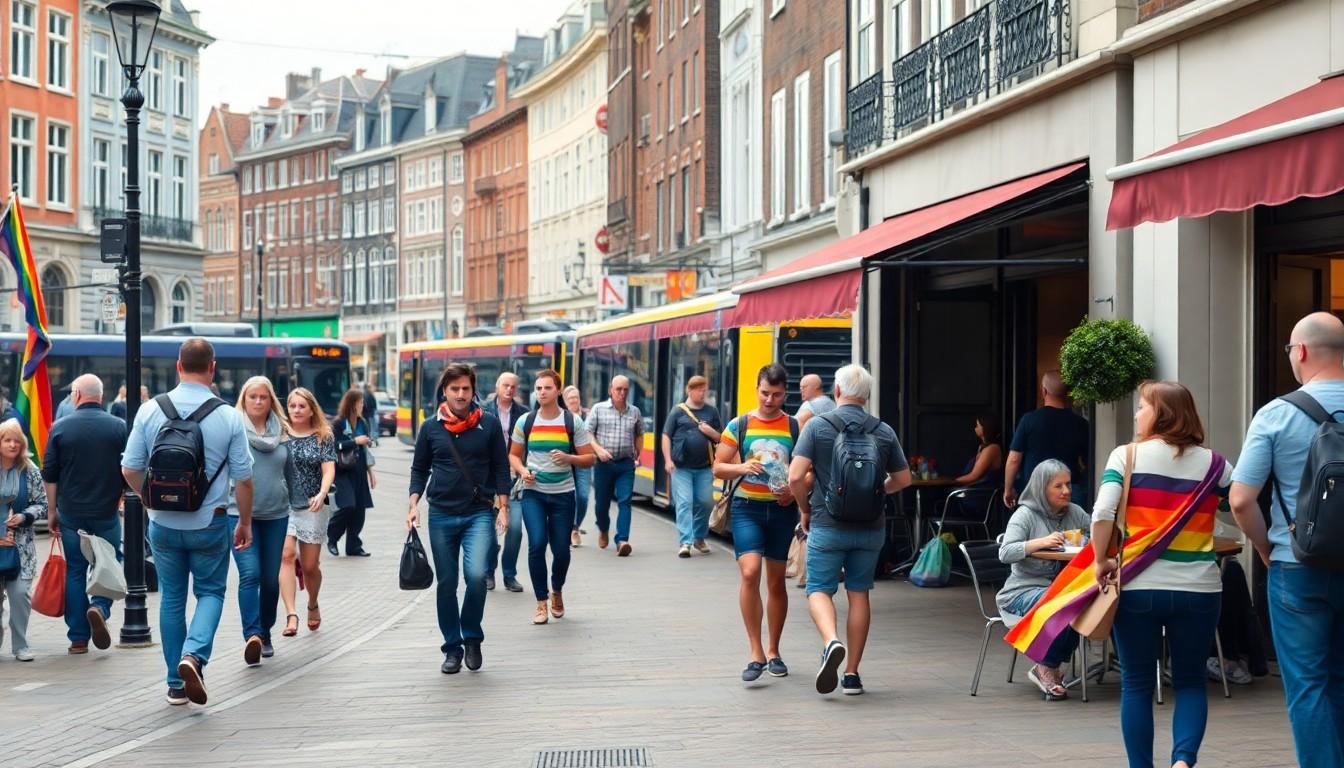
Visitors, festivals and inclusive city branding helped Pride 2026 generate an estimated €403 million in additional tourism spending across Amsterdam, Madrid, London and Cologne. The figures show why major Pride events now matter far beyond the parade route, supporting restaurants, hotels, transport networks and local businesses while making a powerful statement about who feels welcome in Europe’s biggest cities.
Essential Takeaways
- Four cities dominated: Amsterdam, Madrid, London and Cologne captured 92% of attendance and additional tourist spending across the countries studied.
- London led individual spending: Pride visitors generated an estimated €86.2 million in extra tourism expenditure.
- Amsterdam benefited from WorldPride: Its celebrations produced €78.5 million in additional tourist spending, with festivals driving much of the activity.
- Food and drink came first: Restaurants, bars and cafes took the largest share of Pride-related spending in Madrid, London and Cologne.
- Cologne punched above its weight: Its compact programme attracted 1.2 million attendances and accounted for 14% of the spending analysed.
Pride has become a serious tourism draw
The clearest message from the new European analysis is simple: Pride isn't just a one-day parade. Across the UK, Spain, the Netherlands and Germany, celebrations generated substantial visitor spending, with four cities responsible for the overwhelming majority of the activity.
London, Madrid, Amsterdam and Cologne also demonstrate four different ways to build a successful Pride programme. Some rely on a long calendar of parties and cultural events, others on a global flagship occasion, while Cologne shows how a relatively concentrated programme can create a remarkably strong travel response.
According to reporting from Caterer Licensee, the wider study was produced by The Data Appeal Company and Almaviva Group, working with Queer Destinations. Its findings connect attendance with incremental tourist spending, giving cities a clearer view of the commercial value created when visitors travel specifically for Pride.
Amsterdam's WorldPride moment put festivals centre stage
Amsterdam's WorldPride and EuroPride year gave the city a particularly high-profile platform. The celebrations generated €78.5 million in additional tourist economic spending, representing roughly 60% of the city's total Pride-related impact in the analysis.
Festivals were especially important, accounting for 71% of attendance and 77% of additional tourist spending. That makes sense in a city where visitors can move easily between cultural events, nightlife, exhibitions and the famous canal-side setting. The atmosphere is part of the product, even when nobody would describe it that way.
Travel coverage from El Pais highlighted the scale and variety of Amsterdam's WorldPride programme, including a major boat parade, large parties and queer history. The lesson for other destinations is useful: a Pride calendar with plenty to do can encourage visitors to stay longer and spend across more parts of the city.
Madrid shows the value of a longer Pride season
Madrid recorded more than two million attendances, making it one of the largest Pride destinations in the study. Food and drink accounted for 61% of additional tourist spending, while hospitality represented 20% and transport 19%.
That mix suggests visitors weren't simply arriving for a quick photo and leaving. They were eating out, moving around the city and, in many cases, booking accommodation. Madrid's extended Pride period may also help spread demand beyond a single crowded weekend, giving businesses more opportunities to benefit.
Revista Rainbow reported an even broader economic impact figure for Madrid's Pride celebrations, underlining the city's position as a major LGBTQ+ travel destination. For visitors, it also reinforces a practical point: booking early matters, particularly if you want central accommodation near the main events rather than a late-night journey across the metro area.
London proves that spending figures need context
London attracted more than one million attendances, while visitors who travelled specifically for Pride generated an estimated €86.2 million in additional tourism spending. Food and drink took 62% of that total, followed by transport at 21% and hospitality at 17%.
Those numbers reflect London's higher prices as well as its size. A meal, hotel room or taxi ride can cost more than it would in many European destinations, so total spending isn't a pure measure of crowd size or visitor enthusiasm. It does, however, show how heavily Pride visitors use the city's everyday infrastructure.
Pride in London has a long-established place in the capital's public calendar, while City Hall records show the continuing civic and organisational attention given to the event. For travellers, the practical takeaway is to plan around transport closures, busy stations and accommodation prices. The parade may be the headline, but the whole city can feel busier.
Cologne's compact programme delivered an outsized result
Cologne accounted for less than 1% of the events assessed, yet its celebrations attracted 1.2 million attendances and generated 14% of the additional tourist spending across the analysis. That's an impressive result for a programme that doesn't need an enormous number of separate events to make an impact.
Food and drink made up 58% of spending, while transport reached 28%. The latter figure points to strong movement into and around the city, with visitors likely travelling specifically for the celebrations and making use of Cologne's connections.
Information on Cologne's Pride scene is often overshadowed by the larger profiles of Amsterdam and London, but its performance is a useful reminder that scale isn't only about the number of events. A focused programme, a strong local identity and easy access can combine to create a very busy weekend indeed.
The next challenge is sharing the value fairly
The commercial case for Pride is now difficult to ignore. When visitors feel welcome, they spend money, stay longer and engage with more of a destination. As Carlos Cendra of The Data Appeal Company told Caterer Licensee, that can create value for visitors, residents, businesses and communities rather than simply boosting a city's visitor count.
But the economic upside also raises an awkward question: who benefits, and who does the work? Queer Destinations chief executive Edgar Weggelaar pointed to the unpaid labour often carried out by nonprofit Pride organisations, as well as artists who donate their time and talent.
That tension will matter more as cities compete for major Pride and WorldPride events. The strongest destinations won't just count hotel nights and restaurant receipts. They'll also show how funding reaches community groups, how events support vulnerable LGBTQ+ people and how the welcome continues after the flags come down.
Pride is proving that inclusion can be good for a city's economy, but the most convincing version is one where the people who build the celebration share in its success.
It's a small distinction on paper, but a significant one in practice: Pride works best when tourism growth and community benefit move together.
Source Reference Map
Story idea inspired by: [1]
Sources by paragraph:
- Paragraph 1: [2], [4]
- Paragraph 2: [3], [5]
- Paragraph 3: [6], [7]
- Paragraph 4: [2], [3]
- Paragraph 5: [4], [5]
- Paragraph 6: [6], [7]
- Paragraph 7: [2], [4]
- Paragraph 8: [3], [5]
- Paragraph 9: [6], [7]
- Paragraph 10: [2], [3]
- Paragraph 11: [4], [5]
- Paragraph 12: [6], [7]
- Paragraph 13: [2], [3]
- Paragraph 14: [4], [6]
- Paragraph 15: [5], [7]