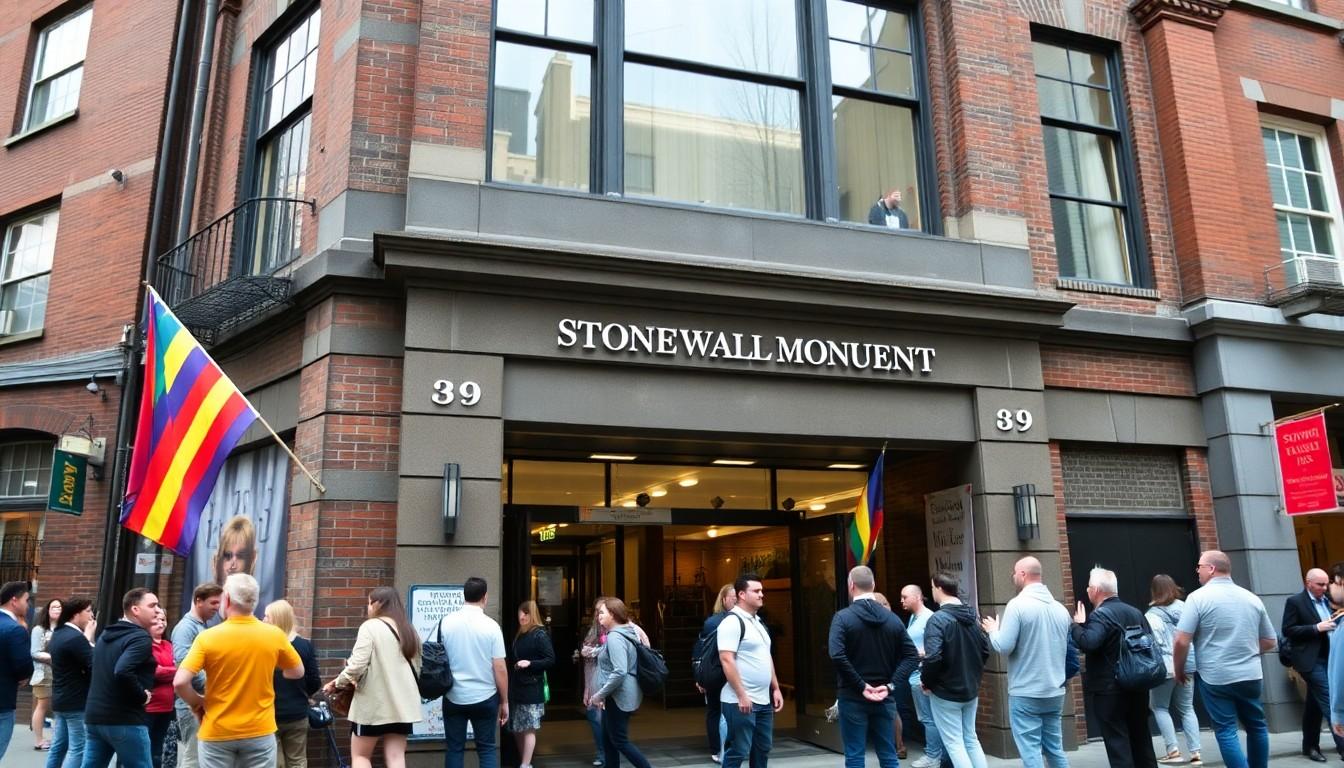
Visitors exploring Greenwich Village can trace a vivid history of American flags, from the battered banner that inspired the national anthem to the Rainbow Flag and the NAACP's anti-lynching message. Together, these symbols show how communities have used colour, music and public display to celebrate identity, challenge injustice and ask what freedom really means.
Essential Takeaways
- The anthem began in wartime: Francis Scott Key wrote the poem that became "The Star-Spangled Banner" after seeing the flag above Fort McHenry in 1814.
- The Village gave it new sounds: Jimi Hendrix's Woodstock performance turned the anthem into an electric, unsettling reflection on war.
- The Rainbow Flag carries local meaning: Its colours became closely linked with Greenwich Village's LGBTQ+ history after the Stonewall uprising.
- One black flag exposed racial terror: The NAACP used a stark public message to announce lynchings from its New York headquarters.
- Flags are arguments, too: In the Village, they haven't simply marked belonging. They've demanded that America honour its promises.
The flag that inspired America's anthem
The original Star-Spangled Banner story is remarkably cinematic. In the early hours after British forces attacked Fort McHenry during the War of 1812, Francis Scott Key saw the American flag still flying over the harbour. That sight inspired the poem that would later become the national anthem.
According to the National Park Service, the enormous flag measured about 30 by 42 feet, making it visible from a considerable distance. History.com notes that Key's poem was soon set to the tune of a popular British song, a slightly awkward reminder that national symbols often have complicated origins.
The song didn't become the official American anthem until 1931. By then, the flag had gathered layers of meaning: military endurance, national pride and the promise contained in its famous question about freedom.
Greenwich Village gave the anthem a louder voice
In Greenwich Village, the Star-Spangled Banner found a very different stage. Jimi Hendrix's 1969 Woodstock performance used a heavily distorted electric guitar to suggest aircraft, explosions and screams, turning a familiar melody into something tense and almost physical.
The performance remains difficult to pin down. Some listeners hear protest against the Vietnam War, while others hear a musician testing the emotional limits of a national song. Hendrix himself resisted the idea that he was simply attacking the anthem, but the effect was unmistakable.
Woodstock Story describes the arrangement as a defining moment of the festival and of late-1960s counterculture. Fender's account likewise highlights the technical control beneath the apparent chaos, while Hendrix's official site presents it as an anthem shaped by the turbulence of its era.
That tension is part of the reason the performance still matters. It didn't discard the symbol. It forced listeners to hear it differently.
Why the Rainbow Flag feels at home in the Village
The Rainbow Flag carries a more direct connection to Greenwich Village. Created by Gilbert Baker in 1978 for San Francisco's Pride celebrations, it quickly became an international emblem of LGBTQ+ visibility, solidarity and liberation.
Its colours feel celebratory, but the history behind them is hard-won. The Stonewall uprising in 1969 helped establish Greenwich Village as a major centre of LGBTQ+ organising and public life. In the years that followed, rainbow flags appeared on shops, homes, community spaces and parade routes across the neighbourhood.
That makes the flag more than cheerful decoration. It signals safety, pride and the right to be visible. For visitors, a rainbow banner in the Village can look bright and welcoming, but it also points to decades of activism, grief and persistence.
The contrast with the national flag is revealing. One symbol claims to represent a whole country; the other began as a movement's demand to be recognised within it.
The black flag that refused to soften the truth
At 70 Fifth Avenue, the NAACP's New York headquarters became associated with one of the starkest public messages in American history: "A Man Was Lynched Yesterday."
The organisation displayed a black flag carrying those words to announce racial terror plainly. There was no patriotic flourish and no attempt to make the message comfortable for passers-by. The point was to make an American crime impossible to overlook.
The banner also connects the surrounding neighbourhood with New York's Black history, including Little Africa and the area's long tradition of Black artistic, intellectual and political life. Its presence on Fifth Avenue turned a building into a public noticeboard for injustice.
That directness still feels startling. A flag usually catches the eye first through colour or pattern; this one made language do the work. It demanded attention, then demanded a response.
What these Greenwich Village flags have in common
The Star-Spangled Banner, the Rainbow Flag and the NAACP's anti-lynching flag represent very different experiences. One emerged from war, one from a campaign for LGBTQ+ equality and one from the fight against racial violence.
Yet each makes an argument in public. The national flag asks people to believe in a shared ideal. The Rainbow Flag says that LGBTQ+ people belong within that ideal. The NAACP flag exposed the distance between American promises and American reality.
This is why Greenwich Village is such a useful place to read American history. Its flags aren't merely objects on poles or walls. They're prompts to ask who is included, who is protected and whose freedom remains unfinished.
The story also offers a practical way to explore the neighbourhood. Look above shopfronts, outside community buildings and around historic sites, but pay attention to context as well as colour. A flag's meaning often comes from the people who raised it, the moment that prompted it and the argument it was meant to make.
An ongoing conversation about freedom
The American Revolution may belong to the eighteenth century, but the debate it began hasn't stayed in the past. Across 250 years, activists, artists and communities have repeatedly expanded the meaning of liberty and equality.
Hendrix did it through sound. The Rainbow Flag did it through visibility. The NAACP banner did it through confrontation. Each transformed a familiar public space into somewhere people had to think again.
Perhaps that's the lasting lesson of Greenwich Village's flag history. Symbols don't remain fixed simply because they are old. Their meaning changes when new generations pick them up, question them or place them in a different setting.
A walk through the Village can therefore feel like a history lesson with colour, music and a little friction. And that makes it far more memorable than a list of dates.
Flags don't just mark history. They show who is still arguing about the future.
Source Reference Map
Story idea inspired by: [1]
Sources by paragraph:
- Paragraph 1: [2], [3]
- Paragraph 2: [3], [6]
- Paragraph 3: [2], [3]
- Paragraph 4: [4], [5]
- Paragraph 5: [5], [7]
- Paragraph 6: [4], [7]
- Paragraph 7: [5], [7]
- Paragraph 8: [2], [3]
- Paragraph 9: [2], [6]
- Paragraph 10: [3], [6]
- Paragraph 11: [2], [3]
- Paragraph 12: [4], [5]
- Paragraph 13: [4], [7]
- Paragraph 14: [2], [6]
- Paragraph 15: [3], [5]
- Paragraph 16: [4], [7]
- Paragraph 17: [2], [3]
- Paragraph 18: [5], [7]
- Paragraph 19: [2], [6]
- Paragraph 20: [3], [4]
- Paragraph 21: [5], [7]
- Paragraph 22: [2], [3]
- Paragraph 23: [4], [7]
- Paragraph 24: [5], [6]
- Paragraph 25: [2], [3]
- Paragraph 26: [4], [5]
- Paragraph 27: [6], [7]