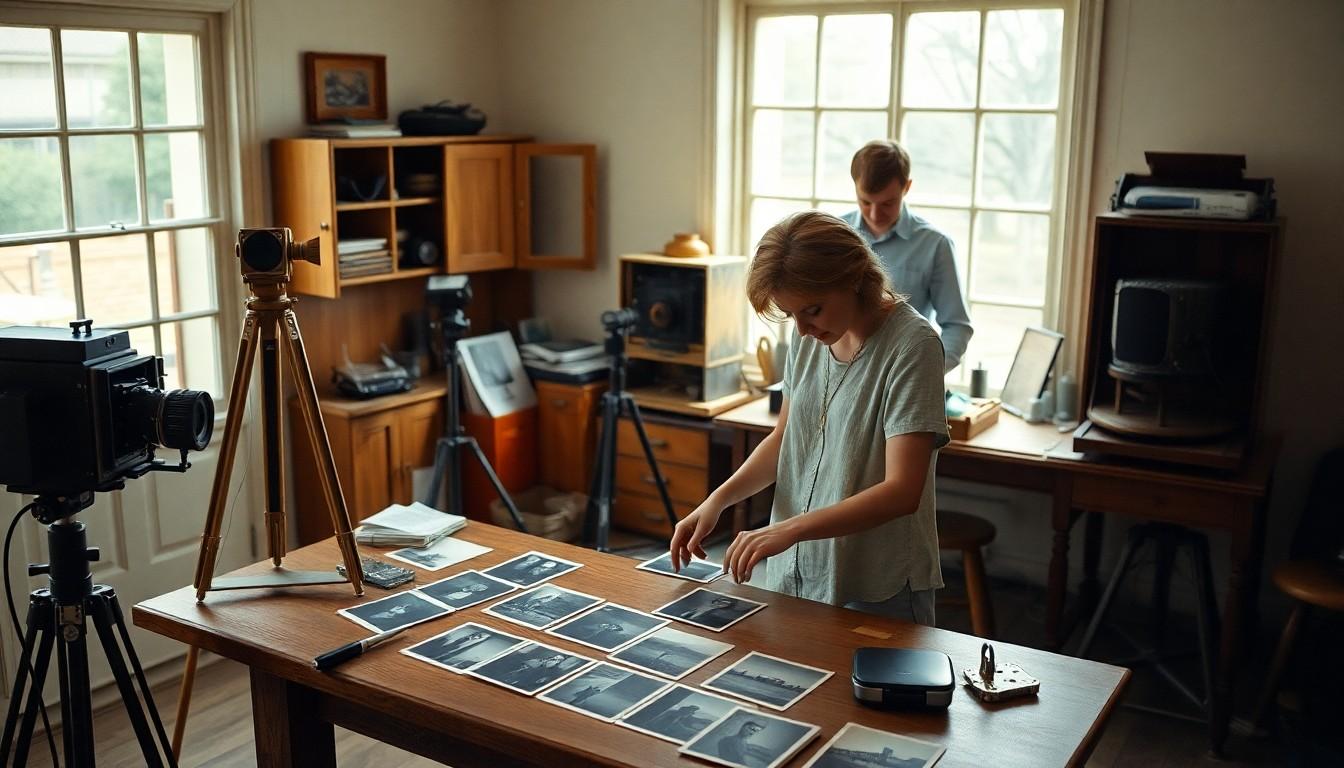
Frances Benjamin Johnston used photography, performance and self-invention to challenge the expectations placed on women in turn-of-the-century America. Her striking portraits and images of herself in masculine dress still feel remarkably modern, offering a vivid reminder that queer histories often survive through the creative choices artists make, frame by frame.
Essential Takeaways
- A groundbreaking photographer: Johnston built a respected career when professional opportunities for women were tightly limited.
- Drag as visual language: Her self-portraits in masculine clothing questioned fixed ideas about gender and identity.
- More than provocation: The images also show control, wit and a sophisticated understanding of photography's power.
- A wider artistic legacy: Contemporary artists such as Sheila Pepe similarly use materials and form to push against established traditions.
- A lasting lesson: Johnston's work encourages viewers to look beyond labels and consider who gets represented, and how.
A camera, a suit and a startlingly modern image
Frances Benjamin Johnston's self-portraits have an immediate visual charge. In one of her best-known images, she appears in a suit, hat and confident pose, holding a beer stein as though she has stepped out of a men's club and decided to rearrange the furniture.
That sense of play matters, but so does the precision. Johnston wasn't simply dressing up for a joke. She was using the camera to construct a public self at a time when women were expected to appear modest, decorative and safely legible. Her photographs made room for something less obedient. Feminine Moments places this story within queer feminist art history, where visibility can be both personal and political.
How Johnston built a career on her own terms
Born in 1864, Johnston entered photography during a period when the medium was becoming more portable and commercially useful. She photographed prominent figures, documented institutions and developed a reputation as a serious professional, rather than treating photography as a genteel pastime.
That achievement is easy to underestimate now. Running a studio, securing commissions and shaping a public identity required business sense as well as artistic judgement. Johnston understood that a photographer controlled more than exposure and focus. Clothing, gesture, setting and attitude could all alter the story an image told.
Her work also sits within a broader tradition of women using portraiture to negotiate social expectations. The camera offered income, status and a degree of independence, while allowing Johnston to decide how people, including herself, would be seen.
Why the drag portraits still resonate
Johnston's masculine self-presentation feels especially powerful because it refuses a single explanation. It can be read as theatrical, rebellious, humorous, queer or simply self-directed. The image doesn't settle the question, and that ambiguity is part of its strength.
It would be too neat to force modern identity categories backwards onto a historical figure. Still, ignoring the gender play would be just as limiting. Johnston created images that unsettled the boundary between private identity and public performance, giving later audiences plenty to consider without needing a final verdict.
This is where her work connects with contemporary queer feminist practice. The point isn't only whether an artist's subject matter looks overtly political. As Sheila Pepe has argued on her website, an artist's choices of material, genre, scale and medium inevitably engage with the history around them. Johnston's choice to photograph herself this way carried its own argument.
Photography becomes a form of self-authorship
The most fascinating detail in Johnston's portraits may be her composure. She doesn't look caught between identities. She looks in control of the frame, which turns the photograph from a record of costume into an act of authorship.
That distinction is useful for anyone exploring early queer photography. A single image can't provide a complete biography, and historical evidence may leave gaps. What it can show is how a person wanted to appear, what visual codes they borrowed and which conventions they were prepared to bend.
Johnston also reminds us that representation is never neutral. The photographer decides where the viewer stands, what remains visible and which version of a subject becomes memorable. Her portraits make that process unusually clear, with a raised eyebrow or carefully angled hat doing as much work as the camera itself.
Her legacy feels surprisingly close to the present
Contemporary artists continue to challenge artistic conventions through material choices and hybrid forms. Sheila Pepe's work, discussed by publications including The Brooklyn Rail, Sculpture magazine and the Trellis Art Fund, moves between craft, sculpture and installation rather than staying comfortably within one category.
Pepe is not a substitute for Johnston, and their practices belong to different moments. The useful comparison lies in their shared refusal to accept that art must behave according to inherited rules. Johnston used portrait photography and gender performance; Pepe works through combinations of materials, forms and feminist histories.
That continuity gives Johnston's photographs fresh energy. They aren't only historical curiosities or charmingly audacious snapshots. They are evidence of an artist thinking carefully about power, audience and the freedom to make a self visible on her own terms.
Johnston's work leaves a simple but powerful impression: sometimes the boldest artistic gesture is deciding exactly how you want to be seen.
Explore queer photography with an eye for both history and self-invention.
Source Reference Map
Story idea inspired by: [1]
Sources by paragraph: