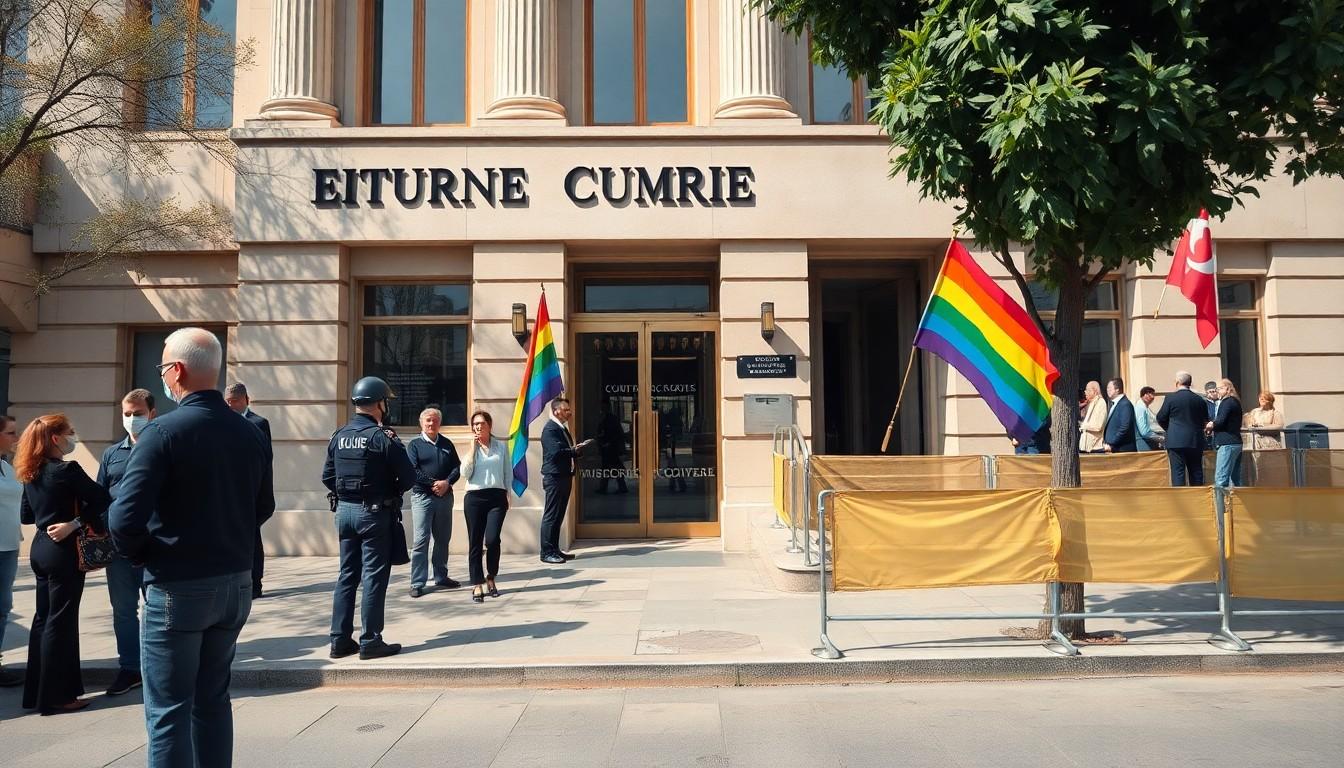
Brussels is watching a widening crackdown in Turkey, where dozens of LGBTQ+ people and activists have been detained in raids across several provinces. The arrests have prompted fresh concern from the European Union, while rights groups warn that pressure on the community is becoming more organised, public and politically driven.
Essential Takeaways
- Sixteen people remanded: A court in Izmir ordered 16 of 18 detainees to remain in custody pending trial.
- Raids across Turkey: Authorities are investigating 162 suspects, nine associations and 13 businesses in 15 provinces.
- EU demands rights protections: The European Commission said Turkey must uphold human rights regardless of sexual orientation or gender identity.
- Rights groups condemn the campaign: Activists describe the operations as state-directed discrimination and intimidation.
- The wider backdrop: The arrests coincide with President Recep Tayyip Erdogan's family and population campaign.
A crackdown that has spread beyond one city
The latest arrests are part of a broader campaign that has reached bars, homes and LGBTQ+ organisations in multiple Turkish provinces. In Izmir, prosecutors said 18 people were detained, with 16 placed in pre-trial custody and two released under judicial supervision, according to reports from the Associated Press and regional news outlets.
The scale is striking. Investigators are reportedly targeting people and organisations in Istanbul, Ankara, Izmir, Aydin and Mersin, among other areas. Earlier raids also led to 26 arrests in Istanbul and 21 in Ankara, creating a pattern that looks far wider than an isolated police operation.
For those watching Turkey's human rights record, the atmosphere is especially bleak. A police raid can close a venue in minutes, but the fear it creates lingers much longer.
Brussels responds with a familiar warning
The European Commission said it was closely monitoring the arrests and legal proceedings. Its message was direct: Turkey, as an EU candidate country and a long-standing member of the Council of Europe, is expected to protect the dignity and rights of all people.
That response reflects the difficult relationship between Ankara and Brussels. Turkey remains strategically important to the EU, particularly on migration, security and regional diplomacy, but concerns over the rule of law and civil liberties have repeatedly strained accession talks.
The latest operation adds LGBTQ+ rights to an already crowded list of disputes. European officials can issue strong statements, but the harder question is how much political influence those warnings still carry inside Turkey.
Why the family-values language matters
Turkish authorities say the campaign is intended to protect children and traditional family values. The timing is significant, arriving as Erdogan promotes a national "family and population" drive aimed at reversing falling birth rates and an ageing population.
That framing turns a demographic concern into a culture-war argument. LGBTQ+ people and organisations are increasingly portrayed by officials and pro-government voices as threats to family life, rather than as citizens entitled to equal protection.
Homosexuality is not criminalised in Turkey, but legal status alone offers little reassurance when public rhetoric becomes hostile. Rights groups say the community is facing mounting restrictions, intimidation and political targeting, according to coverage from German outlet Die Zeit and other regional reports.
Activists warn of fear spreading through civil society
The Turkish Human Rights Association described the raids as state-directed discrimination and a policy of fear aimed at weakening civil society. Nacho Sanchez Amor, the European Parliament's standing rapporteur on Turkey, called the arrests a shocking escalation in repression.
The concern extends beyond those directly detained. Raids on community groups can disrupt legal support, health services, campaigning and safe meeting spaces. Even organisations that aren't searched may find volunteers, venues and donors becoming more cautious.
That is how pressure can reshape public life without a formal ban. People start cancelling events, avoiding familiar venues and keeping their heads down. The quiet is often mistaken for acceptance.
What happens next?
The immediate focus will be on the detained activists and the legal cases now under way. Lawyers and rights organisations are likely to scrutinise the evidence, the treatment of detainees and whether the proceedings meet Turkey's obligations under European human rights law.
The wider direction is harder to miss. With investigations reportedly spanning 15 provinces and targeting associations as well as businesses, the campaign appears designed to send a national message.
For LGBTQ+ communities in Turkey, that message is deeply unsettling. For the EU, it is another test of whether concern can be converted into meaningful pressure.
It's a small phrase on paper, but equal protection matters most when public opinion is being pushed in the opposite direction.
Source Reference Map
Story idea inspired by: [1]
Sources by paragraph:
- Paragraph 1: [2], [4]
- Paragraph 2: [3], [5]
- Paragraph 3: [2], [6]
- Paragraph 4: [3], [4]
- Paragraph 5: [2], [3]
- Paragraph 6: [4], [6]
- Paragraph 7: [3], [5]
- Paragraph 8: [2], [4]
- Paragraph 9: [5], [6]
- Paragraph 10: [2], [3]
- Paragraph 11: [4], [5]
- Paragraph 12: [2], [6]
- Paragraph 13: [3], [4]
- Paragraph 14: [2], [5]
- Paragraph 15: [3], [6]