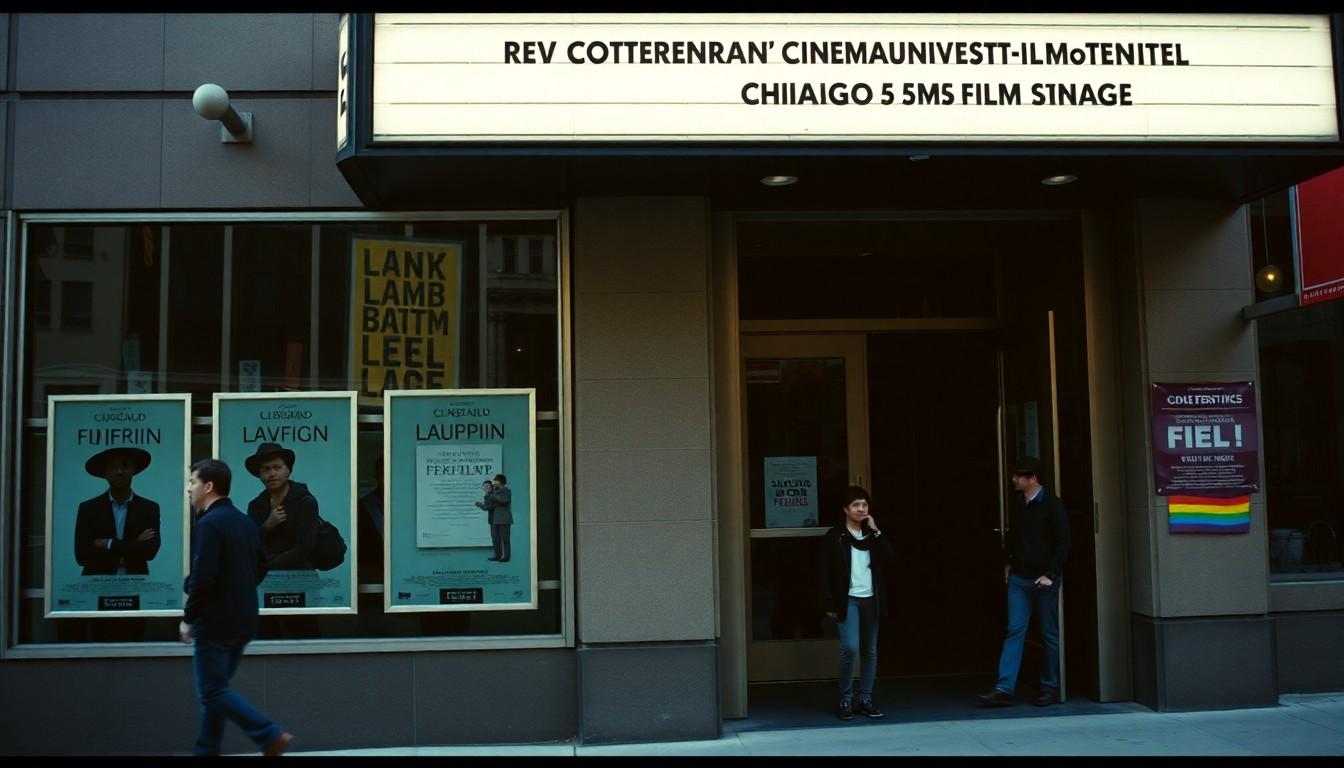
Film fans are heading to Chicago for Reeling’s 44th edition, where 36 features and 59 shorts explore queer love, identity, history and survival. From a major Spanish-language opening night epic to intimate dramas, documentaries and horror, the festival offers plenty of reasons to book a cinema seat this autumn.
Essential Takeaways
- A major Chicago tradition: Reeling is one of the world’s longest-running LGBTQ+ film festivals, now entering its 44th edition.
- A packed programme: The 2026 line-up includes 36 features and 59 shorts across more than 10 programmes.
- Big-screen appeal: Opening film La bola negra arrives with Cannes buzz, an international cast and a planned theatrical release.
- Stories with range: Expect everything from trans relationship drama and queer rodeo documentary to horror, comedy and historical film criticism.
- Plan ahead: Check the official schedule before booking, particularly for centrepiece screenings, opening night and the closing presentation.
Reeling returns with a strikingly broad programme
Chicago's Reeling LGBTQ+ International Film Festival has never been short on variety, but this year's selection feels especially expansive. According to the festival's official information, the programme combines dozens of features and shorts, giving audiences a chance to move between intimate character stories and wider political or historical questions.
That range is part of the appeal. One screening might offer a tender story about chosen family, while the next heads into crime, horror or uncomfortable questions about masculinity. As Choose Chicago and local event listings note, Reeling remains a major fixture in the city's cultural calendar, rather than a niche gathering tucked away at the edge of the festival season.
For visitors, that makes a little planning worthwhile. Browse the schedule early, then leave room for a surprise. Some of the most rewarding festival discoveries are the films you choose because the title, poster or running time catches your eye.
La bola negra brings international prestige
Opening night belongs to La bola negra, the ambitious Spanish drama from Javier Calvo and Javier Ambrossi, known together as Los Javis. The film follows three generations of queer men across pivotal periods in Spanish history, linking private desire with a country's changing social landscape.
The cast includes Penélope Cruz, Glenn Close and singer-songwriter Guitarricadelafuente, while the film's festival journey has already generated considerable attention. Its scale is a strong reason to see it in a cinema, where the sweep of the story and the visual detail can breathe properly before the film reaches Netflix.
It also signals something encouraging about queer cinema's current reach. A story rooted in LGBTQ+ history can now arrive with serious international backing, recognisable stars and a genuine theatrical push. That's a welcome change from treating queer films as valuable only after they have moved quietly to a streaming menu.
Intimacy, identity and the messiness of real life
Daniel Ribeiro's I Am Going to Miss You takes a familiar breakup premise and gives it a distinctly trans perspective. A trans woman and trans man find their long-term relationship strained by cohabitation, changing circumstances and the awkward, ordinary pressures that can unsettle any partnership.
The film sounds appealing precisely because it doesn't reduce its characters to a lesson or a symbol. Its handheld style and domestic conflicts suggest something immediate, with the emotional friction unfolding in the messy spaces between affection, exhaustion and uncertainty. Festival audiences often respond to that kind of closeness because it feels lived-in rather than polished smooth.
Mermaid offers a warmer, more bittersweet variation on queer connection. Fia Perera's narrative centrepiece pairs a grieving drag queen with a 10-year-old trans child who dreams of becoming a mermaid, creating a story about solidarity and the support people offer while they grow into themselves.
Together, these films underline one of Reeling's strengths: identity matters, but so do the small daily negotiations around family, love and belonging. The emotional stakes can be huge even when the setting is simply a home, a car or a difficult conversation.
Queer cowboys, bodybuilding and dangerous secrets
Jaripeo heads into the Mexican rodeo world, examining the tension between machismo and hidden desire. Set among the landscapes of Michoacán, the documentary uses a dreamlike approach to explore gay men navigating a culture where toughness can become both performance and prison.
Lunar Sway stays with the queer cowboy atmosphere but turns towards dark comedy and crime. Its heartbroken central character moves through estrangement, hookups and increasingly strange complications, giving the film a playful genre energy without losing sight of its underlying loneliness.
Meanwhile, Test brings physical pressure into sharper focus. Based partly on writer and star Brock Yurich's life, the drama follows a bisexual bodybuilder juggling ambition, family strain, attraction and the risks attached to performance-enhancing drugs. The premise promises plenty of muscle, but the more interesting question is what the body is being asked to carry emotionally.
These films could make a particularly lively mini-marathon for viewers drawn to queer stories that resist tidy categories. If you prefer films with a strong visual identity and a little danger around the edges, this is where the programme starts to flex.
Comedy, horror and the community's unfinished business
Meeting Marsha offers a lighter route into family tension, following an actress whose marriage proposal is thrown off course by the arrival of her difficult mother. Elaine Hendrix leads the cast, with Lisa Ann Walter also appearing, giving the film an extra spark for viewers who enjoy a knowing pop-culture connection.
At the darker end, Son of Sara reworks familiar Rosemary's Baby territory through a queer horror-comedy lens. A pregnant woman is invited to the estate of her child's father in exchange for financial help, but the offer quickly gathers the unmistakable smell of manipulation, ritual and supernatural trouble.
My Brother's Killer, directed by Rachel Mason, takes a real-life mystery approach. The documentary revisits the unsolved 1990 murder of adult film actor Billy London and follows queer Angelenos trying to understand what happened and push the case towards justice. It sounds like a film shaped as much by collective memory as by investigation.
That combination of tones is worth embracing. Reeling isn't asking audiences to sit through one uniform mood, and the programme's sharp turns between laughter, fear and grief reflect the breadth of queer life itself.
A landmark closing film looks back at cinema
Reeling closes with a 30th anniversary screening of The Celluloid Closet, the restored documentary by Rob Epstein and Jeffrey Friedman. Based on Vito Russo's influential book, it traces queer representation from early cinema through censorship, coded subtext and the emergence of New Queer Cinema.
For newcomers, it's an accessible way into the history of LGBTQ+ film culture. For longtime viewers, the anniversary screening offers a chance to revisit a work that helped audiences see how much meaning could be hidden in a glance, a costume or a character who was never allowed to say exactly what they meant.
The choice is a thoughtful full stop for the festival. After a programme filled with new voices and contemporary stories, The Celluloid Closet reminds audiences that today's visibility grew from decades of persistence, interpretation and challenge. Sometimes the old films still have the sharpest things to say.
Book early, choose boldly and let Reeling’s range do the rest.
Source Reference Map
Story idea inspired by: [1]
Sources by paragraph:
- Paragraph 1: [3], [7]
- Paragraph 2: [4], [5]
- Paragraph 3: [6], [7]
- Paragraph 4: [3], [5]
- Paragraph 5: [4], [6]
- Paragraph 6: [3], [7]
- Paragraph 7: [4], [5]
- Paragraph 8: [6], [7]
- Paragraph 9: [3], [4]
- Paragraph 10: [5], [7]
- Paragraph 11: [3], [6]
- Paragraph 12: [4], [5]
- Paragraph 13: [6], [7]
- Paragraph 14: [3], [5]
- Paragraph 15: [4], [6]
- Paragraph 16: [3], [7]
- Paragraph 17: [5], [6]
- Paragraph 18: [4], [7]
- Paragraph 19: [3], [5]