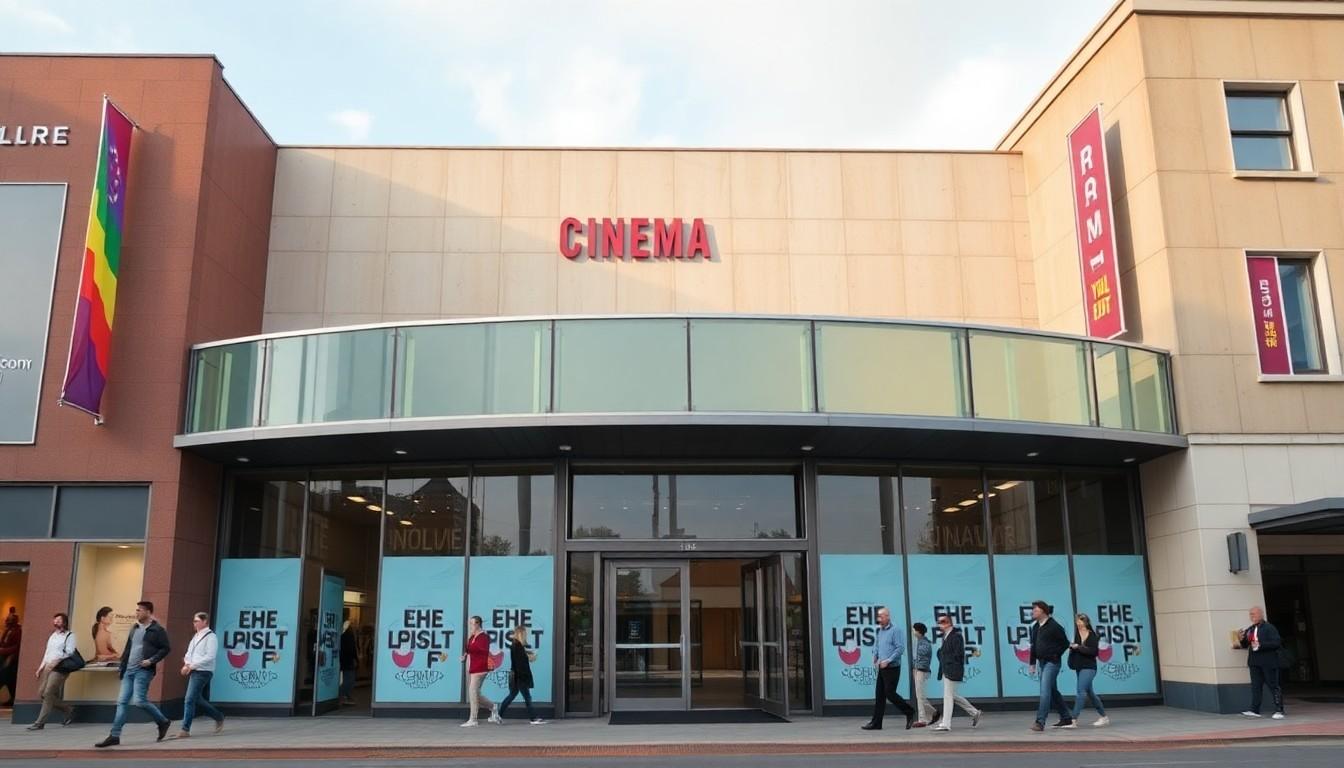
Festival audiences are discovering a rich crop of LGBTQ+ films this autumn, from hypnotic dramas in Venice to intimate queer stories at Toronto and AFI. These films explore desire, chosen family, grief and self-worth, while offering a useful preview of the titles that could reach cinemas and streaming services next.
Essential Takeaways
- Venice highlights: Atmospheric dramas explore secrecy, loneliness and care through quietly powerful performances.
- Toronto discoveries: Queer Indigenous characters, trans identity and chosen family lead several promising new films.
- Animation with heart: Julián brings a colourful, empowering coming-of-age story to Brooklyn.
- Latin American voices: Nosotros and Eva place trans characters at the centre of emotionally expansive dramas.
- What to watch next: Festival buzz doesn't guarantee a release, but these films are strong candidates for wider attention.
Venice sets a moody, intimate tone
Some of the most striking LGBTQ+ films on the autumn circuit are less interested in neat explanations than in atmosphere. Salon de Belleza, which premiered at Venice, turns a beauty salon into a hospice run by an unnamed gay hairdresser. The setting feels both practical and dreamlike, with fish tanks, damaged ceilings and flashes of remembered intimacy creating a world suspended between life and death. According to the Venice Film Festival programme, the film was among the event's notable international selections.
It's a patient film, built around images and sensations rather than constant dialogue. Its protagonist's care for the dying gives the story a tender, almost ritual quality, while glimpses of clubs, bathhouses and imagined encounters suggest a life shaped by desire and memory. It won't suit viewers looking for a brisk narrative, but those willing to settle into its rhythm may find it quietly hypnotic. The film's Venice appearance also reflects the festival's continuing role in introducing adventurous queer cinema to international audiences.
Lovers in the Blue Night, another Venice premiere, takes a more recognisable romantic route but moves with similar restraint. Karim, a gay man living in Mumbai in a marriage of convenience, meets Sukka after helping him, and a cautious connection develops between them. At the same time, Karim's wife, Ameena, pursues a relationship of her own, creating a story about several people trying to escape isolation without fully understanding what they want.
The film's strength lies in its everyday detail. Cigarettes, letters, work and shared rooms become emotionally charged, so the eventual turns in the relationships feel earned rather than engineered. Industry coverage of Venice positioned the film as a slow-burning relationship drama, and its appeal is easy to understand: it treats loneliness not as a plot device, but as a condition its characters carry everywhere.
Toronto puts chosen family front and centre
At the Toronto International Film Festival, Seventeen follows three queer Indigenous people facing urgent personal deadlines. Aidan needs money for a home, December is dealing with her father's death, and Tamara must recover her passport before her visa expires. Their problems overlap over a compressed period, but the film's emotional focus is less on ticking-clock suspense than on the support networks that help them keep moving.
Writer-director Justin Ducharme's debut connects the idea of home with friendship, identity and survival. The characters don't simply find solutions; they borrow courage from one another, forming a temporary but convincing chosen family. Toronto's programming has often provided space for emerging Indigenous and queer filmmakers, and this film feels especially valuable because it allows its characters to be complicated, funny and vulnerable at once.
Ancestors takes a darker historical path. Set partly in 1988 England, it follows Beau, a café worker who takes in Tiny, a young man living with HIV. The film shifts between Beau's memories of caring for Tiny and his later search for him, gradually revealing how love, shame and grief can remain entangled for years. The Toronto programme has included many films that revisit recent queer history, but this one approaches the period through personal loss rather than broad political explanation.
That choice gives the drama a bruised, intimate quality. Rupert Everett brings weight to the café setting, while Éanna Hardwicke gives Beau a striking combination of guardedness and tenderness. The result is a film about mourning, but also about the difficult possibility of continuing to live after someone has disappeared from your world.
A mermaid story brings colour and confidence
Not every LGBTQ+ festival discovery is heavy. Louise Bagnall's animated feature Julián offers a warm, vivid change of pace, following a young boy spending the summer with his grandmother in Brooklyn. He struggles to settle into his new surroundings, finds companionship in an imaginary sprite and becomes fascinated by the Mermaid Parade.
The story draws on Jessica Love's picture book Julián Is a Mermaid, expanding its themes of expression and belonging for the screen. When Julián faces bullying, the film doesn't pretend that confidence appears instantly. Instead, it shows how encouragement, imagination and family support can help a child reclaim joy. AFI and other festival programmers have increasingly embraced animated LGBTQ+ stories, and Julián makes a persuasive case for why they matter: a bright visual style can carry serious emotional meaning.
There are also two Canadian shorts worth keeping in mind. Buddies examines the awkward uncertainty of teenage attraction during a sleepover, while Driftwood follows a trans man dealing with the loss of his packer after a distressing sexual experience. Both films are small in scale, but their details feel recognisable, from games and vaping to the easy shorthand between close friends.
Short films can be especially good at capturing feelings before characters have the language to explain them. That makes these Toronto selections promising examples of how queer cinema continues to find fresh stories in ordinary, sometimes uncomfortable moments.
Latin American films widen the conversation
The AFI Latin American Film Festival adds two films with trans protagonists to the autumn conversation. In Nosotros, Romero, an Indigenous man from rural Guatemala, meets Nubia, a trans woman who runs a shop in the city. Their relationship develops privately, against the pressure of workplace prejudice and rigid ideas about masculinity.
The film's still, carefully composed images give its romance a sense of secrecy and intensity. A shared bed or a tense exchange in a bathroom can carry as much force as a traditional confrontation. AFI's festival programme has helped bring Latin American cinema to US audiences, and films such as Nosotros show why that platform matters: the story is culturally specific, yet its questions about desire, fear and public identity travel widely.
Eva takes a different route, using family drama to explore trans identity. Eva lives with her son and his pregnant partner, but after tragedy strikes during childbirth, she becomes the person responsible for a baby while the family tries to manage its grief. Her relationship with Antonio adds another layer of frustration, particularly when he hesitates to acknowledge her fully in his own life.
The film's most affecting scenes come from Eva's combination of firmness and warmth. She challenges misgendering, pushes her grieving son to face responsibility and still finds moments of dancing and delight. AFI's Latin American Film Festival has long provided a home for stories that might otherwise struggle to reach US screens, and Eva demonstrates how a trans character can be at once a lover, parent, carer and source of comic or emotional energy.
What should viewers watch for next?
Festival premieres are useful early signals, but they're not guarantees of a cinema release. Distribution depends on reviews, sales, subtitling, audience demand and whether a distributor can find the right launch window. Films with recognisable performers may travel more easily, while formally daring dramas often depend on specialist distributors, repertory screenings or streaming deals.
For viewers, the practical approach is simple. Check the official festival pages, follow LGBTQ+ film organisations and look for regional screenings before assuming a title has vanished. AFI, Venice, Toronto and NewFest regularly provide clues about where a film may appear next, while specialist cinemas and queer film festivals often programme titles that mainstream listings overlook.
The broader picture is encouraging. These films cover grief, romance, childhood, Indigenous identity, trans selfhood and chosen family without reducing LGBTQ+ life to a single genre. Some are quiet and challenging, others are colourful and accessible, but together they suggest that the next wave of queer cinema is both broader and more emotionally adventurous.
The autumn festival circuit is offering plenty to discover, one intimate story at a time.
Source Reference Map
Story idea inspired by: [1]
Sources by paragraph:
- Paragraph 1: [4], [5]
- Paragraph 2: [4], [5]
- Paragraph 3: [4], [5]
- Paragraph 4: [4], [5]
- Paragraph 5: [2], [6]
- Paragraph 6: [2], [6]
- Paragraph 7: [2], [6]
- Paragraph 8: [2], [6]
- Paragraph 9: [2], [3]
- Paragraph 10: [3], [7]
- Paragraph 11: [2], [3]
- Paragraph 12: [2], [6]
- Paragraph 13: [2], [3]
- Paragraph 14: [2], [3]
- Paragraph 15: [2], [4]
- Paragraph 16: [2], [3]
- Paragraph 17: [2], [3]