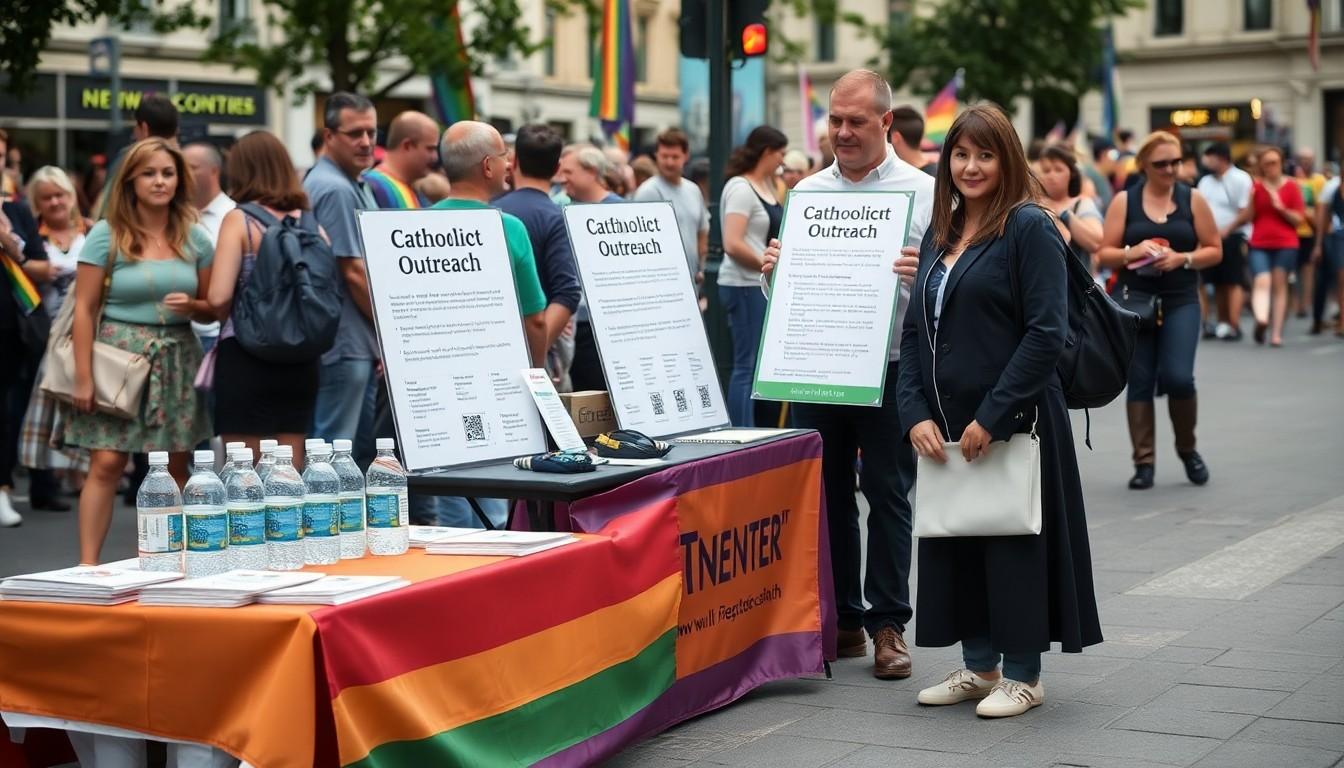
A small Catholic initiative in Vilnius is rethinking Christian outreach at Pride, swapping protest signs for blessed drinking water, conversation and a gentle invitation to explore faith. The approach matters because it creates room for encounter without pretending theological disagreements have vanished, giving visitors a practical, human point of contact rather than another public confrontation.
Essential Takeaways
- A gift came first: Volunteers handed out blessed drinking water instead of opening with protest.
- The project grew: Distribution rose from 500 bottles in its first experiment to 2,000 around the 2026 Vilnius event.
- The invitation continued online: QR codes directed people to Mass times, prayer resources and faith materials.
- Brief encounters still mattered: Some visitors stopped to talk, exchange greetings or leave prayer intentions.
- The bigger aim is welcome: Organisers want a respectful bridge between LGBTQ people and the Catholic Church.
Water changed the tone of the encounter
The first idea was protest. Then a conversation with another Catholic shifted the focus towards something far less combative: offering blessed water to people attending Pride in Vilnius.
That simple change carried a clear sensory contrast. Instead of a shouted argument or a forest of placards, visitors encountered a bottle of cool drinking water and an open hand. The gesture remained visibly Christian, but it began with generosity rather than opposition.
According to the project's account, 500 bottles were prepared for the first initiative, each paired with a small invitation to explore faith. The response challenged expectations, with some people stopping to smile, shake hands, pose for photographs or even offer an embrace.
A difficult conversation gets a softer starting point
The initiative emerged in a setting where relationships between LGBTQ people and the Catholic Church can be tense. Some Catholics fear that a warmer welcome could be mistaken for abandoning church teaching, while some LGBTQ people have experienced Christians as hostile, remote or simply uninterested.
That doesn't make the underlying disagreements disappear. It does, however, suggest that the first step in a meaningful conversation may be seeing a person rather than treating them as a symbol of a debate.
This is the thinking behind Light In The Dark, a Catholic evangelisation project in Lithuania. Its stated aim is to offer a positive encounter with Christians, alongside conversation, prayer and an invitation towards church life.
From 500 bottles to a wider invitation
By 2026, the effort had expanded considerably, with 2,000 bottles distributed during and around Vilnius Pride. Each label carried a QR code, allowing the conversation to continue after the brief handover at the event.
The linked resources included Catholic Mass times in Lithuanian and English, Christian communities, Scripture and meditation materials, plus a way to submit prayer intentions. That matters because most encounters at a busy march last only seconds. A digital invitation gives people time, privacy and control.
The project also encouraged visitors to write prayers in person. Their requests centred on familiar human hopes: happiness, financial security, better family relationships, friendship, trust and a path towards God. Public arguments can make those longings easy to miss, but they often provide the most honest route into a deeper conversation.
What makes this Christian outreach approach different?
The project is not presented as a one-day campaign. Before events, organisers recruit Catholic volunteers, contact clergy and religious communities, and ask Vilnius churches to offer a warm welcome to anyone who might attend Mass after receiving an invitation.
That follow-through is important. Telling someone that church doors are open is easy; making sure they encounter kindness once inside is the harder, more revealing part.
The volunteer team has also been deliberately varied, including people from different countries and backgrounds. William, a volunteer from Uganda, said the group prayed together and hoped the day would prompt greater interest in the church. Another volunteer, Kęstutis, described his motivation simply as wanting to do something good after feeling inspired by God.
A small experiment with a longer horizon
The organisers say the outreach has also changed the Catholics taking part. It has prompted conversations about pastoral sensitivity, faithfulness and how Christians meet people who feel distant from the church.
That may be the project's most interesting ripple effect. A bottle of water is modest, and no one can know what happens after a QR code is scanned or a prayer is written down. Yet a low-pressure encounter can leave space for curiosity, reflection or a future return.
In that sense, Light In The Dark is less a finished answer than an experiment in tone. It suggests that Christian outreach at Pride can be clear about belief while still beginning with listening, dignity and practical kindness.
Sometimes the most persuasive invitation is simply the one that doesn't demand an argument first.
It's a small gesture, but it leaves the door open.
Source Reference Map
Story idea inspired by: [1]
Sources by paragraph: