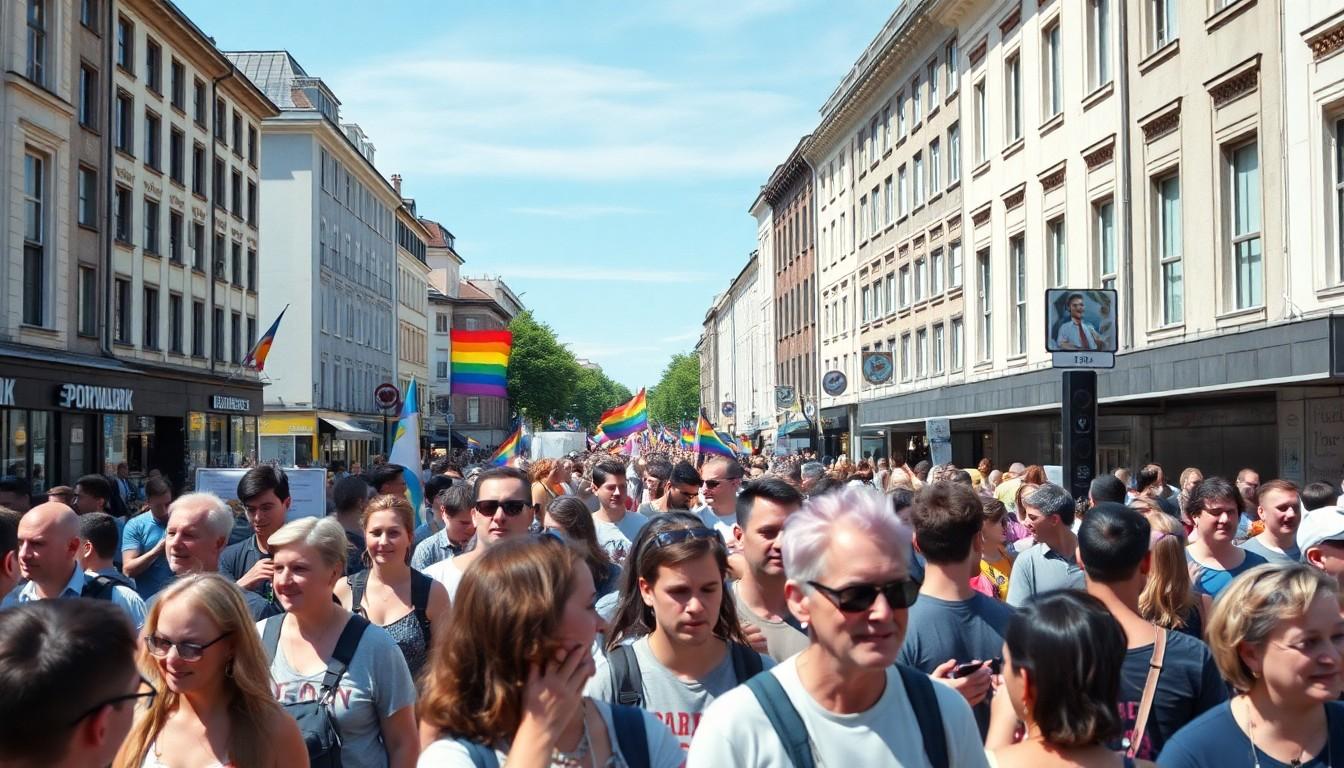
A 42-year-old man has been taken to hospital after an alleged assault near a queer street festival in Berlin-Schöneberg. Police are investigating the incident as a suspected homophobic attack, highlighting continuing concerns about safety around LGBTQ+ events in the German capital.
Essential Takeaways
- The alleged assault: Police say three people approached the man, with one reportedly striking him on the head.
- Medical treatment: The victim was taken to a clinic after the incident.
- Investigation: Berlin's state security unit is examining the case as a politically motivated offence with a homophobic background.
- Festival link: Authorities believe the attack may be connected to a fetish festival held in the area that weekend.
- Unclear details: Investigators haven't established the alleged attackers' genders or identified a motive beyond the suspected anti-gay context.
Man attacked near Berlin queer festival
The alleged assault happened at the edge of a queer street festival in Schöneberg, one of Berlin's best-known LGBTQ+ neighbourhoods. According to police information reported by dpa, a witness saw three people run towards the 42-year-old during the night before one allegedly hit him in the head.
The group is said to have fled immediately afterwards. The man was taken to hospital for treatment, although authorities haven't released further information about the seriousness of his injuries. It was a sudden, ugly interruption to what should have been a celebratory evening.
Why the case is being treated as homophobic violence
Berlin's state security investigators, who handle politically motivated offences, are leading the case. Police are examining the alleged assault as bodily harm with a homophobic background, rather than treating it simply as an unconnected street fight.
Investigators believe the incident may be linked to a fetish festival held in the city over the weekend. That connection remains an early assessment, however, and police haven't publicly confirmed what was said or done before the alleged blow. The identities and genders of the suspected attackers are also not known.
A wider pattern around LGBTQ+ events
The case arrives amid continued concern about anti-LGBTQ+ violence in Berlin. Reporting collected by queer.de has documented attacks and threats affecting LGBTQ+ people in the city, while previous incidents around Pride and queer venues have drawn national attention.
That wider backdrop matters because public events can become both visible targets and important spaces of solidarity. As coverage from Tagesspiegel and international outlets including the Los Angeles Times has shown, incidents around Berlin's queer celebrations can quickly raise questions about policing, prevention and whether people feel safe travelling home afterwards.
What attendees can do if trouble starts
Organisers and visitors can't prevent every attack, but a few practical steps can reduce risk. Stay with friends when leaving an event, keep a charged phone accessible and move towards staffed venues or well-lit public transport stops if a confrontation develops. Don't chase an alleged attacker; preserving distance and calling emergency services is safer.
Anyone who witnesses an assault should note the time, location, direction of escape and any distinctive clothing, but only if doing so doesn't put them at risk. Those details can be useful to investigators, particularly when a group disappears into a busy nightlife area.
The investigation is still developing
Police haven't announced arrests or provided a detailed description of the people involved. That means early accounts should be treated carefully, especially while investigators establish exactly what happened and whether the festival was a direct factor.
Berlin has repeatedly faced scrutiny over security at Pride-related events and LGBTQ+ venues, including cases discussed by German and international media. For festival-goers, the immediate hope is straightforward: that the injured man recovers quickly and that witnesses come forward with information that helps identify those responsible.
It's a small act of violence in one night, but it can leave a much larger shadow over public queer life.
Source Reference Map
Story idea inspired by: [1]
Sources by paragraph: