Turkish LGBT organisations and allied groups are facing fresh website and social-media restrictions, alongside police raids and arrests in Istanbul. The action matters because it reaches far beyond one charity: it affects community information, journalism, dating platforms and public debate, leaving people searching for safer ways to stay connected.
Essential Takeaways
- Websites restricted: Kaos GL and several other LGBT organisations have reportedly been blocked in Turkey.
- Raids and arrests: Police searched offices, homes and venues in Istanbul, with more than ten activists reportedly detained.
- Online pressure: Restrictions have also affected social-media accounts, news outlets, feminist groups and dating services.
- Legal concerns: Turkey's Constitutional Court has previously found some blanket access bans incompatible with freedom of expression.
- Community impact: Blocking trusted information sources can make support, legal advice and health guidance harder to find.
A familiar website has become a new target
For many people, a community website is more than a news page. It can be a quiet route to legal advice, health information, event updates and the reassurance that someone else understands what you're facing. The reported restrictions on Kaos GL and other groups therefore carry a distinctly personal weight.
Kaos GL has previously documented cases in which LGBT news and dating platforms were blocked without clear notice. According to the organisation, some outlets only discovered restrictions after readers reported that pages would not load, creating a murky and frustrating information gap.
That uncertainty is part of the story. A blocked page doesn't always produce a clear warning, while restrictions can vary between mobile networks, platforms and regions. For readers, the experience is less a slammed door than a corridor of half-closed ones.
Police raids add a sharper edge
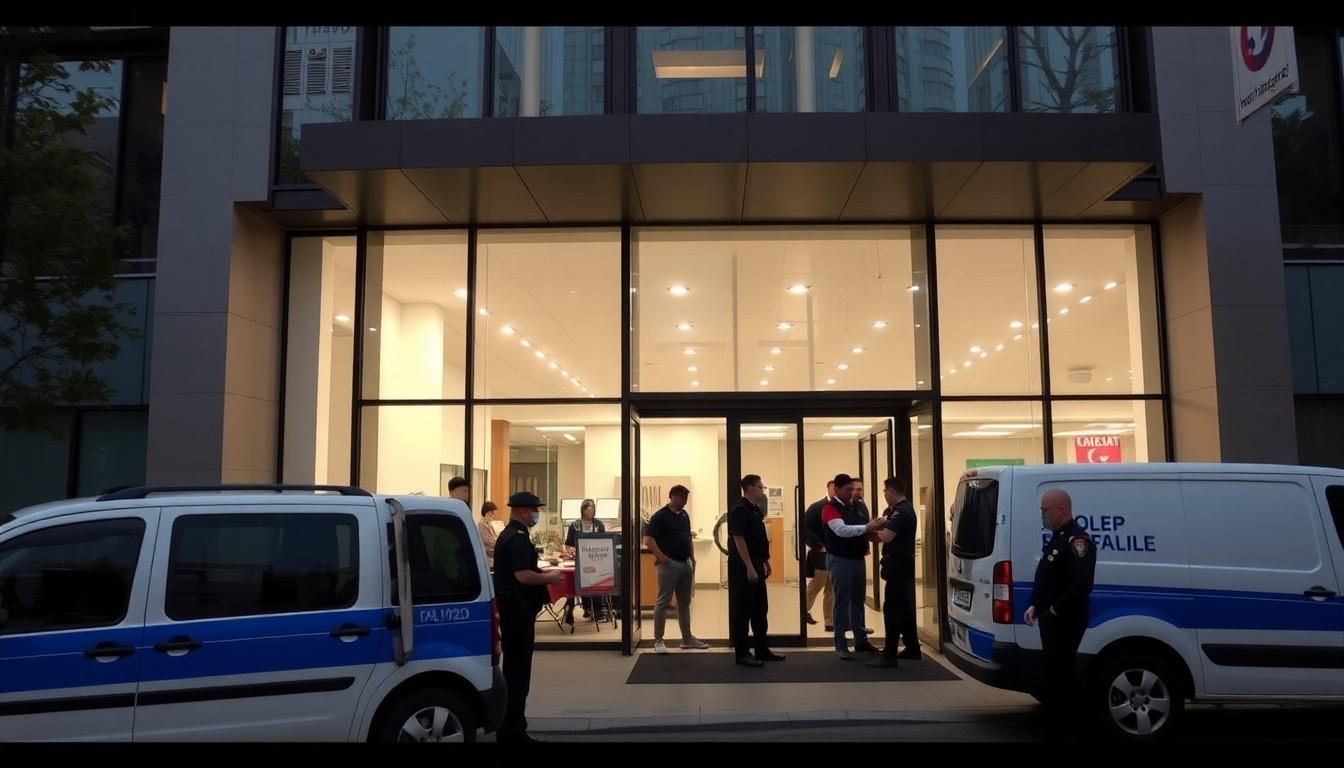
The reported website blocks came alongside searches of Kaos GL offices and the homes of board and supervisory members. Local reports said more than ten activists were detained in an investigation involving allegations including the publication of obscene material and breaches of association law.
Police operations were also reported at nightlife venues, massage businesses and other premises around Beyoglu, Sisli, Taksim and Cihangir. The precise relationship between those searches and the wider investigation remains important, particularly while lawyers have yet to provide a full account of the evidence.
Kaos GL has also faced official censorship arguments in earlier access cases. In one dispute, the organisation said authorities attempted to justify blocking its website through constitutional and public-order reasoning, a move critics say stretches those concepts far beyond their original purpose.
Why the online restrictions matter
Digital bans can sound technical, but their consequences are tangible. When a community organisation disappears from search results or social feeds, people may lose access to emergency contacts, discrimination reporting, counselling referrals and reliable information about their rights.
The organisation has reported that LGBT news portals were sometimes unaware of restrictions affecting them. That lack of notification makes it harder to challenge a decision quickly and leaves readers guessing whether a problem lies with the site, their internet provider or a broader government order.
The pattern also extends beyond one website. Earlier cases involved the dating app Hornet, whose access was blocked and later restored, according to Kaos GL. Turkey's Constitutional Court has ruled in related cases that blanket access bans can violate freedom of expression, yet campaigners say similar restrictions continue to appear.
A wider squeeze on public space
The latest actions follow months of mounting pressure on LGBT organisations, activists and media outlets. Reports have described restrictions affecting dozens of accounts and pages, including feminist groups, student networks and independent journalists.
That breadth matters. It suggests this isn't simply about moderating a particular piece of content, but about narrowing the digital space in which civil-society groups can organise and speak. When websites, social networks and public events are all constrained, even ordinary community work begins to feel precarious.
Pride events in Istanbul have been prohibited repeatedly since 2015, although homosexuality itself isn't a criminal offence in Turkey. The contrast is striking: a community may be legal in principle while facing increasingly limited room to appear in public.
What happens next?
Rights groups are likely to challenge the restrictions through domestic courts and international advocacy. Previous Constitutional Court findings could provide a legal route for appeals, although court action can be slow while blocked organisations and detained activists deal with the immediate consequences.
For readers trying to verify information, it helps to compare several reputable outlets, check official statements and avoid sharing unconfirmed claims about arrests or evidence. People directly affected should also consider trusted legal and human-rights organisations, using secure communication where appropriate.
The deeper concern is simple. Once access to information becomes conditional, silence can spread without anyone formally banning every voice. As one community worker might put it, a website can be a lifeline, not merely a URL.
A free internet needs more than fast connections; it needs room for people to find one another.
Source Reference Map
Story idea inspired by: [1]
Sources by paragraph:
- Paragraph 1: [2], [3]
- Paragraph 2: [3], [4]
- Paragraph 3: [6], [4]
- Paragraph 4: [6]
- Paragraph 5: [2], [4]
- Paragraph 6: [5], [7]
- Paragraph 7: [2], [3]
- Paragraph 8: [6]
- Paragraph 9: [3], [4]
- Paragraph 10: [2], [5]
- Paragraph 11: [3], [6]
- Paragraph 12: [4], [5]
- Paragraph 13: [2], [7]
- Paragraph 14: [2], [3]
- Paragraph 15: [4], [6]
- Paragraph 16: [2], [7]
- Paragraph 17: [3], [4]
- Paragraph 18: [2], [7]