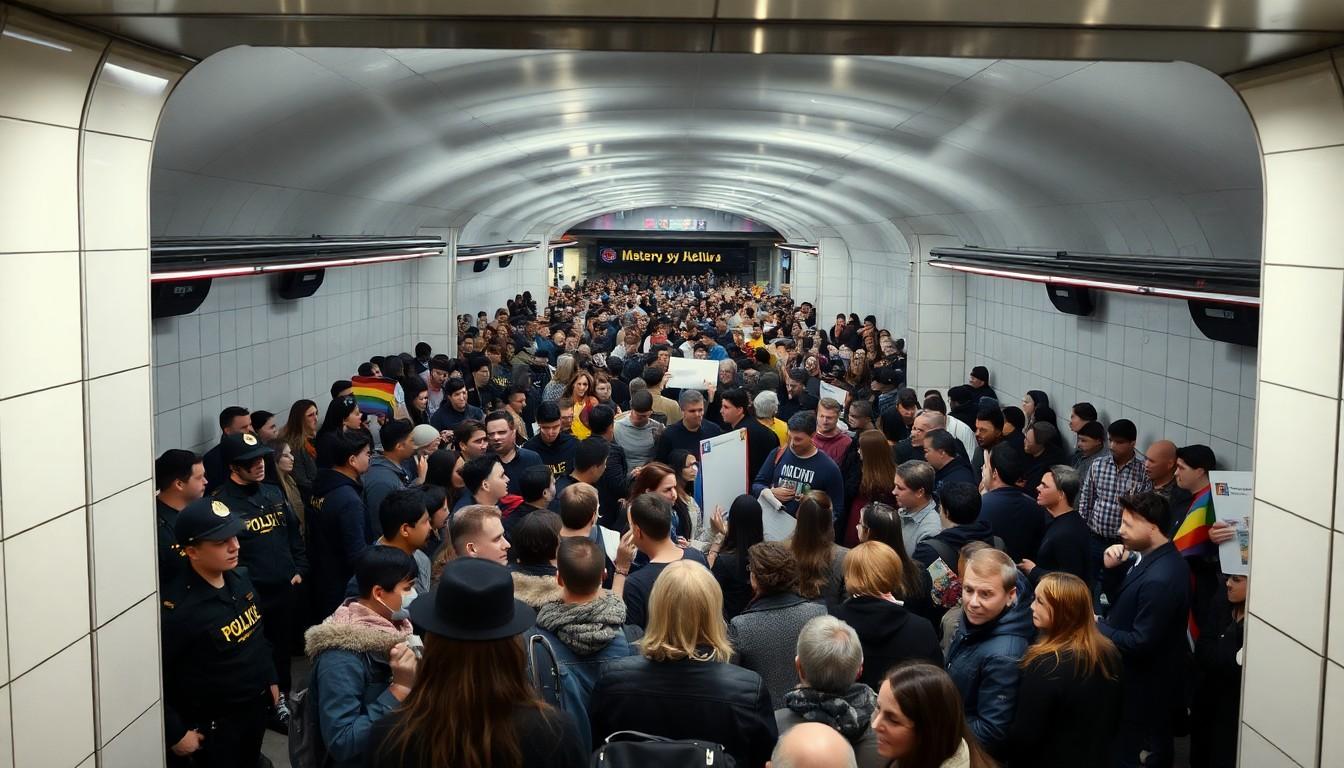
Organisers held Kharkiv Pride in a metro station during an air raid, turning a hidden gathering into a powerful demand for equal rights, legal partnerships and a more European Ukraine. The event drew around 200 people, with police protection, rainbow banners and an unusually stark backdrop: a city still living under the pressure of war.
Essential takeaways
- A first-of-its-kind setting: Around 200 registered participants gathered at Universitet metro station for safety.
- Equal rights remained central: Organisers called for registered partnerships, marriage rights and stronger action against hate crimes.
- Police escorted the march: Officers protected participants from a hostile counter-protest and later helped them leave safely.
- War shaped the programme: A memorial zone honoured LGBTQ+ service members who had been killed or reported missing.
- Support went beyond protest: The wider festival offered health checks, workshops, first-aid training and help for vulnerable people.
A pride march beneath the city
The strongest image from Kharkiv Pride wasn't a parade through a sunlit boulevard. It was a crowd gathering underground, surrounded by concrete, tiled walls and the uneasy quiet of an air-raid shelter. According to reports from local and regional outlets, about 200 people assembled at Universitet station after registering in advance.
Keeping the location secret was a practical decision, not a theatrical one. Kharkiv remains close to the war's frontline pressures, and organisers wanted to reduce the risk of drawing Russian military attention or allowing opponents to block the event. With an air alert under way, the metro offered one of the few places where people could meet with some protection. [2], [3]
The gathering later moved towards Freedom Square and the surrounding streets under police escort. That combination of public visibility and careful security summed up the event: Pride was visible, but never careless. [5], [7]
Equal rights, partnership and protection
Rainbow signs carried straightforward demands, including freedom, equal rights and an end to homophobia. Organisers also renewed calls for the Ukrainian parliament to approve legislation on registered partnerships for same-sex couples, a proposal that has remained stuck since its introduction in 2023. [4], [7]
The proposed framework would give couples important legal safeguards. Shared property could be recognised, partners could inherit from one another, and a surviving partner could access certain social rights if the other person died or disappeared. In wartime, those details aren't abstract: they can determine who receives information, manages belongings or makes practical decisions during a crisis. [4], [6]
The proposal would still fall short of marriage equality. It wouldn't create a route to same-sex marriage or allow registered partners to adopt children, but supporters see it as a meaningful step towards legal recognition. For couples living through displacement, military service and bereavement, even limited recognition could make a painful situation slightly less precarious. [4], [6]
A hostile counter-protest met a protected march
The demonstration was met by black-clad opponents describing themselves as defenders of traditional family values. Reports said the counter-protest took place at Freedom Square, where police stood between the two groups and protected the Pride participants. [3], [6]
The confrontation was more than a clash of slogans. One counter-protest display used a rainbow flag in a mocking message, before participants reportedly trampled it and set it alight. The image was ugly, but it also underlined why organisers are pressing for more effective criminal enforcement against hate crimes. [2], [6]
After the event, buses transported Pride participants to secure locations before they continued their journeys home. It's a reminder that, in Kharkiv, taking part in a rights march can require the same careful planning as any other movement through a city under threat. [3], [7]
The festival offered practical support too
Kharkiv Pride wasn't limited to the march. The two-day programme included a market for local businesses, talks, panel discussions, workshops and first-aid sessions. Visitors could also receive free tests for HIV, hepatitis B, hepatitis C and syphilis, making the festival as much about community care as public protest. [4], [5]
Some participating businesses said they would donate part of their takings to a support centre offering free assistance to LGBTQ+ people and women. That practical strand matters because a Pride event can be both symbolic and useful: it can create visibility while directing people towards health services, advice and a safer network. [4], [5]
The wider Ukrainian LGBTQ+ movement has also been shaped by the war. Community groups have increasingly highlighted the service and sacrifice of LGBTQ+ people in the armed forces, challenging the idea that equality can wait for peacetime. [4], [6]
Remembering those serving and missing
One of the most affecting parts of the festival was a memorial area featuring portraits and stories of LGBTQ+ soldiers who had died or gone missing. It placed military service at the centre of the event, rather than treating Pride as separate from the country's wider struggle. [4], [7]
That focus gives the partnership debate particular urgency. When a service member is killed or disappears, the absence of legal recognition can leave a partner without rights that married couples might take for granted. The proposed legislation wouldn't solve every problem, but it could offer a clearer legal foothold during grief, uncertainty and bureaucratic confusion. [4], [6]
For organisers, the message is therefore both local and national. Kharkiv Pride is asking what kind of city and country Ukraine wants to build while fighting a war. The answer, they argue, should include safety, dignity and equal treatment for LGBTQ+ citizens. [4], [7]
In Kharkiv, Pride became a small but striking act of public courage beneath the sound of an air-raid warning.
Source Reference Map
Story idea inspired by: [1]
Sources by paragraph: