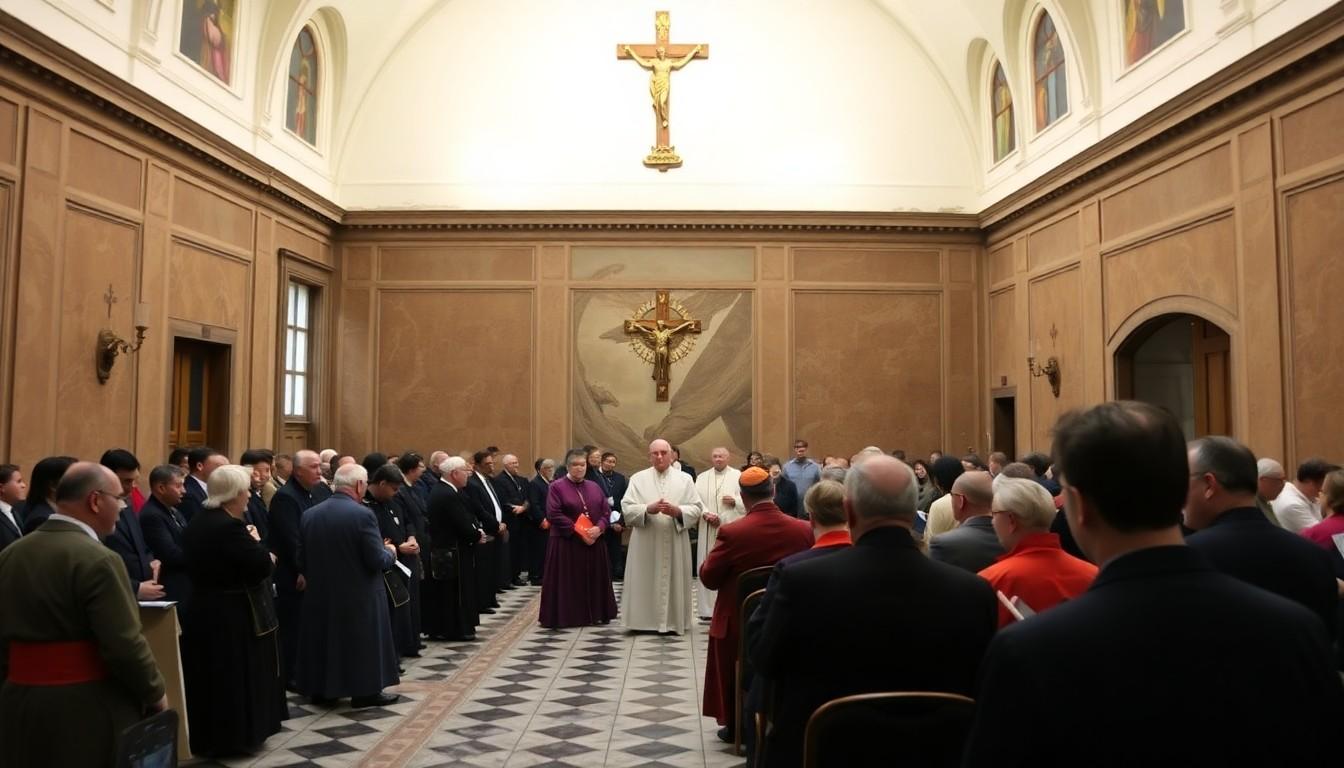
Catholic leaders have gathered in Rome for Italy’s first national conference focused on pastoral care for LGBTQ+ people, signalling a warmer approach to parish life while leaving official teaching unchanged. The meeting matters because it brings bishops, families and ministry groups into the same conversation about dignity, listening and belonging.
Essential Takeaways
- A national first: Around 200 people and roughly a dozen bishops attended the Rome gathering.
- Practical focus: Discussions centred on listening, reducing stigma and helping LGBTQ+ Catholics remain part of parish communities.
- Local examples: Dioceses including Florence, Cremona, Bari and Chiavari shared existing pastoral initiatives.
- Doctrine remains unchanged: The conference represents a shift in tone and practice, not formal Church teaching.
- A continuing journey: The meeting follows a major LGBTQ+ Catholic pilgrimage to Rome in 2025.
Rome gathering puts LGBTQ+ Catholics at the centre
The strongest message from the conference was not a theological announcement, but a change in who was being heard. Catholic representatives met in Rome to discuss how parishes can become less intimidating and more welcoming for gay, lesbian and transgender believers.
According to Outreach Faith, the event brought pastoral workers and Church figures together around the everyday realities of LGBTQ+ Catholics and their families. That means conversations about rejection, silence and the simple question of whether someone feels safe enough to walk through a parish door.
The gathering took place at the General Curia of the Society of Jesus, giving the event a setting closely associated with pastoral discussion and reform-minded Catholic thinking. Its size also gave it weight. This wasn't a small local initiative tucked away from public view.
Bishops share what inclusion looks like on the ground
Representatives from several Italian dioceses described programmes already under way. Florence highlighted its pastoral work and Casa di Andrea, a temporary home for LGBTQ+ young people facing difficulties within their families.
The Conference of Catholic Bishops of Calabria reported that the meeting also reflected wider efforts to open Church spaces to LGBTQ+ people. In practice, that can mean trained pastoral teams, family support and a willingness to listen before offering judgement.
Bishop Antonio Napolioni of Cremona called for every believer to receive full dignity through a family-like welcome, according to the event coverage. It's a modest-sounding principle, but one that has real force for people who've previously felt asked to choose between their faith and their identity.
A warmer welcome does not mean doctrine has changed
This is where the story needs careful handling. The conference doesn't change the Catholic Church's official position on marriage, sexuality or gender. Instead, it shows some parts of the Italian Church trying to improve pastoral care within those existing boundaries.
The distinction can feel frustrating, especially for Catholics who want full equality rather than a more sympathetic welcome. But it also explains why the meeting matters. As Urania Institute reported, the discussion represents movement in pastoral practice even while formal doctrine remains in place.
For families, the difference may be felt in small but significant ways: a priest who listens, a parish group that doesn't treat someone as a problem, or a young person who isn't made to feel that home and faith are opposing worlds.
The conference follows a landmark pilgrimage
The Rome meeting arrives after a notable moment in September 2025, when more than 1,000 LGBTQ+ Catholics, relatives and supporters travelled to the city from around the world. Their pilgrimage appeared on the official Holy Year calendar, although that listing wasn't the same as formal Vatican sponsorship.
According to Sete Margens, the pilgrimage helped make LGBTQ+ Catholic presence visible within one of the Church's most important public celebrations. Participants also followed the Jubilee tradition of passing through the Holy Door at St Peter's Basilica.
That public visibility matters. A conference can change the language used by institutions, while a pilgrimage shows people occupying space together. One is about policy and pastoral direction; the other is about presence, emotion and belonging.
Italy’s Catholic inclusion debate is still unfolding
The meeting's organisers have described it as the beginning of a journey rather than a final destination. That wording feels appropriate. The Church's formal teaching remains a substantial barrier for many LGBTQ+ Catholics, even as some bishops and pastoral groups push for greater care.
ANSA has also reported wider Catholic initiatives aimed at challenging hostility and discrimination against LGBTQ+ people, suggesting that the Rome conference sits within a broader, if uneven, movement. These efforts won't resolve every dispute, but they can influence how people are treated in ordinary parish life.
For now, the most important change may be that inclusion is being discussed openly and nationally, with bishops in the room. That's not equality, but for people who've spent years feeling invisible, it can be the first visible sign that the conversation is no longer happening without them.
The Italian Church has opened a door. The harder question is how far it will be willing to walk through it.
It's a meaningful beginning, but LGBTQ+ Catholics will be watching what comes next.
Source Reference Map
Story idea inspired by: [1]
Sources by paragraph: