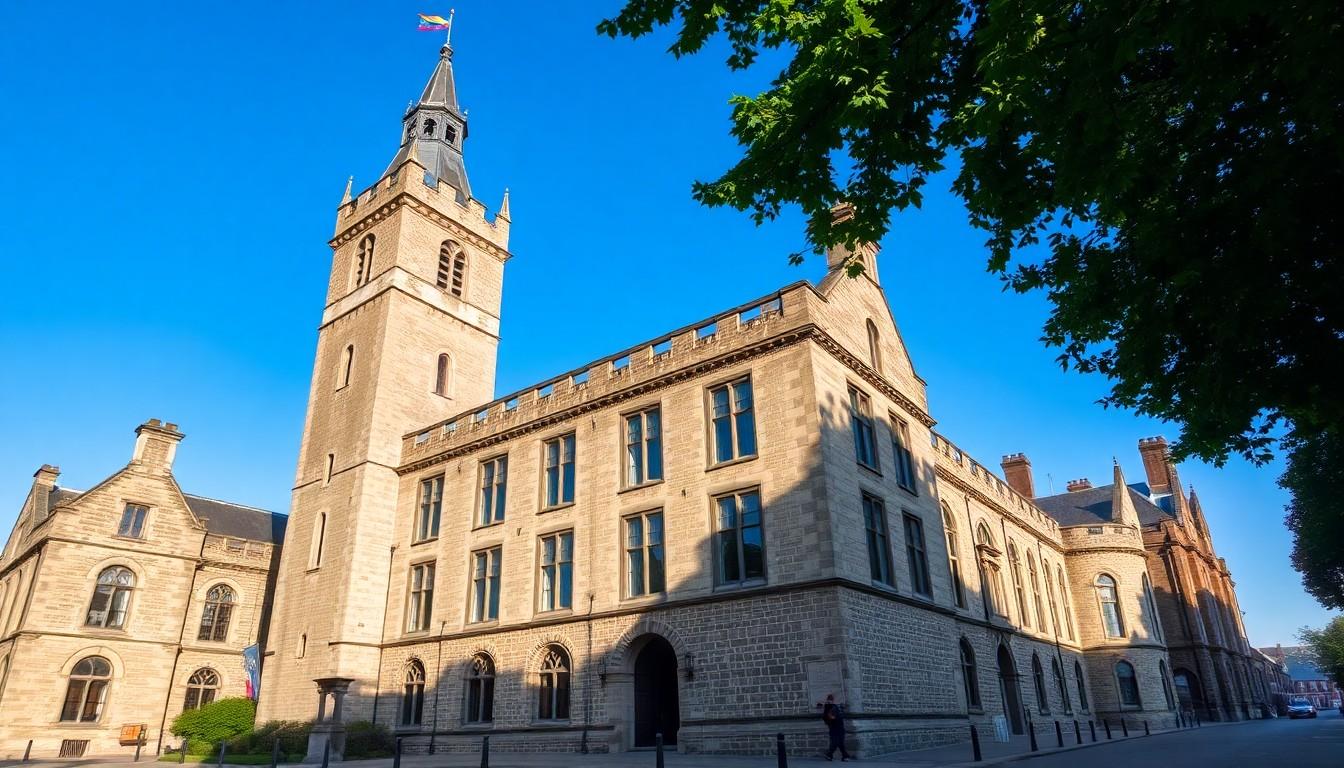
Visitors to Norwich Castle Museum are discovering how cartoons, badges and textiles can challenge discrimination without shouting. The exhibition Kindly Ease The Tension explores LGBTQ+ history through the work of artist David Shenton, showing how personal memories, grief and everyday craft can become a gentle but striking form of protest.
Essential Takeaways
- Gentle activism: The exhibition shows how humour, craft and visual storytelling can question prejudice.
- Personal history: David Shenton’s work draws heavily on LGBTQ+ experiences and events that shaped his life.
- AIDS memorial: His Duvet of Love uses hundreds of badges to depict two men embracing.
- Everyday materials: Textiles and familiar objects give the work an intimate, tactile quality.
- A lasting message: Quiet protest can preserve memories while opening conversations about equality.
When protest feels personal, it can hit harder
The most striking thing about Kindly Ease The Tension is its intimacy. Rather than relying on grand gestures, the exhibition uses cartoons, fabric and collected badges to explore discrimination, identity and loss. The result feels approachable at first glance, but the stories underneath carry real emotional weight.
That balance reflects David Shenton's long career as a cartoonist. His work has often used wit to examine LGBTQ+ life, but the exhibition also reveals how humour can sit alongside sorrow. A bright image or playful line may invite visitors in, then leave them thinking about the prejudice behind it.
The BBC reported that Shenton has been drawing since the 1970s and that the exhibition focuses largely on LGBTQ+ issues and the events that have shaped his life. That personal angle matters: these aren't distant historical symbols, but pieces rooted in lived experience.
Duvet of Love turns memory into a memorial
At the heart of the exhibition is Duvet of Love, a textile work made from hundreds of badges. Arranged as a mosaic portrait of two men embracing, it commemorates friends Shenton lost during the AIDS crisis.
The piece began with something private and comforting. After moving to London and feeling deeply unhappy, Shenton pinned his badges to his duvet. Norwich Castle's account of the work describes how that ordinary habit eventually developed into a memorial, transforming personal comfort into public remembrance.
There's something especially affecting about that journey. A duvet suggests rest, safety and home, while the badges carry the sharper language of identity and public belonging. Together, they create an object that feels soft in material terms but quietly defiant in meaning.
What does "craftivism" really mean?
Shenton has been described as a "craftivist", a term that combines craft and activism. Yet, according to the BBC, he said he hadn't set out to become one. That reluctance is revealing, because many forms of creative protest begin with making, remembering or coping rather than with a formal campaign.
Craft-based activism can work precisely because it feels human-scale. Stitching, pinning and assembling take time, and that visible labour encourages people to pause. Unlike a disposable slogan, a handmade object can hold evidence of patience, care and accumulated experience.
Research and museum-sector writing on craftivism has explored how textiles can carry social and political messages while remaining accessible to visitors. The approach also challenges the old idea that activism must always be loud. Sometimes, a carefully made object can keep a difficult subject in the room for longer.
Cartoons make difficult conversations easier to start
The exhibition's cartoons add another layer to the textiles. Cartoons can compress a complicated argument into a single image, using exaggeration or humour to expose unfairness. That makes them useful when subjects are painful, controversial or otherwise hard to discuss.
They can also create a gentler entry point for visitors who may not know much about LGBTQ+ history. A smile can become a moment of recognition, followed by a question: what is this image really saying, and why did it need to be said?
That combination of accessibility and challenge is one of the show's strengths. The work doesn't soften the reality of discrimination, but it gives audiences different ways into the conversation. Some visitors may respond to the political message, while others connect first with the material, the joke or the memory.
Why quiet protest still matters
The AIDS crisis left behind vast personal and community archives, but many stories remain fragile. Reports on documenting the HIV and AIDS epidemic have highlighted the importance of preserving testimony, objects and visual records before they disappear. Works such as Duvet of Love help keep that history tangible.
Textiles are particularly good at carrying this kind of memory. They can be touched, repaired, layered and passed on, making them feel closer to family keepsakes than conventional monuments. That closeness can make historical loss feel immediate rather than remote.
For visitors, the exhibition offers a useful reminder that protest isn't always a march or a headline. It can be a badge pinned to fabric, a cartoon shared with a friend or a memorial made from the things someone kept close. And sometimes, that quietness is exactly what makes the message endure.
It's a small, handmade gesture with a very large memory inside it.
Source Reference Map
Story idea inspired by: [1]
Sources by paragraph:
- Paragraph 1: [2], [4]
- Paragraph 2: [3], [5]
- Paragraph 3: [6], [7]
- Paragraph 4: [2], [4]
- Paragraph 5: [3], [5]
- Paragraph 6: [6], [7]
- Paragraph 7: [2], [3]
- Paragraph 8: [4], [5]
- Paragraph 9: [6], [7]
- Paragraph 10: [2], [3]
- Paragraph 11: [5], [7]
- Paragraph 12: [2], [4]
- Paragraph 13: [6], [7]
- Paragraph 14: [3], [5]
- Paragraph 15: [2], [4]
- Paragraph 16: [6], [7]
- Paragraph 17: [3], [5]
- Paragraph 18: [2], [6]
- Paragraph 19: [4], [7]
- Paragraph 20: [3], [5]
- Paragraph 21: [2], [6]