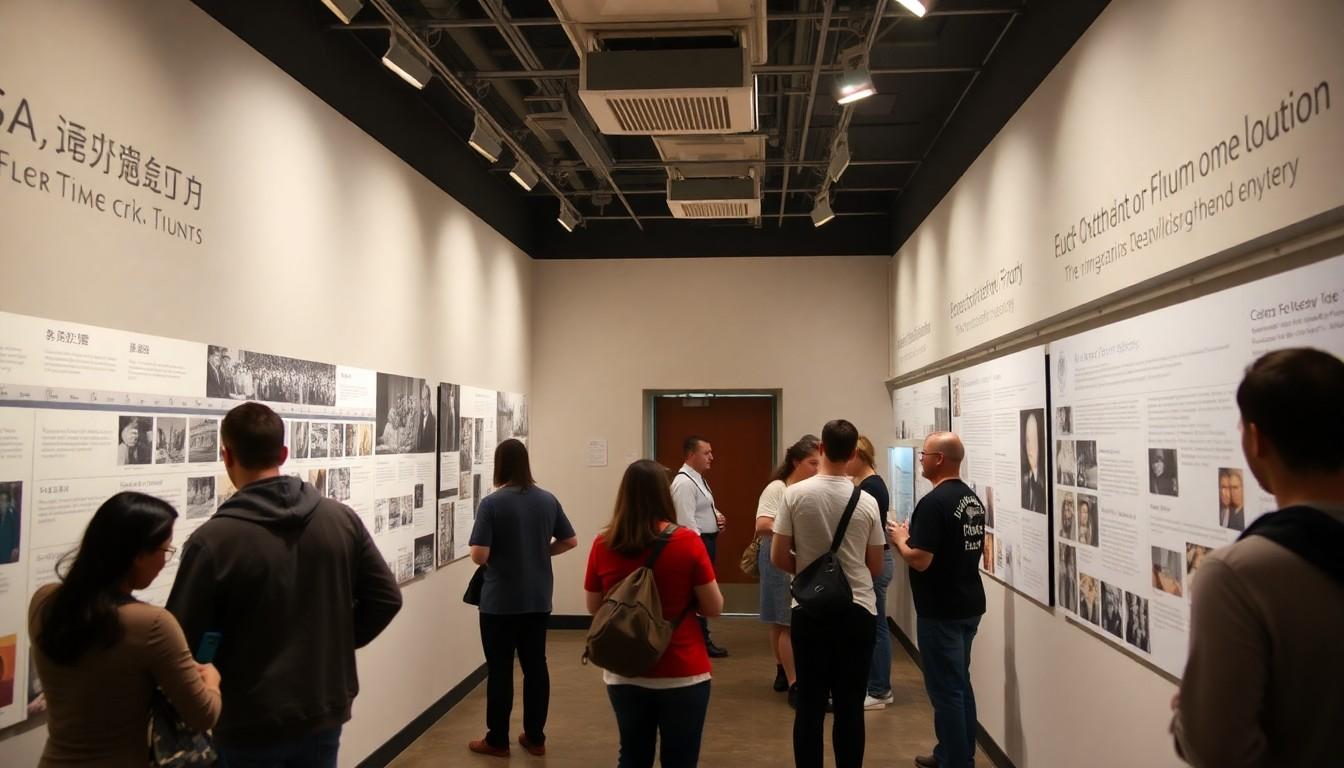
Visitors are discovering the OUT Museum, the world’s first Chinese LGBTQ+ museum, in San Francisco’s Chinatown. Free to enter and volunteer-run, the intimate Saturday exhibition offers art, performance and personal histories, creating a much-needed place for Chinese queer communities and allies to meet, reflect and feel seen.
Essential Takeaways
- A historic first: The OUT Museum presents itself as the first museum dedicated to Chinese LGBTQ+ histories and culture.
- Small but ambitious: The current exhibition occupies one room and opens on Saturdays by reservation.
- Free to visit: Volunteers run the museum, keeping admission accessible to the community.
- Stories take centre stage: Visitors encounter opera, photographs, keepsakes, timelines and interactive art.
- A wider mission: Organisers hope to expand the museum’s space, opening hours and public programme.
A small Chinatown museum with a big purpose
San Francisco’s Chinatown has gained a quietly significant new landmark. Tucked among its busy streets, food shops and distinctive architecture, the OUT Museum offers something visitors won’t find anywhere else: a dedicated home for Chinese LGBTQ+ stories.
The museum opened in May with a free, one-room exhibition, according to KALW. It currently welcomes visitors on Saturdays, with advance reservations required through its website. The arrangement is modest, but that almost makes the experience feel more personal. Rather than a vast institution to rush through, it’s a space designed for lingering.
The museum’s own website says its purpose is to preserve queer creativity, life stories, social movements and cultural work from Chinese-speaking communities, including immigrants and the wider diaspora. That gives the project a broad reach, even while its physical footprint remains compact.
What can visitors see inside?
The opening exhibition brings together several forms of storytelling. A two-person opera performance sits alongside a colour-coded historical timeline, while an interactive yarn installation invites visitors to trace their own experiences of gender and sexuality.
There are also mixed-media displays built from family photographs, heirlooms and personal keepsakes. These everyday objects carry a particular emotional weight. A photograph or treasured possession can say plenty about a life before anyone adds a label or explanation.
Coverage from the South China Morning Post highlighted the museum’s focus on a community often overlooked by mainstream cultural institutions. The result isn’t simply a display of art. It’s an attempt to connect private memories with a larger shared history.
Why this museum matters now
The OUT Museum was founded by Xiangqi Chen, who left China after increasing pressure on LGBTQ+ activism. After arriving in San Francisco as a visiting scholar in 2022, she became more involved with local Asian American queer networks through cultural and artistic work.
That experience helped shape the museum’s direction. Chen saw what could happen when people had room to meet across generations, backgrounds and languages. The museum is therefore as much a community project as a cultural one.
Helen Zia, an author and activist who sits on the museum’s advisory board, has stressed the importance of having a visible physical space. For communities that can face stigma in both their countries of origin and immigrant communities abroad, simply being represented publicly can be powerful.
GayCities reported that the museum aims to help visitors recognise the humanity and creativity of Chinese queer communities. That may sound straightforward, but visibility still matters enormously when many stories remain absent from traditional museums and media.
Personal histories give the project its emotional pull
Some of the most affecting moments have come from visitors rather than the exhibition itself. Chen has described meeting a transgender man who immigrated to the United States decades ago to seek gender-affirming care, as well as a mother hoping to better understand her gay adult son.
Those encounters show why the museum’s audience extends beyond LGBTQ+ visitors. Allies, relatives and older members of the Chinese diaspora may arrive with questions, memories or uncertainty. A welcoming cultural setting can make difficult conversations feel less abstract.
The museum is also staffed entirely by volunteers, according to the San Francisco Bay Area Times. That gives the project an unmistakably grassroots character. It may lack the polish and scale of a major national institution, but it has something equally valuable: people who are personally invested in why the doors are open.
How to plan a visit to the OUT Museum
At present, visitors should check the museum’s website before travelling. The space is free, but opening is limited to Saturdays and reservations are needed. That’s worth planning around, especially if you’re visiting Chinatown as part of a wider San Francisco itinerary.
Allow time to take in the details rather than treating it as a quick stop. The objects, colours and personal stories are intended to encourage reflection, and the intimate setting means the atmosphere may change depending on who else is there.
The museum’s long-term plans include expanding its premises and increasing its hours. For now, its small scale is part of the charm. It feels less like a finished monument and more like the beginning of an important conversation.
A cultural bridge built one story at a time
The OUT Museum’s ambitions reach beyond San Francisco. Its organisers describe it as a bridge between generations, regions and queer Chinese experiences, linking people whose lives may otherwise remain separated by geography, language or family history.
That makes the museum part of a wider shift in LGBTQ+ cultural work. Communities are increasingly creating their own archives and exhibition spaces, preserving experiences that larger institutions were slow to collect. The work can be intimate, handmade and volunteer-led, yet still historically important.
As Hong Kong artist Dixon Ngai told the Associated Press, Chinese queer people exist even when mainstream media fails to represent them. The museum’s message is simple, but it lands with force: these lives have always been here, and they deserve room to be remembered.
It’s a small museum with the potential to become a lasting part of San Francisco’s cultural landscape.
Source Reference Map
Story idea inspired by: [1]
Sources by paragraph:
- Paragraph 1: [2], [4]
- Paragraph 2: [3], [5]
- Paragraph 3: [7]
- Paragraph 4: [4], [6]
- Paragraph 5: [3], [5]
- Paragraph 6: [2], [4]
- Paragraph 7: [5], [6]
- Paragraph 8: [2]
- Paragraph 9: [3], [7]
- Paragraph 10: [4], [6]
- Paragraph 11: [2], [7]
- Paragraph 12: [3], [5]
- Paragraph 13: [4], [7]
- Paragraph 14: [2], [6]
- Paragraph 15: [3], [5]
- Paragraph 16: [4], [7]