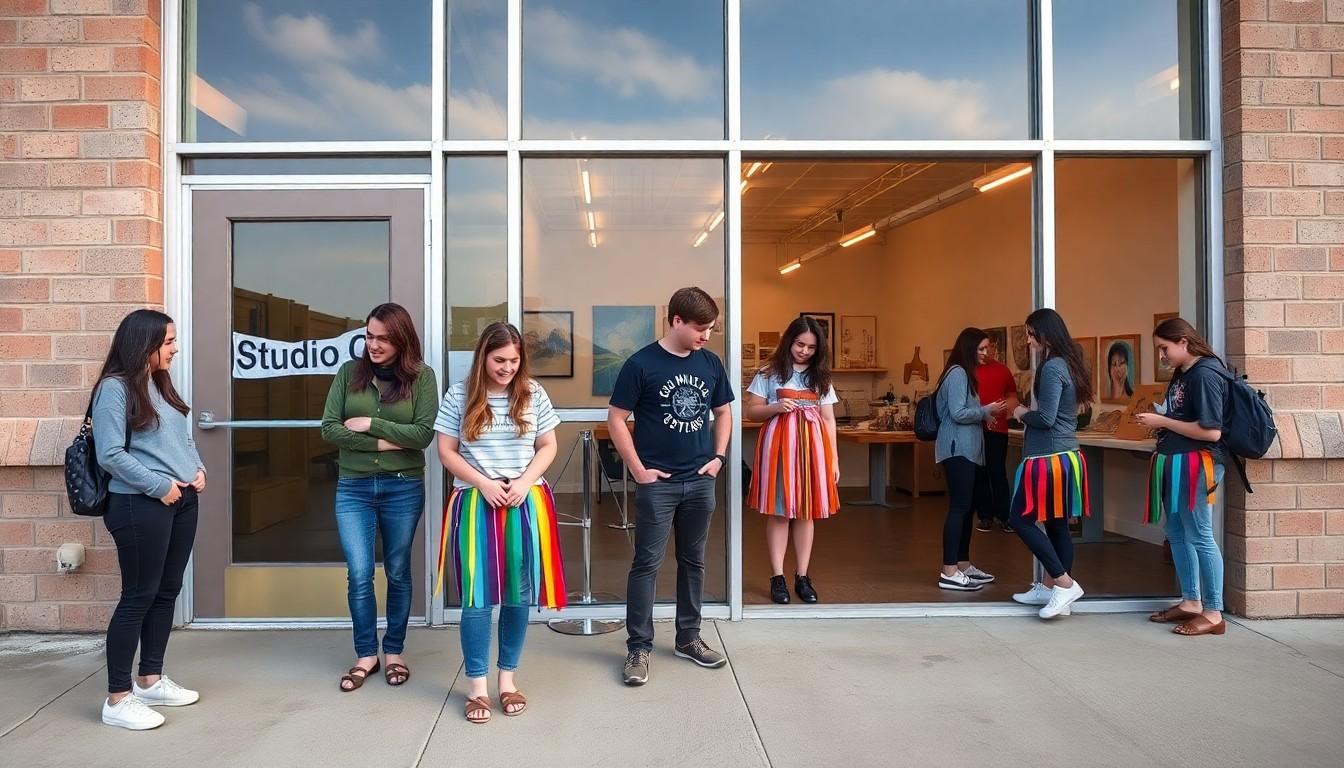
Young queer and Two-Spirit people in Prince Albert are finding more than a place to make art at Studio Q. The open studio offers practical creative time, friendly faces and a sense of safety, showing why accessible community spaces matter when acceptance elsewhere can feel uncertain.
Essential Takeaways
- A creative welcome: Queerative Night Open Studio gives people room for ribbon-skirt making and other art projects.
- Community comes first: Visitors can work alongside friends, meet new people and build trusted connections.
- Safety matters: The space is designed to support queer, Indigenous and Two-Spirit youth.
- Art opens doors: Informal workshops and open studios can make community participation feel less intimidating.
- The wider picture: Similar arts initiatives are celebrating Indigiqueer and Two-Spirit voices across Canada and beyond.
A quiet room can make a loud difference
The most important thing happening at Studio Q isn't necessarily the finished artwork. It's the atmosphere: scissors snipping fabric, people chatting over projects and a room where visitors don't have to explain who they are before settling in.
The Prism Project's Queerative Night Open Studio in downtown Prince Albert was created as a welcoming place for queer and Two-Spirit people and young people to work on ongoing creative projects. Participants could make ribbon skirts, share ideas and spend time with others who understood the value of being accepted.
That combination of activity and belonging is powerful. According to the Prince Albert Daily Herald, attendees described the event as a useful way to connect with community while doing something practical with their hands.
Why Studio Q matters to local youth
For some visitors, joining a new group can feel daunting, particularly in a place where queer acceptance hasn't always been taken for granted. An open studio softens that first step because people don't have to arrive with a polished introduction or a big reason for being there. They can simply bring a project.
Studio Q's wider programme has also included live music, including punk shows that attract a broad age range. That matters because community isn't built through one type of event alone. A sewing table, a gig and a casual conversation can all become routes into friendship.
The local arts scene has increasingly recognised the need for spaces that support 2SLGBTQ+ learning and expression. Earlier coverage of Studio Q and the Prism Project has highlighted their work around teaching and community-building in Prince Albert.
Art becomes a shared language
Ribbon-skirt making is both creative and meaningful, so it naturally creates opportunities to talk, teach and learn. Someone who might feel awkward walking into a formal meeting can often find it easier to sit beside another person, choose materials and let conversation happen at its own pace.
That approach reflects a broader movement in Indigenous and queer arts. Regina exhibitions have celebrated Two-Spirit and Indigiqueer artists, giving visibility to work that carries personal, cultural and political weight. As Indiginews has reported, these exhibitions help place artists' identities and stories at the centre rather than treating them as an afterthought.
The result is more than a pleasant evening. Creative spaces can help people see themselves reflected in local culture, which is particularly important for young visitors still working out where they belong.
How welcoming art spaces get the details right
The best open studios tend to feel relaxed rather than over-programmed. Clear information, approachable organisers, accessible materials and the freedom to watch before joining in can make a surprisingly big difference.
It also helps when a venue offers several ways to participate. Some people want to collaborate, others prefer quiet concentration and a few may come mainly to meet friends. A flexible studio can accommodate all three without making anyone feel as though they're doing community participation incorrectly.
Other arts organisations use similar models, combining studio time with mentorship, workshops or shared resources. The California Arts Council's support for community-focused studio projects shows how these environments can provide both creative development and a reliable social anchor.
The invitation is simple: come as you are
The message from Studio Q is refreshingly straightforward. You don't need to be an expert artist, arrive with a finished idea or know everyone in the room. You can bring a half-made project, a curious mind or simply the hope of meeting someone kind.
That openness is especially valuable for queer and Two-Spirit youth who may not receive consistent support at home or in other parts of their community. Prince Albert's wider arts network also includes open studio opportunities, helping make creativity feel less like a private hobby and more like something people can share.
One attendee's reflection captures the human side of it: a welcoming venue can become the place where friendships finally start to stick. Sometimes a table, a few materials and a little trust are enough to change how a city feels.
A safe art studio can be the first thread in a much stronger community fabric.
Source Reference Map
Story idea inspired by: [1]
Sources by paragraph: