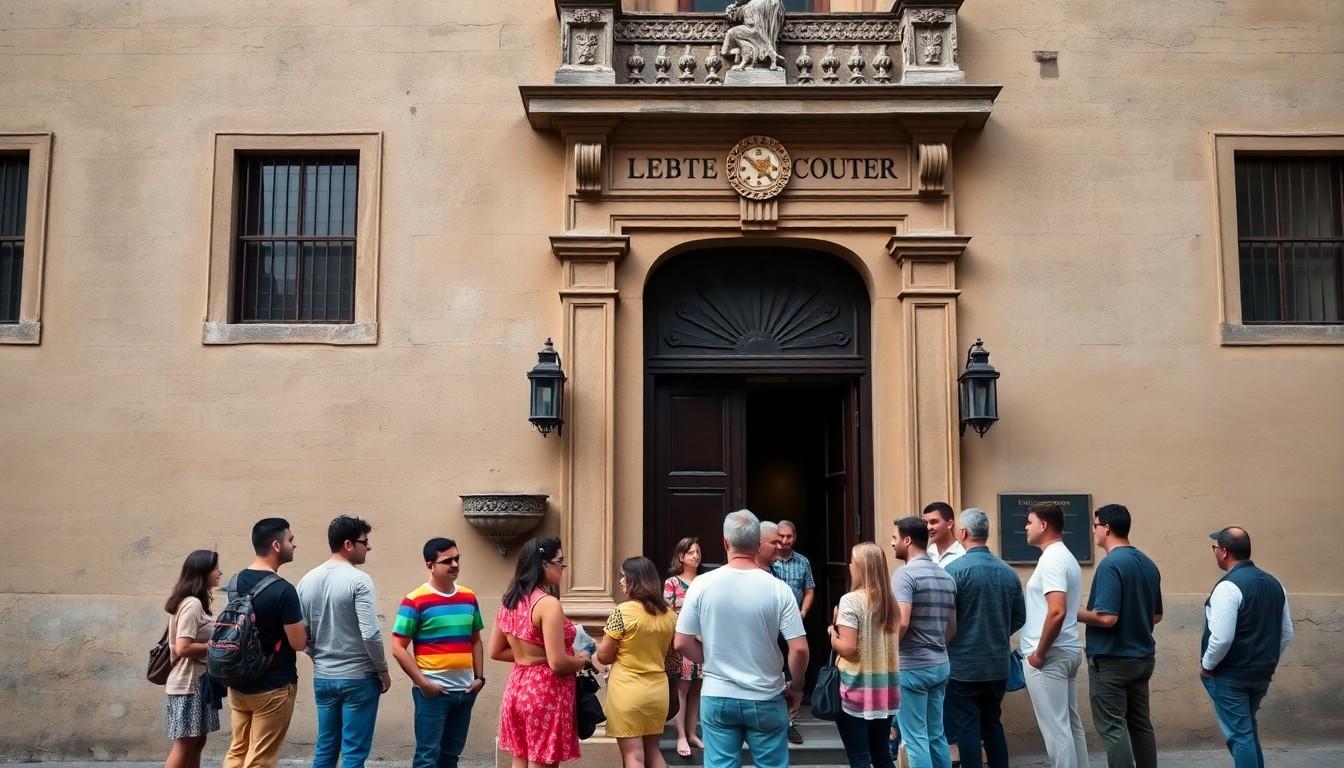
Visitors and locals are rediscovering Cordoba's LGBT+ nightlife history, from discreet meeting places under repression to vibrant bars, clubs and cultural venues. These spaces offered far more than music and dancing: they created safety, friendship and visibility, helping queer communities build a shared identity across more than five decades.
Essential Takeaways
- A 50-year story: Cordoba's LGBT+ nightlife stretches from private gatherings and Akies to later clubs such as Piaf, Somos, Beep Pub, Hangar 18 and Zen Disco.
- More than nightlife: Bars and clubs provided belonging and protection when public life could be hostile or dangerous.
- Performance evolved: Transformism gradually opened into broader drag aesthetics, influenced by pop, electronic music and international culture.
- The scene moved outward: Since the mid-2010s, drag has reached theatres, museums, cultural centres and university-linked events.
- Community remains central: New LGBT+ venues continue the tradition of creating spaces shaped by and for queer people.
Cordoba's LGBT+ nightlife began as a refuge
The most important thing about Cordoba's LGBT+ bars isn't the dance floor. It's the door. For generations, getting through it could mean finding somewhere to relax, flirt, perform and be recognised without having to explain yourself.
Research into the city's transformist scenes shows that queer social life existed through private parties and informal meeting points as well as established venues. During the 1970s and 1980s, dictatorship, police pressure and conservative attitudes made those encounters difficult, but they didn't disappear. According to the Escenas Transformistas project, these early networks helped preserve performance and community through particularly tense years.
Akies, which operated in a house in the San Vicente neighbourhood between 1975 and 1985, is remembered as one of the places that offered that kind of shelter. Its owner, Marcela Juarez, known as La Pochocha, became an important figure because she made room for queer gatherings and performances when public options were scarce.
Piaf and Somos gave the democratic era a soundtrack
After democracy returned, Cordoba's LGBT+ nightlife expanded and became more visible. Piaf Disco, opened in 1983, is one of the city's best-known examples, moving between several locations before eventually continuing in San Martin until 2010. Its long run reflects how quickly a meeting place can become part of a city's emotional map.
Somos followed in 1984, adding parties, fancy-dress nights, competitions and celebrations to the usual formula of music and dancing. Those details matter because they show how these venues worked socially. They weren't simply places to consume nightlife; they were places where friendships were formed and rituals were repeated.
As La Voz has documented, Beep Pub and Hangar 18 later became closely associated with the city's queer night scene. For many people, memories of these venues are likely to be as much about the crowd, the atmosphere and the sense of recognition as they are about the buildings themselves.
Hangar 18 helped drag find a new visual language
The stage changed as the 1990s progressed. Earlier performances often centred on transformism and impersonating famous women from music, film and theatre, including Liza Minnelli, Marilyn Monroe and Madonna. These acts demanded skill, glamour and a healthy tolerance for hairspray, but they also created a platform for artists to develop their own presence.
Hangar 18 became especially significant because artists began exploring forms of drag that went beyond straightforward imitation. More distinctive styling, choreography, pop references and electronic music helped widen the vocabulary of performance. The shift didn't erase transformism; it added new possibilities.
The Escenas Transformistas archive is valuable here because it treats these artists and venues as part of cultural history rather than as colourful footnotes to nightlife. That perspective gives proper weight to performers whose work helped shape Cordoba's artistic identity.
Why these venues mattered beyond a night out
A club can look ordinary from the pavement, especially in daylight. Inside, though, it may become a social infrastructure: a place to meet others, exchange information and feel briefly protected from the expectations of family, work or public life.
That role was particularly important when LGBT+ people faced hostility or isolation. The historical accounts gathered by Argay and related cultural projects show how nightlife allowed people to sustain relationships and creative practices even when public visibility carried risks. In that sense, a dance floor could function as both entertainment and quiet resistance.
Today's LGBT-friendly travel guides also point to Cordoba's broader reputation as a welcoming destination. But the city's present-day openness didn't appear overnight. It was built through decades of people keeping venues open, supporting performers and returning to spaces where they felt at home.
The drag scene has stepped beyond the club
Over roughly the past 15 years, drag in Cordoba has spread into theatres, museums, cultural centres and university-linked projects. Since around 2015, collectives and recurring events have helped create a wider circuit, including Tarde Marika Maricas, Dragmaticas and Entre Piernas Noches de Club.
Several forces encouraged that change. Legal advances, including marriage equality and gender identity protections, helped reshape public life, while international programmes such as RuPaul's Drag Race introduced new audiences to drag as a broad performance art. Local artists, however, have given the scene its own accent, humour and politics.
Newer venues continue that tradition. The opening of Cucinattta, described by El Resaltador as an LGBT+ bar driven by the trans community, suggests that the story is still being written. At the same time, reports of vandalism against LGBT+ spaces are a reminder that visibility and safety can't be taken for granted.
Cordoba's old clubs are remembered because they made room for people to meet. The newer scene matters for the same reason, even when the setting is a museum, theatre or neighbourhood bar. The names and aesthetics may change, but the need for belonging remains wonderfully stubborn.
Closing Line
Explore Cordoba's queer history with curiosity, respect and plenty of room for the next chapter.
Source Reference Map
Story idea inspired by: [1]
Sources by paragraph: