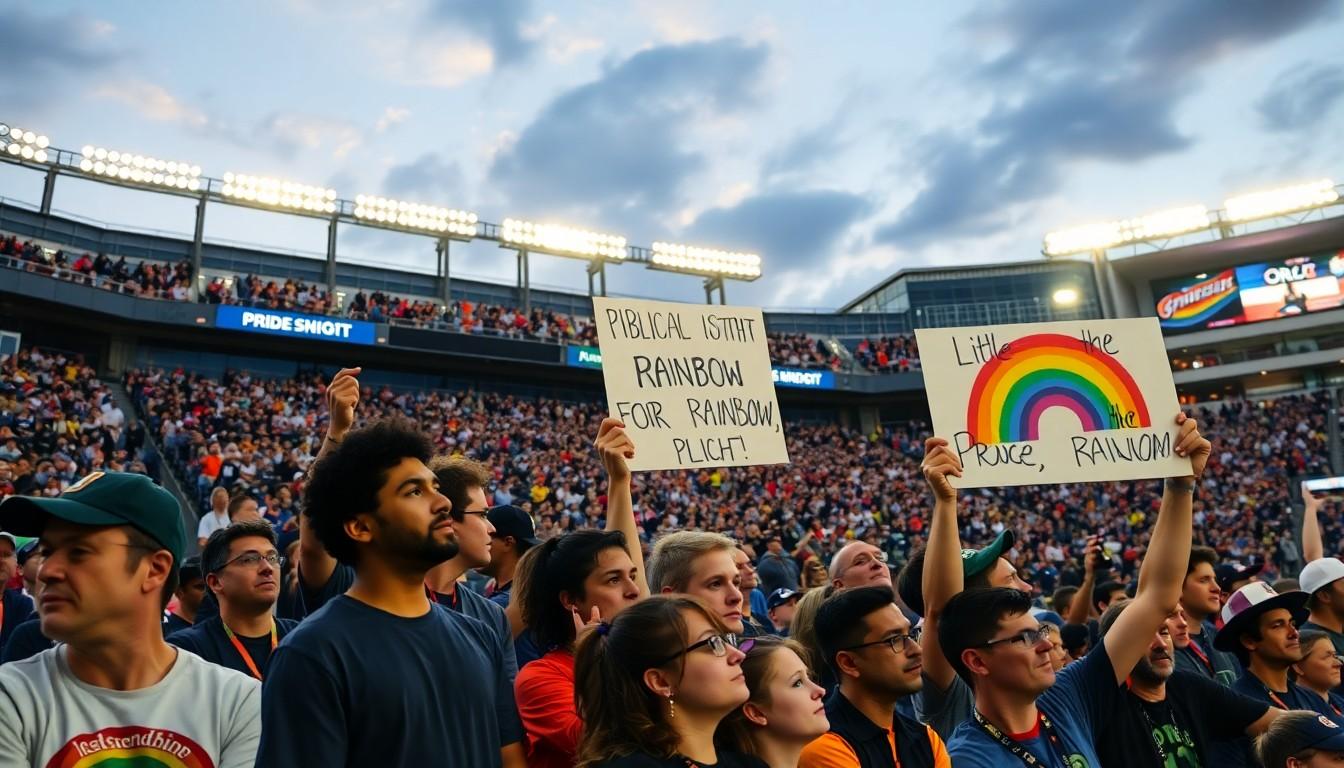
Athletes are bringing Christian faith into public view, reopening a debate over who gets to define the rainbow and why sports remain such a powerful place for cultural change.
Essential Takeaways
- The rainbow has layered meanings: It appears in the biblical story of Noah and later became a global LGBTQ symbol.
- Gilbert Baker created the first rainbow flag: The artist designed it for San Francisco's 1978 Pride celebration.
- Sports offer a huge platform: Athletes can reach young audiences with messages about faith, discipline and identity.
- The symbol remains contested: Reusing the rainbow can create both connection and conflict, depending on the setting.
The rainbow carries more than one story
Few symbols have travelled so far, or gathered so many meanings, as the rainbow. In Genesis, it represents a promise made after the flood. Decades later, it became a vivid emblem of gay rights and, eventually, the wider LGBTQ movement.
That history is why Christian athletes who refer back to the biblical meaning aren't simply making a design choice. They're stepping into a cultural argument over whether a familiar symbol can hold more than one identity at once. History.com traces the modern flag's public beginnings to San Francisco's Pride movement, while the National Park Service credits artist Gilbert Baker with creating the original design.
Baker's first flag wasn't quite the six-colour version most people recognise today. It included additional stripes, including hot pink and turquoise, before practical problems with fabric availability and display led to a simpler design. The result was easier to reproduce, but no less instantly recognisable.
From Pride banner to cultural flashpoint
The rainbow flag was designed as a statement of visibility, hope and community. The GLBT Historical Society describes Baker's work as a response to the demand for a symbol that could represent LGBTQ people with warmth and pride rather than shame or silence.
That origin matters because it explains the emotional charge surrounding the flag today. For many people, it represents hard-won rights and belonging. For some Christians, the rainbow also evokes a much older religious story. Neither interpretation disappears simply because the other has become more prominent.
And that is where sport enters the picture. A baseball cap, a pre-match gesture or a post-game interview can turn an abstract cultural debate into something immediate and personal, especially when millions are watching.
Why athletes have become unlikely faith leaders
Athletes occupy a curious place in public life. They aren't clergy, politicians or academics, yet fans often listen to them with remarkable attention. Their worlds are built around sacrifice, routine, resilience and commitment, qualities that can sit comfortably alongside religious belief.
The appeal is particularly strong among young men, many of whom encounter faith less through traditional institutions than through personalities they already follow. A footballer speaking about prayer or a basketball player discussing moral conviction may reach people who'd never attend a religious service.
That influence cuts both ways, of course. Athletes who challenge a popular cause can face criticism, while those who support it may receive praise. The resulting tension has made sport one of the clearest stages for arguments about free expression, identity and institutional pressure.
Can one symbol belong to several communities?
The answer, awkwardly, is yes. Symbols rarely stay fixed forever, and the rainbow is now embedded in both biblical imagery and modern LGBTQ history. Trying to assign it to only one group risks flattening a complicated story.
Baker's own account of the flag's creation shows how deliberately it was shaped as a communal emblem. The original design was made for a public celebration, then adapted as it spread. Its meaning grew through use, not through a single official declaration.
That makes Christian references to the rainbow both understandable and provocative. They can be a sincere expression of faith, but they can also be read as an attempt to challenge the symbol's current cultural association. The setting matters enormously: a Bible verse on a private cap may land differently from a public campaign designed to provoke confrontation.
A more thoughtful way to read the debate
For consumers, fans and parents trying to make sense of the argument, context is the best starting point. Ask what the symbol is being used to communicate, who is using it and whether the message is inviting conversation or simply looking for a fight.
It also helps to remember that symbols evolve without losing their earlier meanings. The rainbow can represent a biblical covenant to one person, LGBTQ pride to another and, in some settings, optimism or inclusion to a third. That ambiguity isn't a flaw. It's part of why the image remains so powerful.
The next phase of this debate will probably be less about ownership than visibility. Athletes are increasingly comfortable discussing beliefs that once stayed private, and audiences are learning to sit with competing interpretations. That's healthier than pretending public life has room for only one approved story.
The rainbow has never been a simple symbol. Now, once again, it's asking people to look up and decide what they see.
Choose the meaning that fits the moment, but don't forget the history behind it.
Source Reference Map
Story idea inspired by: [1]
Sources by paragraph:
- Paragraph 1: [2], [3]
- Paragraph 2: [4], [5]
- Paragraph 3: [6], [7]
- Paragraph 4: [2], [3]
- Paragraph 5: [4], [5]
- Paragraph 6: [6], [7]
- Paragraph 7: [2], [3]
- Paragraph 8: [4], [5]
- Paragraph 9: [6], [7]
- Paragraph 10: [2], [3]
- Paragraph 11: [4], [5]
- Paragraph 12: [6], [7]
- Paragraph 13: [2], [3]
- Paragraph 14: [4], [5]
- Paragraph 15: [6], [7]
- Paragraph 16: [2], [3]
- Paragraph 17: [4], [5]
- Paragraph 18: [6], [7]
- Paragraph 19: [2], [3]
- Paragraph 20: [4], [5]