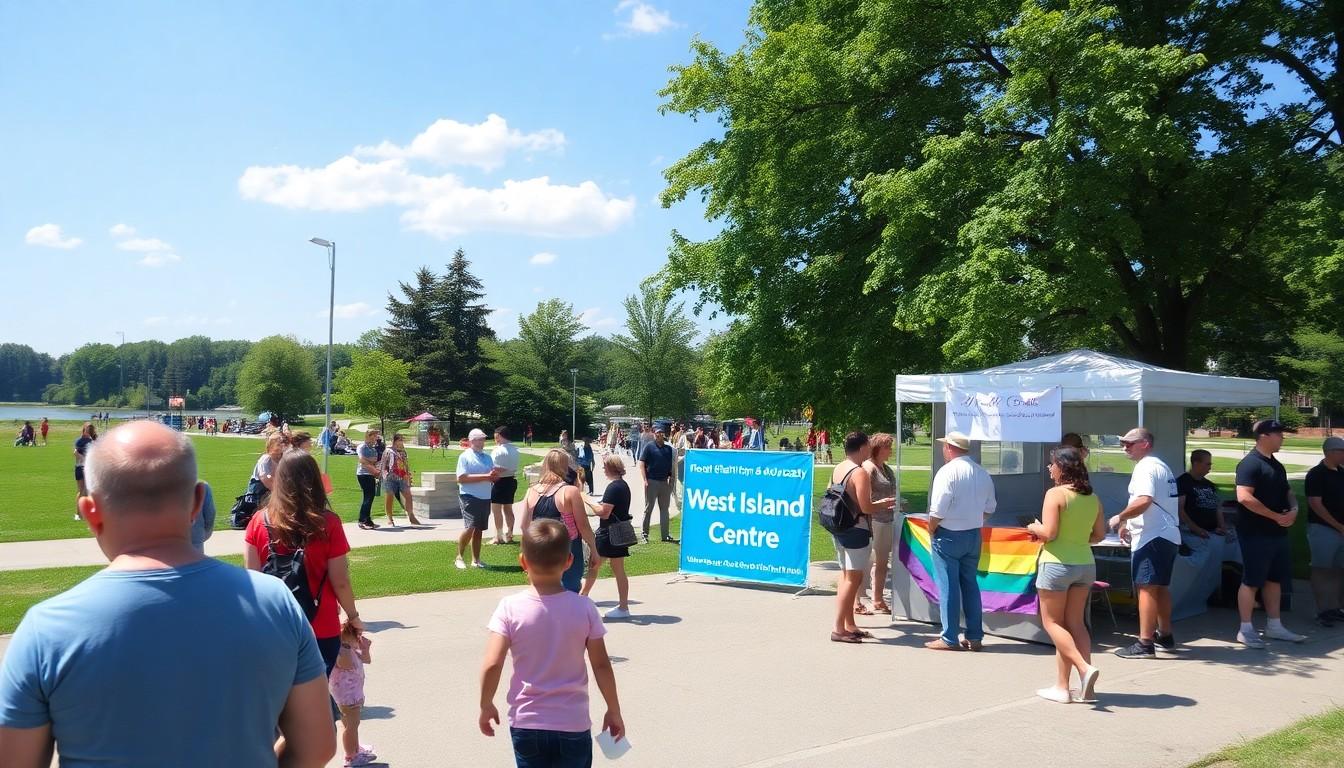
Families and LGBTQ2+ residents gathered at Pointe-Claire’s Edgewater Park for a third West Island Pride, a free community day offering performances, stalls and children’s activities. But organisers say the celebration is becoming harder to fund as corporate backing weakens, putting a bright local tradition under growing financial pressure.
Essential Takeaways
- A local celebration: West Island Pride returned to Pointe-Claire for its third year with family-friendly entertainment and community stalls.
- Funding is tighter: Organisers reported more rejected sponsorship requests and said the event was running at a deficit.
- Community close to home: Attendees valued having an LGBTQ2+ celebration in the West Island rather than travelling elsewhere.
- Young people included: Drag performer Bambi Dextrous hosted a story time focused on acceptance, family and self-expression.
- A longer history: Pride activism in Pointe-Claire reaches back to a major anti-homophobia march in 2001.
West Island Pride keeps its place in the community
There was colour, music and the easy bustle of a summer park gathering as West Island Pride returned to Pointe-Claire. Edgewater Park hosted a free, day-long programme of performances, vendors and family activities, giving residents a chance to celebrate without travelling across Montreal.
For David Hawkins, executive director of the West Island LGBTQ2+ Centre, the event is about visibility as much as entertainment. He told CityNews that LGBTQ2+ people remain part of the community and deserve recognition, space and a public voice.
That message matters in a suburban setting, where local events can make community support feel more tangible. A stall, a familiar face or a relaxed afternoon with friends can sometimes do more than a formal campaign ever could.
The celebration is popular, but the funding picture is less cheerful
The difficult reality behind the upbeat atmosphere is financial. Hawkins said organisers faced substantially more refusals when seeking sponsorship, including from companies that had supported earlier editions.
He said the team had done more work to find partners, yet the event was still operating at a deficit. That experience reflects a wider Canadian trend: reporting from NHPR and Retail Insider suggests that some businesses are reducing or reconsidering Pride sponsorships amid political pressure, tighter budgets and closer public scrutiny of corporate commitments.
For small community events, the impact can be immediate. A national parade may have several funding streams, but a local Pride day often depends on a much smaller group of sponsors, volunteers and neighbourhood supporters.
Why a nearby Pride event matters to families
Nora Beettam-Johnson described the West Island gathering as a valuable place to bring friends, browse stalls and meet people locally. She also encouraged parents and families of queer young people to attend, arguing that shared community can ease some of the fear and isolation families may feel.
That family focus was visible throughout the programme. The day began with a land acknowledgement from Mohawk knowledge sharer Kahsennenhawe Sky Deer, followed by performances and activities designed for a broad age range.
The approach is significant. Pride isn't only a nightlife event or a large city parade; it can also be a quiet, welcoming afternoon where children ask questions, parents listen and young people see themselves reflected in the crowd.
Story time puts acceptance centre stage
Drag performer Bambi Dextrous led a reading session featuring books about acceptance, family and self-expression. It was a playful addition, but also a practical one: stories give children language for difference, kindness and confidence without turning the conversation into a lecture.
Dextrous described the session as a chance for families to gather, enjoy reading and explore imagination. That combination of fun and representation is one reason children’s programming has become such a visible part of Pride celebrations.
Parents choosing similar events should look for clear age guidance, accessible facilities and a programme that offers more than one way to participate. Some children want to dance, others would rather browse quietly or listen to a story, and both responses are perfectly valid.
Pointe-Claire’s Pride history runs deeper than three years
West Island Pride may be a relatively young annual event, but the area’s LGBTQ2+ history stretches back decades. Theo Wouters, who is 84, has attended since the celebration began in 2024 and recalled taking part in a large anti-homophobia march in Pointe-Claire in 2001.
He and his late partner, Roger Thibault, later became the first same-sex couple to formalise their relationship under Quebec’s Civil Union law in July 2002. His presence at the event added a powerful sense of continuity, linking earlier activism with today’s family-focused celebration.
That history gives the gathering extra weight. Pride in the West Island isn't simply appearing because it happens to be fashionable; it builds on people who challenged prejudice locally and insisted that a happy, visible life should be possible there.
What happens next for local Pride?
The central question now is whether community enthusiasm can compensate for retreating corporate support. Coverage from The Gaygency and the Pride sponsorship materials indicates that organisers across the sector are having to rethink how they present partnerships, raise money and demonstrate value to supporters.
For West Island Pride, that could mean a greater reliance on individual donations, local businesses, volunteers and direct community fundraising. Those sources may be less predictable, but they can also create a stronger sense of shared ownership.
A free event feels effortless when you're enjoying it, with music in the air and children darting between activities. Behind the scenes, though, every tent, performer and accessible programme item needs backing. Keeping that support visible may be the next challenge.
It's a small local celebration with a big job: making sure nobody has to look far to find community.
Source Reference Map
Story idea inspired by: [1]
Sources by paragraph: