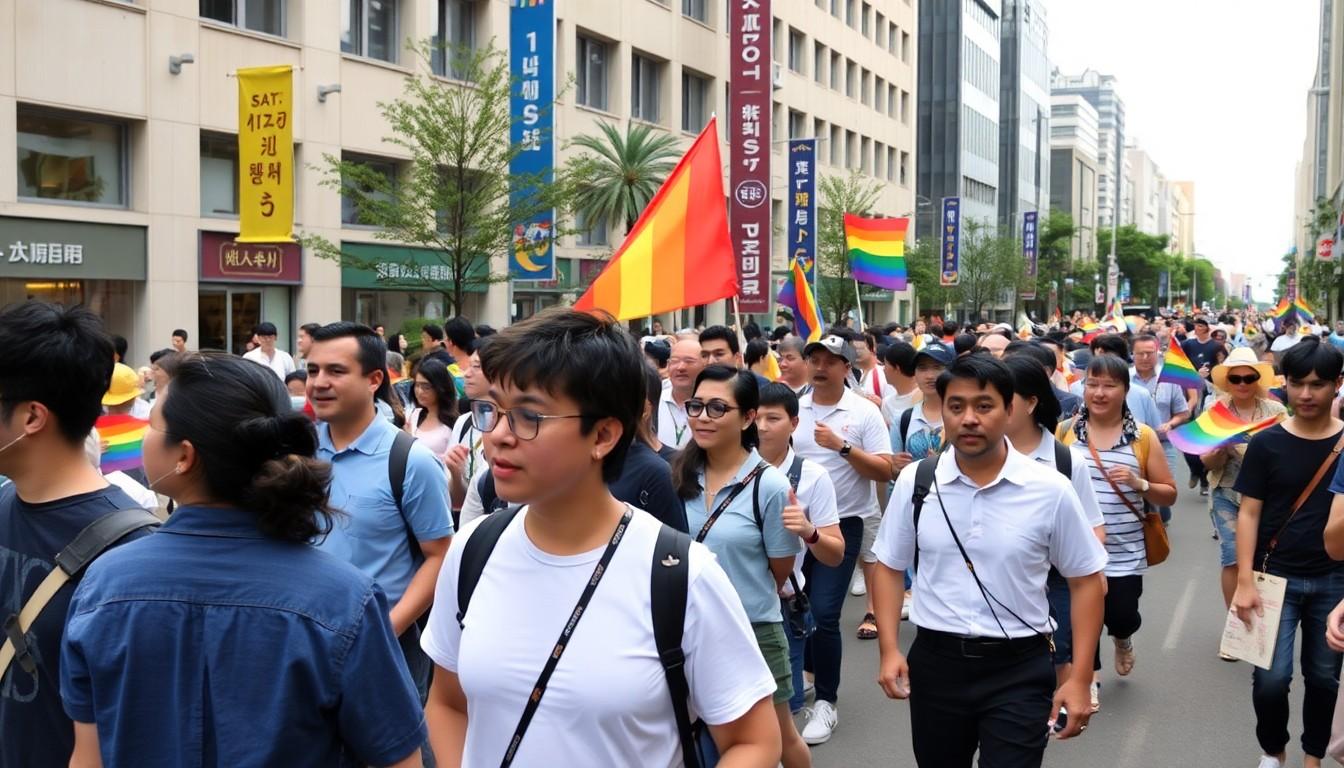
Participants filled central Daegu for the 18th Daegu Queer Culture Festival, while a separate opposition rally unfolded nearby. The public parade has reopened familiar questions about LGBTQ+ visibility, freedom of expression, traffic disruption and how competing rights should be balanced in a busy city centre.
Essential Takeaways
- A visible parade: Participants marched through Jung-gu on 12 September during Daegu's annual queer festival.
- A divided response: Supporters described the event as a legitimate demand for equality, while critics objected to disruption and some displays.
- Public-space tensions: Transport delays and road controls became part of the online argument.
- A competing rally: Opposition groups held a separate gathering featuring prayers, speeches and calls against equality legislation.
- The wider issue: The dispute reflects a continuing struggle over visibility, protest rights and shared urban space.
Daegu's streets became the centre of the argument
Bright signs, marching crowds and a busy weekend cityscape gave the parade an unmistakable public presence. Participants said walking through central Daegu was essential to showing that LGBTQ+ people are part of everyday civic life, rather than a community expected to remain out of sight.
Online reaction was sharply split. Supporters framed the march as a lawful expression of identity and human rights, while opponents focused on congestion, public access and what they considered provocative presentation. The Korea Times and Korea Herald both reported on the gathering and the tensions surrounding it.
Why visibility matters to festival supporters
For people taking part, the parade was more than a colourful procession. It was a statement that LGBTQ+ residents should be able to occupy the same streets, squares and public institutions as everyone else without hiding who they are.
That argument has particular force at public festivals, where visibility is part of the message. Supporters said freedom of expression should protect the event, provided organisers and authorities meet the relevant legal requirements. As the Korea Herald reported, the debate has continued to focus on the place of queer festivals in public life.
Critics point to traffic, conduct and shared space
The opposition case centred less on whether people can hold private gatherings and more on how a large procession uses a shared city centre. Critics argued that road closures and crowds affected commuters, shoppers and public transport users, especially during a weekend period when central streets were already active.
There was also disagreement over what counts as acceptable public expression. Some online comments objected to clothing, slogans and displays they considered too explicit, while supporters said such criticism can become a way of policing LGBTQ+ visibility. The Korea Times noted the competing concerns around pedestrian movement, traffic management and the festival's public setting.
A second rally sharpened the contrast
While the queer festival was under way, anti-queer organisations, including Christian groups, held a separate public rally in Daegu and North Gyeongsang Province. Organisers used prayers, religious music and speeches to oppose same-sex relationships and proposed anti-discrimination or equality legislation.
Several claims made at the rally were framed through religious belief and public-health arguments. Those statements sit within a highly charged national debate, where questions about faith, sexuality, HIV and legal equality are often presented in emotionally powerful ways. The Korea Herald covered the opposing gathering alongside the festival, underlining how closely the two events were linked in the day's public conversation.
What could make future festivals less confrontational?
The practical challenge is familiar: protect the right to protest while reducing avoidable disruption. Clear route notices, reliable transport updates, carefully managed road closures and visible separation between opposing demonstrations can help residents understand what is happening without feeling shut out of their own city.
That doesn't remove the disagreement, and it shouldn't pretend that every concern is equal or equally supported by evidence. But it can create a more workable framework in which visibility, safety and access are considered together. For many participants, simply being able to march openly remains the point; for everyone else, good planning is what makes that right easier to live with.
The Daegu debate shows that public space is never neutral, especially when identity and politics meet in the street.
Source Reference Map
Story idea inspired by: [1]
Sources by paragraph: