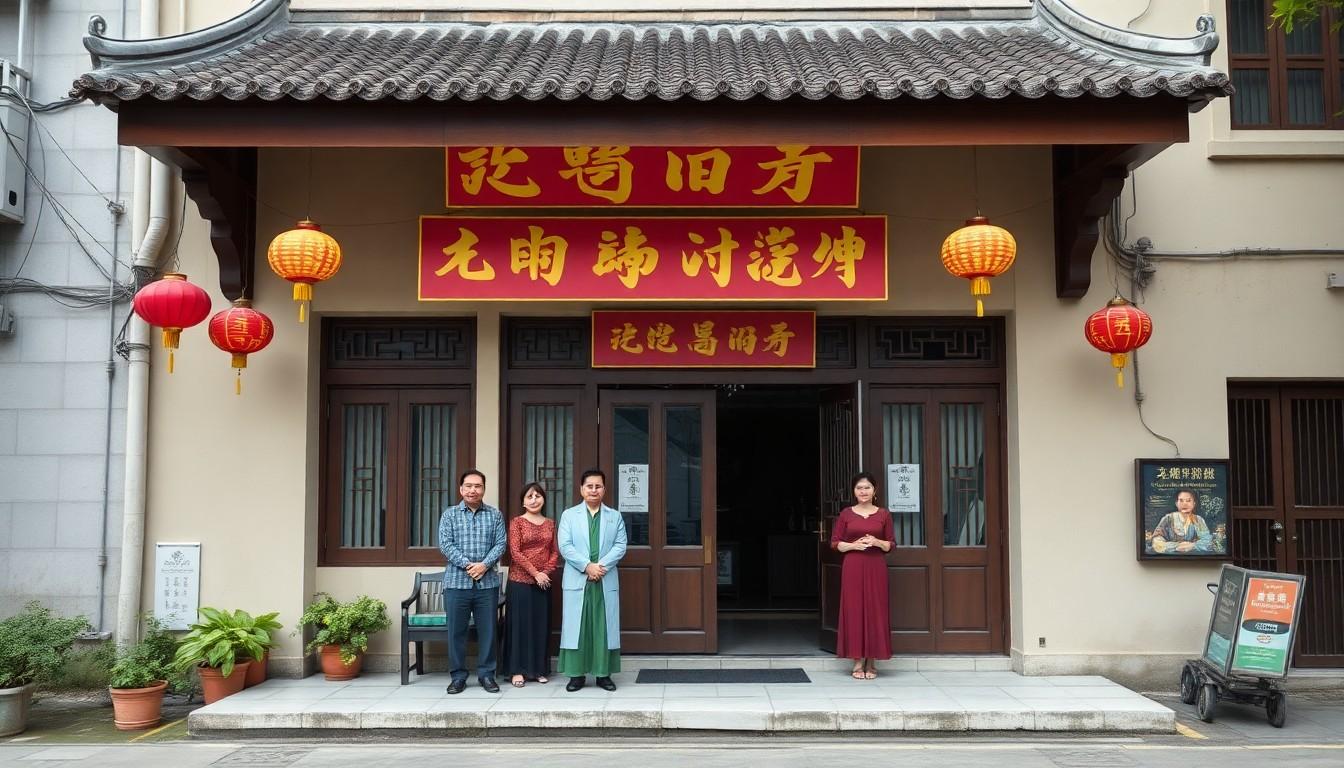
Viewers are being drawn to Lenne Chai’s tender photographs of queer Singapore, where wedding rituals, soft colour and family-album nostalgia imagine a more accepting future. The Singaporean photographer’s 377A series matters because it turns a difficult public debate into something intimate, joyful and unmistakably human, while her wider fashion and portrait work keeps pushing image-making in unexpected directions.
Essential Takeaways
- A staged wedding with real meaning: Chai’s 377A series reimagines a traditional Chinese wedding through LGBTQIA+ community and ally participation.
- Nostalgia becomes a visual tool: Soft focus, muted colour and familiar family-photo poses make the images feel warm, personal and quietly radical.
- Singapore’s legal shift changed the backdrop: Section 377A was repealed, but legal reform didn't settle every question around acceptance and equality.
- Her career spans fashion and portraiture: Chai has worked with titles and brands including Vogue, W Magazine, Gucci and Harper’s Bazaar.
- Human craft remains central: She combines careful planning, film, digital cameras and restrained post-production rather than chasing spectacle for its own sake.
A wedding album for the future
The most affecting images in Lenne Chai’s 377A series don't shout. They glow softly, like photographs discovered in an old family drawer, with couples and guests arranged in moments of calm celebration. That gentleness is precisely what gives the work its force.
Chai began the project in 2018, amid renewed discussion around Singapore’s colonial-era law criminalising sex between men. According to The Phoblographer, she responded to the hostile public debate by staging a lesbian wedding in the style of a traditional Chinese ceremony, presenting love as ordinary, hopeful and worthy of celebration.
The result feels deliberately familiar. There are elegant clothes, posed groups and the quiet social choreography of a wedding gathering. Yet the familiarity carries a sting, because the people represented have so often been excluded from the visual language of family life. The images ask a simple question: why shouldn't this be part of the album too?
Why nostalgia makes the message more powerful
Nostalgia can be comforting, but it can also expose what a culture has chosen to leave out. Chai borrows from her own family albums, recreating the lighting, compositions and gestures associated with older wedding photographs. The scenes look as though they belong to a remembered past, only that past has been gently rewritten.
The palette is bright but softened, while the focus often feels dreamlike rather than clinically sharp. That approach gives the series an almost cinematic intimacy. Fzine's coverage of Chai's practice similarly places her between fashion's constructed beauty and documentary photography's interest in real lives.
Some images also draw on the visual vocabulary of Renaissance painting. A reaching gesture between two women recalls Michelangelo's Creation of Adam, turning a familiar art-historical image into a declaration of connection. It’s a graceful visual idea, and thankfully it doesn't need a neon sign saying, "This is the symbolism."
From Section 377A to a more complicated present
Singapore repealed Section 377A in 2022, removing the criminal penalty for consensual sex between men. The International Bar Association described the repeal as a significant legal development, but the change didn't amount to a complete transformation of LGBTQIA+ rights or public attitudes.
That context gives Chai’s series an unusual afterlife. It began as a response to a moment of disappointment, yet it now also works as a record of hope before reform arrived. The photographs preserve a community imagining itself into visibility, rather than waiting for permission from institutions.
This is where the project moves beyond fashion imagery, even though its styling is carefully considered. Clothes, posing and set design aren't decorative extras. They're part of the argument, showing queer people occupying the same beautiful, sentimental and culturally recognisable spaces that straight couples have long been allowed to claim.
A photographer who lets the subject lead
Chai's wider career has taken her from photojournalism and fashion imagery into high-profile portraiture. Models.com's profile lists work across editorial, celebrity and commercial photography, while The Straits Times has highlighted her work with major entertainment and publishing projects.
Her portraits can change tone dramatically. A campaign featuring Lily-Rose Depp as Nosferatu used restrained double exposure, while a shoot with Jennifer Coolidge leaned into surrealism, humour and maximalist energy. The contrast suggests a photographer who isn't attached to one signature look at the expense of the person in front of the camera.
According to Fzine, Chai has spoken about approaching each subject with curiosity and wanting people to feel seen. That sounds straightforward, but it’s harder than it appears. A striking portrait needs both a strong idea and enough trust for the subject to remain more than a prop inside it.
Planning carefully, leaving room for surprise
Chai prepares extensively, sometimes sketching rough stick-figure versions of her ideas before a shoot. That preparation gives collaborators a clear starting point, but she also leaves room for accidents and unexpected changes. The best frame, as photographers know, is often the one that wasn't on the mood board.
Her equipment reflects a hybrid working method. She has used a Canon R5 with a 24-70mm lens, alongside film cameras including the Fuji GA645 and Canon Sure Shot Multi-Tele. Portra film, lens filters and restrained colour work help create the gentle atmosphere associated with her photographs.
That balance feels especially relevant as artificial intelligence makes polished images easier to generate. Chai has questioned how viewers recognise human effort when even painstakingly built photographs can be mistaken for AI. Her answer isn't to reject constructed imagery, but to make the process, collaboration and emotional purpose matter.
The value of images that take their time
Chai's photographs reward a slower look. A hand, a glance or an apparently modest gesture can shift the meaning of an entire scene, particularly when the image is viewed again away from the noise of social media.
The Phoblographer has also emphasised the human verification behind her work, including behind-the-scenes material and production evidence. That matters in a visual culture increasingly crowded with synthetic images. Knowing that real people gathered, posed, made, lit and photographed these scenes adds weight to their warmth.
There’s a quiet optimism here. Chai's work doesn't pretend that a legal change can solve every social problem, nor does it flatten queer experience into a single campaign message. Instead, it offers something more lasting: a set of images in which tenderness is not weakness, and belonging looks beautifully ordinary.
It’s a reminder that the most powerful photographs can make a future feel like a memory.
Source Reference Map
Story idea inspired by: [1]
Sources by paragraph: