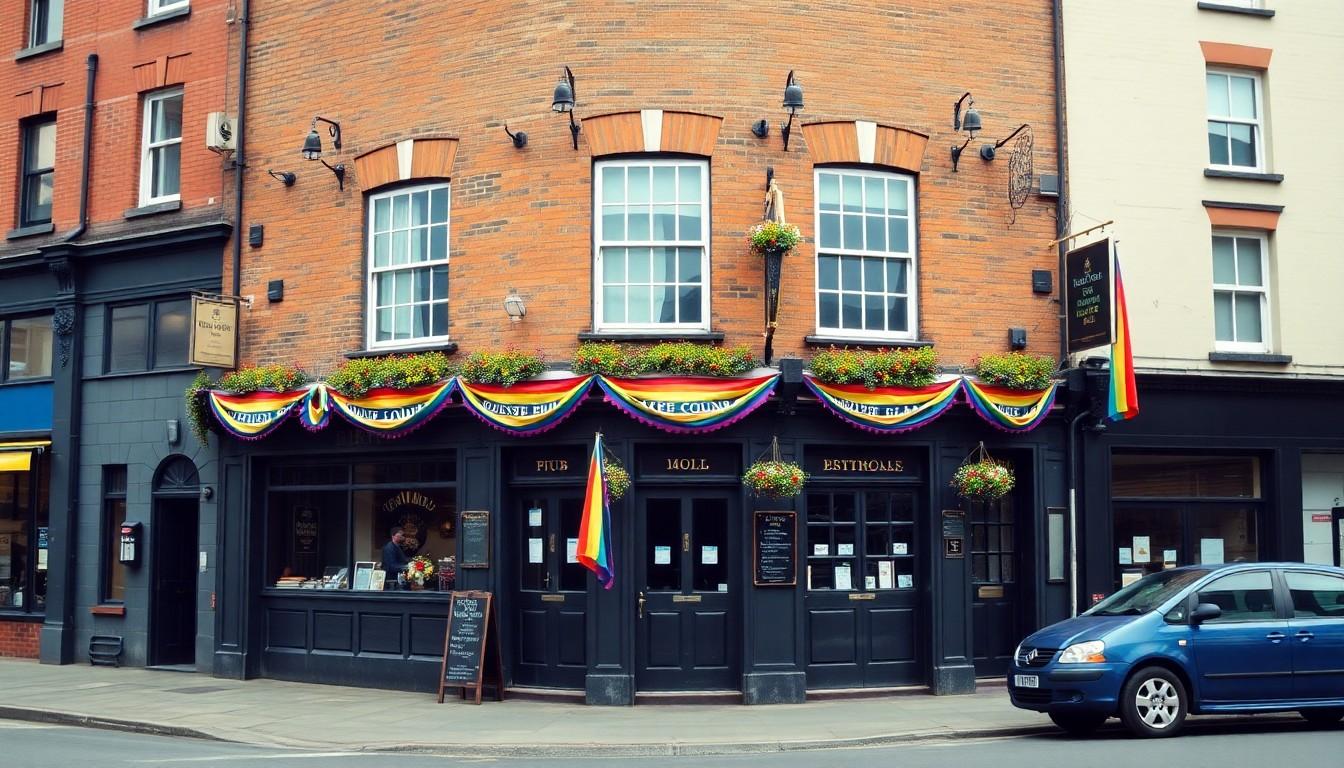
Manchester’s Gay Village wasn’t always the bright, welcoming district visitors know today. In the 1980s, police raids, public hostility and fear shaped everyday life, while local politicians and community organisers pushed back. The story of Napoleons, early Pride events and grassroots support shows how determined people helped transform the city’s LGBTQ+ heart.
Essential Takeaways
- A hostile climate: Gay venues faced raids, restrictive licensing action and widespread prejudice.
- Napoleons held its ground: Manchester Council resisted efforts to close the long-running venue.
- Pride began modestly: Early events were small, practical fundraisers rather than major city celebrations.
- Community support mattered: Local activists built networks around HIV, AIDS and LGBTQ+ welfare.
- The legacy is visible: Today’s thriving Village grew from years of protest, courage and persistence.
The Gay Village began under pressure
Today, Canal Street feels colourful, busy and unapologetically public. In the 1980s, however, Manchester’s LGBTQ+ community often had to find safety behind frosted glass, drawn curtains and discreet entrances. The mood was anxious rather than celebratory, with many people still fearful of violence, arrest or exposure.
The Manchester Evening News reported that former council leader Pat Karney remembered the period as deeply hostile. Police attention focused heavily on gay venues, while wider public attitudes made simply going out feel risky. It’s difficult to imagine the modern Village without remembering how hidden its nightlife once had to be. ([2], [3])
Why did Napoleons become a symbol of resistance?
One of the clearest flashpoints centred on Napoleons, a long-established bar in the Village. Police reportedly objected to men dancing together and used an old licensing law to justify action against the venue. The issue wasn’t noisy disorder or dangerous behaviour; it was the presence of gay men enjoying an ordinary night out.
According to the Manchester Evening News, council figures challenged the priority behind such enforcement, questioning why officers were targeting dancing instead of burglars or car thieves. That confrontation mattered because it showed the council could use its licensing powers to defend the venue rather than simply accept police demands. ([4], [5])
Historical material preserved by the Manchester Digital Music Archive captures the controversy around Napoleons in contemporary press coverage. Those records offer a useful reminder that the battle wasn’t abstract. It played out through licences, inspections and the right of a real business to remain open. ([2], [3])
Early Pride was small, but it changed the city
Manchester’s first Pride-related gatherings were far removed from the huge crowds the city attracts now. One early event was organised to raise money for better furnishings and comfort at Monsall Hospital, where people living with HIV and AIDS were treated. The setting and scale were modest, but the purpose was practical and urgent.
The Manchester Evening News described an early gathering outside the Rembrandt Hotel as little more than a bring-and-buy sale. Yet these small events created visibility at a time when many people were being told to stay quiet. There’s something powerful about that beginning: Pride grew from care, not branding. ([4], [5])
Press coverage archived by the Manchester Digital Music Archive also helps place Napoleons within the wider social world of the period. Venues were not merely places to drink or dance; they were meeting points, refuges and informal community hubs. For many people, that sense of belonging was the real attraction. ([2], [3])
From fear and misinformation to practical support
The struggle extended well beyond nightlife. HIV and AIDS were surrounded by alarming headlines and false claims, adding a layer of panic to an already marginalised community. Health workers, volunteers and activists had to counter basic misinformation while supporting people facing illness, stigma and isolation.
The Manchester Evening News reported that Manchester activists created services intended to provide accurate advice and emotional support. Groups such as the Manchester AIDS Helpline, which later became George House Trust, helped build a more informed and compassionate response. That work was less visible than a parade, but it was just as important. ([4], [5])
For anyone trying to understand the Gay Village’s development, this is the crucial context. Safer spaces don’t appear simply because attitudes improve. They’re built through patient organising, public challenges and people willing to keep showing up when the atmosphere is uncomfortable. ([2], [3])
What Manchester’s Village represents now
The contrast between the early events and modern Manchester Pride is striking. What began as small-scale fundraising and community organising now draws visitors from across the country, mixing protest, celebration, nightlife and remembrance. That evolution reflects genuine progress, even if the need for visibility and safety hasn’t disappeared.
The Manchester Evening News noted that Pride can mean different things to different people. For some, it remains a political demonstration; for others, it’s a rare chance to celebrate openly with friends, partners or family. Both instincts belong in the same weekend, and perhaps that tension is part of what keeps Pride meaningful. ([4], [5])
The story of Napoleons, early Pride and local activism also offers a broader lesson. Public spaces become welcoming when communities claim them, defend them and make room for others. Manchester’s Village wasn’t handed its identity; people patiently, and sometimes defiantly, made it. ([2], [3])
It’s a legacy built from small acts of courage that still shape Manchester today.
Source Reference Map
Story idea inspired by: [1]
Sources by paragraph: