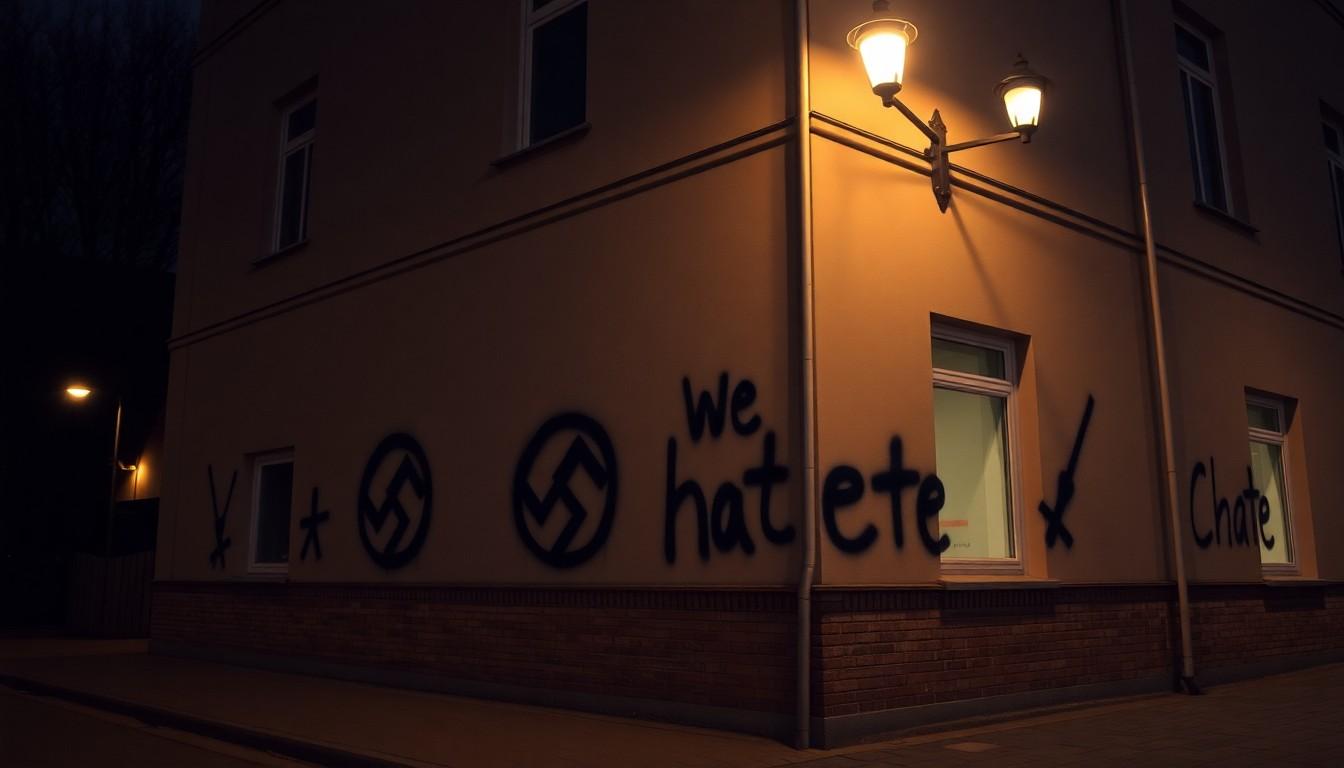
A rainbow community centre in Cottbus has again been targeted in an apparent far-right attack, with swastikas sprayed on Pride flags and a hateful message left on its building. The incident has renewed calls for stronger protection, solidarity and long-term support for queer spaces across southern Brandenburg.
Essential Takeaways
- Fresh damage: Several rainbow flags were reportedly defaced, while the building was marked with a threatening slogan.
- Repeat target: The Rainbow Kombinat Cottbus has faced earlier attacks, including damage to banners and concerns over a suspected arson attempt.
- Community response: The Safe Places South Brandenburg network is pushing for visibility, practical help and firm democratic resistance.
- Wider concern: Local campaigners link the attacks to a broader climate of far-right intimidation and anti-queer hostility.
- Why it matters: Community centres offer advice, events and safety for people who may already feel isolated or threatened.
A hateful message aimed at a visible community hub
The latest attack was blunt and chilling. According to the taz, several Pride flags outside the Rainbow Kombinat Cottbus were sprayed with swastikas overnight, while the facade was tagged with the words “We hate you”. The symbols are not random vandalism; they are designed to intimidate, provoke and make a welcoming place feel unsafe.
For visitors, the damage can carry an unsettling emotional weight. A rainbow flag is meant to signal openness and protection, so seeing one defaced outside a community centre feels like a direct attempt to reverse that message. The Rainbow Kombinat describes itself as a place for queer people and allies in Cottbus and the Niederlausitz region, making the target especially significant.
This is not an isolated incident
The centre has reportedly been attacked several times before. Information published by the Rainbow Kombinat refers to destroyed rainbow banners and a pattern of escalating hostility, while local political reactions have also raised concern about a suspected arson attack. Taken together, those incidents suggest something more serious than a single act of nuisance vandalism.
That history explains why local organisations are treating the latest damage as part of a continuing security problem. As the centre's own account of its situation makes clear, repeated attacks can stretch staff, volunteers and finances, while forcing a place intended for support to spend valuable time on repairs and protection.
Why queer community centres matter
The Rainbow Kombinat is more than a building with colourful flags outside. Its published self-description presents it as a meeting point for queer people, supporters and community projects, providing space where people can find information, connection and practical support. For someone facing discrimination or loneliness, that quiet sense of belonging can be enormously important.
Cottbus has also developed a visible Pride and queer community presence. Radioeins has reported on the city's Christopher Street Day events, reflecting the way public celebration and political expression have become part of local life. That visibility is valuable, but it can also make community spaces more conspicuous targets for extremists.
A network is trying to make vulnerable places safer
The centre has joined forces with other cultural and social venues through the Safe Places South Brandenburg initiative. According to the taz, the network aims to respond through public visibility, hands-on assistance and a clear rejection of far-right violence. It is a practical approach, recognising that solidarity needs to mean more than supportive statements after the fact.
The Greens in Cottbus have also condemned the attacks, while queer news outlet queer.de reported on the growing concern surrounding the centre. The common thread is a demand for meaningful protection rather than temporary reassurance. That could include better security measures, reliable funding, rapid repair support and stronger coordination with local authorities.
What support looks like in practice
For residents, support can be straightforward but meaningful. Attending queer events, using community services, sharing accurate information and donating to local initiatives can help prevent targeted spaces from becoming isolated. Businesses, faith groups and cultural organisations can also offer meeting rooms, equipment or visible public backing.
Authorities, meanwhile, need to treat repeated incidents as a pattern. Documenting damage, investigating threats and protecting vulnerable venues should go alongside longer-term investment in democratic and community organisations. As campaigners have argued, cutting support for diversity projects while far-right intimidation grows would be a particularly shortsighted choice.
The flags can be replaced, but the message behind the attack should not be minimised. People deserve to gather safely, and the spaces that make that possible deserve more than sympathy after each incident.
It's a small act of solidarity that can help keep a whole community visible and safe.
Source Reference Map
Story idea inspired by: [1]
Sources by paragraph: