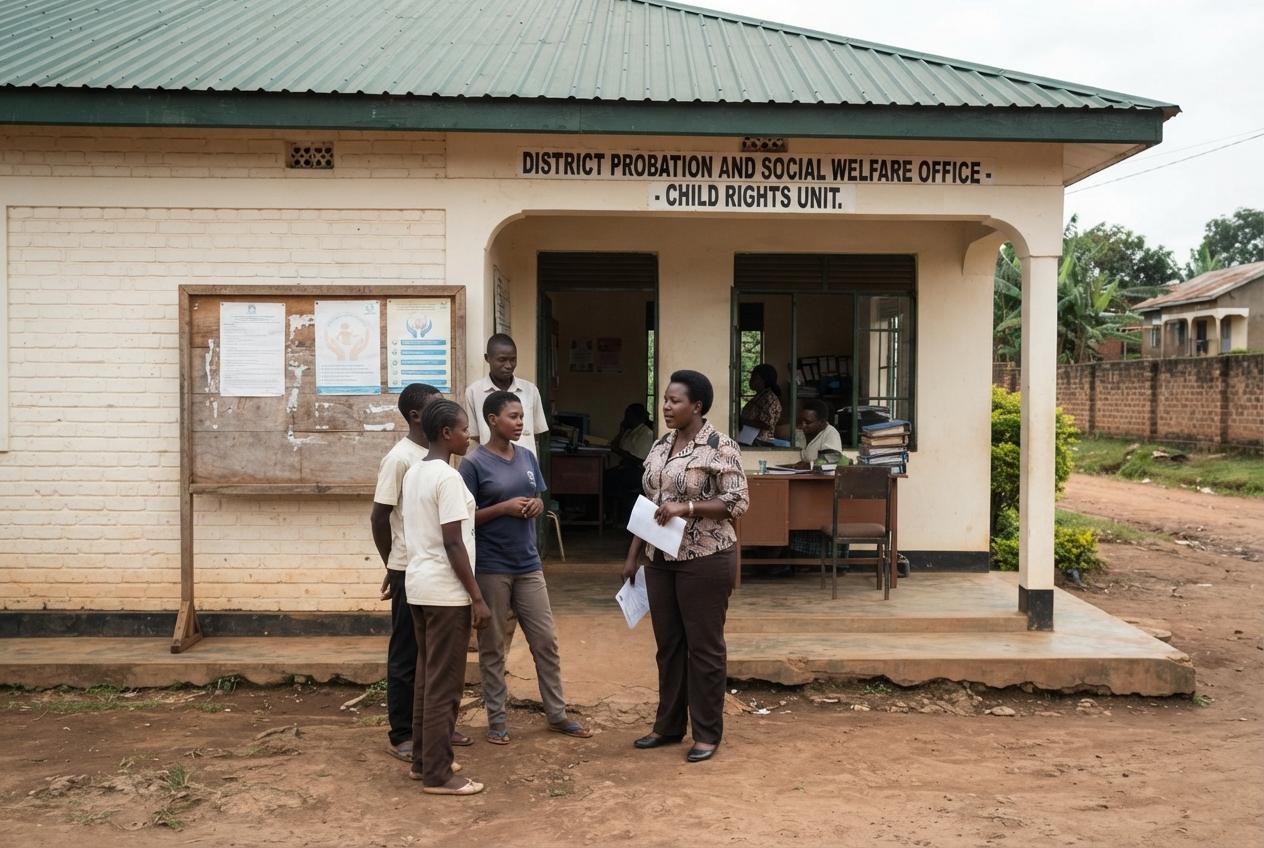
Uganda’s latest child rights review has praised new protections against violence while highlighting fierce debate over the anti-homosexuality law and continuing efforts to end child marriage. The United Nations Committee on the Rights of the Child examined the country’s record in Geneva, asking how legal reforms are working for children in everyday life.
Essential Takeaways
- Stronger protection systems: Uganda has expanded helplines, police family protection units and child-friendly reporting routes.
- Child marriage remains a concern: The legal minimum age is 18, but experts questioned enforcement, including in customary marriages.
- Anti-homosexuality law challenged: UN experts said the legislation could restrict access to scientifically sound sex education and increase risks for vulnerable young people.
- Online abuse is rising: Uganda reported more than 2,200 cases of online sexual exploitation and abuse involving children.
- Implementation is the test: The committee welcomed new policies, but pressed Uganda on budgets, staffing, data and results.
Uganda’s child protection reforms win cautious praise
Uganda arrived at the review with a sizeable list of reforms, covering education, health, juvenile justice and child protection. The government also pointed to a revised Children’s Act, national policy frameworks and new systems intended to coordinate services more effectively.
Among the most practical developments are the child helpline, direct response centres and family protection units operating through the police. These are the kinds of mechanisms that can turn a child rights promise into a reachable phone number or a trained officer, although their impact depends on staffing and regional coverage.
The government also said it was piloting a child wellbeing management information system in six regions. In theory, that should make it easier to track cases and direct support quickly. In practice, the committee’s questions showed that Uganda still needs stronger evidence about how widely these services work and what happens after a complaint is made. [2], [4]
The anti-homosexuality law remains the sharpest fault line
The most contentious part of the discussion centred on Uganda’s Anti-Homosexuality Act. Parliament passed the law in 2023, and the legislation sets out offences relating to same-sex conduct, promotion and related activities. Uganda’s Parliament described the measure as protecting children and preventing what it called promotion of homosexuality. [2], [3]
UN experts took a very different view. They argued that the law could obstruct comprehensive, scientifically grounded sex education and leave children more exposed to stigma, violence, family rejection and homelessness. One expert urged Uganda to consider repeal, while also raising concerns about the effect of the law on young people exploring sexuality and gender identity.
That disagreement matters beyond the courtroom. Children need accurate information about health, consent, boundaries and safety, whether they live in Kampala, a rural district or a refugee-hosting community. When education becomes politically or legally restricted, young people may turn to unreliable sources instead, which is hardly a recipe for safer childhoods. [3], [5]
Ending child marriage needs more than a legal age
Uganda’s position is clear on paper: marriage is legally limited to adults aged 18, with no customary exception. The country also has a national strategy running to 2027, aimed at tackling poverty, school exclusion and other pressures that can push girls into early marriage.
But the committee wanted more than legislation. Experts asked how the rule is enforced in customary marriages and questioned the apparent ability of the national identification system to recognise girls as marrying from age 16. They also sought concrete results from northern and eastern regions, where child marriage remains particularly prevalent.
That focus is important because laws rarely change behaviour on their own. Community leaders, religious figures, schools, registration officials and social workers all influence whether a child is protected in reality. Uganda said it was increasing awareness among communities and religious leaders, but the next review will inevitably ask whether those efforts have reduced marriages, teenage pregnancies and school dropouts. [2], [4]
Online abuse and violence demand faster responses
Uganda told the committee that more than 2,200 cases of online sexual abuse and exploitation of children had been reported. It is developing a dedicated national action plan, training social workers and using a confidential toll-free helpline for children and families.
The numbers underline how quickly child protection has moved beyond homes, schools and streets. Phones and social platforms can connect children to education and opportunity, but they can also expose them to grooming, exploitation and bullying. A policy that protects children without cutting them off from useful digital access will need careful training, reliable reporting channels and cooperation with technology companies.
There are encouraging signs in Uganda’s wider response. The country said family protection units operate across police stations, while specialist court arrangements and legal aid are intended to reduce the trauma of reporting abuse. Still, a helpline only works if a child trusts it, can reach it and receives meaningful help afterwards. [2], [3]
The next step is proving policies work
Uganda presented a broad programme that includes disability inclusion, alternative care, birth registration, child labour prevention and support for refugees. It also reported progress on HIV prevention, child-sensitive justice and the use of family-based care instead of institutions.
The committee’s questions repeatedly returned to practical delivery: how many social workers are available, whether rural children can access services, how budgets are tracked and whether children’s views shape decisions. Those details may sound administrative, but they’re where rights become real. A carefully written strategy cannot comfort a child who cannot obtain a birth certificate, report abuse or return safely to school.
The committee is due to issue its concluding observations at the end of its session. Uganda’s government says it will continue strengthening protections and ensuring no child is left behind. That’s an ambitious promise, and the country’s next challenge is to show that its growing legal framework is felt not only in policy documents, but in the quiet, ordinary places where children live. [4], [5]
It's a promising framework, but safer childhoods will depend on consistent enforcement and clear evidence of change.
Source Reference Map
Story idea inspired by: [1]
Sources by paragraph: