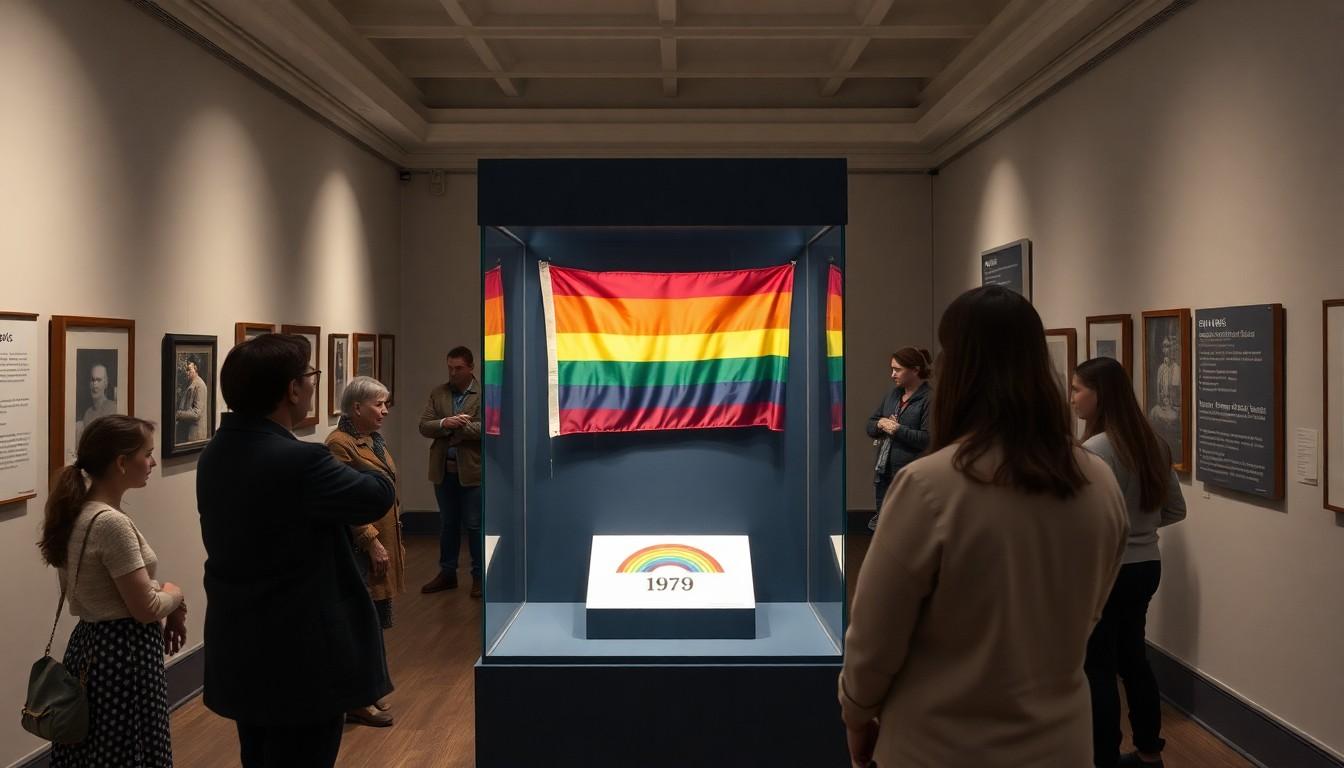
Visitors in Cork can now see the original 1978 Rainbow Flag in person, marking its first international exhibition outside the United States. The four-month loan brings a landmark of LGBTQ+ history from San Francisco to Cork Public Museum, where it anchors the city’s first permanent exhibition celebrating queer stories and community life.
Essential Takeaways
- A historic first: The original 1978 flag is being displayed outside the US for the first time.
- Four months in Cork: The loan coincides with a new permanent LGBTQ+ history exhibition at Cork Public Museum.
- A San Francisco connection: The project links San Francisco and its Irish sister city through shared cultural work.
- More than a symbol: The flag reflects Gilbert Baker’s design, activism and the community history behind the familiar rainbow.
- The story continues in California: San Francisco’s GLBT Historical Society Museum is showing related Baker collection material while the original travels.
Cork welcomes a landmark of LGBTQ+ history
The most striking thing about the exhibition is also the simplest: a piece of fabric has crossed an ocean, and suddenly history feels close enough to touch. The original 1978 Rainbow Flag is now on public display at Cork Public Museum, giving visitors across Europe a rare chance to encounter one of the most recognisable symbols of LGBTQ+ rights. Cork City Council described the event as the first time the original flag has been shown outside America. [3], [4]
That international move matters because the flag isn't merely a colourful object. It represents the creative work of Gilbert Baker, the activism of the late 1970s and the communities that gave the design its enduring meaning. According to the GLBT Historical Society, the surviving flag is part of a much wider story about identity, protest and belonging. [2], [7]
Why this Rainbow Flag loan matters
The exhibition is the result of a partnership between the GLBT Historical Society, Cork Public Museum and the city of Cork. The relationship has a particularly neat shape: San Francisco and Cork are sister cities, separated by the Atlantic but connected by a commitment to preserving LGBTQ+ history. [3], [5]
Cork's new exhibition is also significant in its own right. It creates a permanent home for LGBTQ+ stories in a major public museum, rather than treating them as a brief or occasional addition to the cultural calendar. That shift gives local history more room to breathe, and it means visitors can see the Rainbow Flag within a broader account of community life. [4], [7]
The original eight-stripe design still tells a bigger story
The first Rainbow Flag had eight stripes, each assigned a particular meaning by Baker. Later versions became more familiar with fewer colours, but the original design retains a distinctive visual rhythm and a sense of creative ambition. It looks instantly recognisable, yet its details reward a slower look. [2]
The flag also carries the marks of its era. It was made for a community that needed visible signs of solidarity, joy and resistance, at a time when public LGBTQ+ representation remained heavily contested. Seeing the original in a museum setting may feel quieter than seeing one raised at a parade, but the emotional charge hasn't disappeared. [2], [7]
What visitors can expect in Cork
The flag is on loan for four months, allowing thousands of visitors from Cork and further afield to see it during the opening period of the permanent exhibition. News reports from Ireland say the display is intended to make LGBTQ+ history more accessible, with the flag acting as an immediate and memorable centrepiece. [4], [5]
For visitors, the appeal goes beyond taking a photograph. The most rewarding experience will likely come from considering the object alongside the exhibition's wider material, including local stories and the changing ways LGBTQ+ people have organised, celebrated and supported one another. It makes the visit feel less like a stop at a famous artefact and more like an introduction to a living history. [3], [7]
San Francisco keeps Gilbert Baker's story in view
The Rainbow Flag's temporary absence from San Francisco doesn't mean the story has left the GLBT Historical Society Museum. During the Cork loan, the Castro museum is presenting material from the Gilbert Baker Collection, including a reproduction of the original eight-stripe flag signed by Baker in 1998. [1], [2]
The display also includes a sewing machine associated with Baker's supplies and a medallion presented by Cork during a delegation visit to San Francisco. Those details add warmth to the story: alongside the headline-making flag are the tools, relationships and small objects that help explain how cultural history is made. [1], [3]
The Cork exhibition is expected to bring fresh attention to the Rainbow Flag's international legacy. More importantly, it shows how museums can share difficult, joyful and deeply personal histories across borders without reducing them to a single symbol. For many visitors, that may be the most meaningful part of the journey. [5], [7]
A landmark symbol has crossed the Atlantic, but its message still feels close to home.
Source Reference Map
Story idea inspired by: [1]
Sources by paragraph: