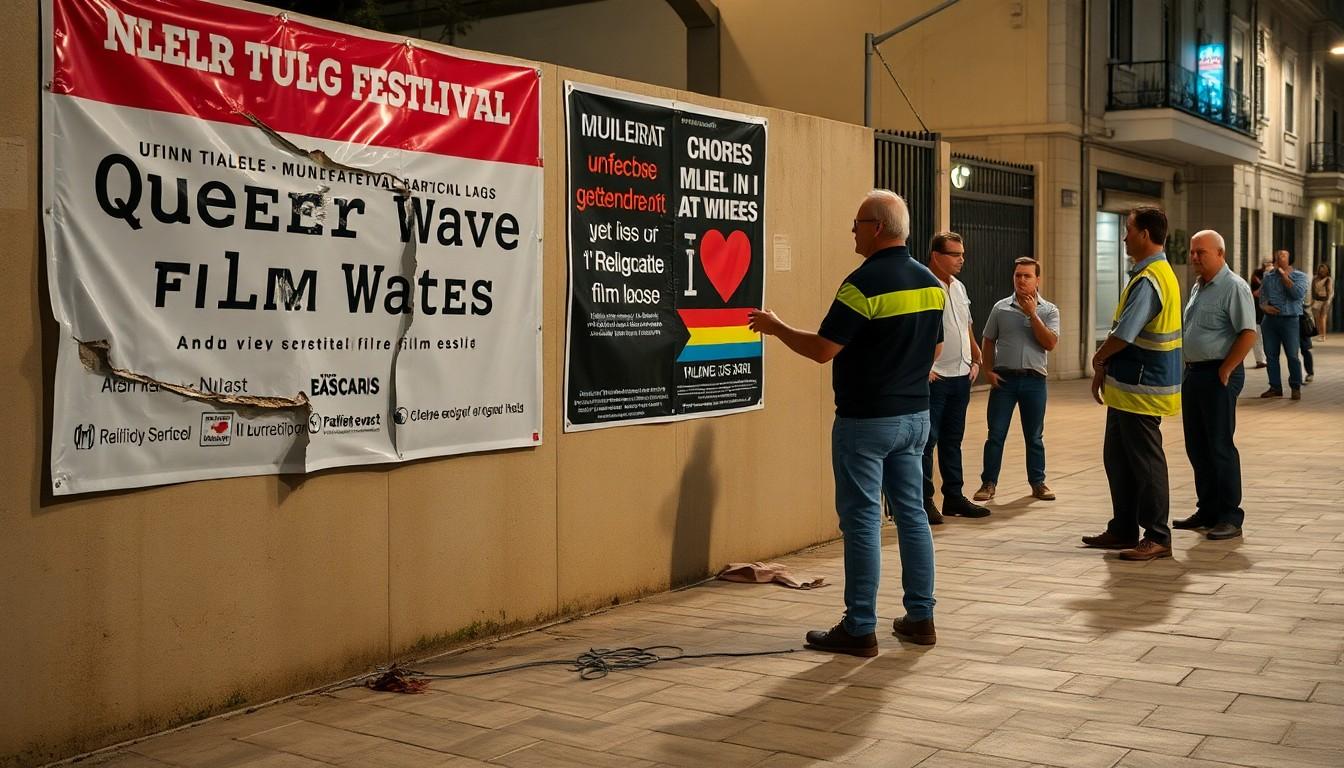
Organisers and rights campaigners are urging action after Queer Wave festival banners were vandalised in Nicosia’s Kaimakli neighbourhood. The incident has renewed concern over LGBTQIA+ visibility in Cyprus, while highlighting a wider question: who gets to feel welcome in public space, and what should authorities do when cultural events are targeted?
Essential Takeaways
- Banners damaged: Queer Wave promotional material was vandalised overnight in Kaimakli.
- Police urged to investigate: ACCEPT says the incident deserves serious attention, particularly if identity was the motive.
- Public space at stake: Campaigners argue that visibility and assembly rights must apply to everyone.
- Organisers remain defiant: Queer Wave supporters say intimidation won’t silence the festival.
- A wider concern: The dispute touches on free expression, community belonging and LGBTQIA+ safety.
Vandalised banners become a bigger statement
A torn festival banner might look like a small act of street damage. In Kaimakli, however, it has become a sharp symbol of who is allowed to be visible.
Banners advertising the Queer Wave film festival were vandalised on Wednesday night, according to reports from ACCEPT and Queer Wave supporters. The damage has been described not simply as property destruction, but as an attempt to intimidate an LGBTQIA+ cultural event in a shared neighbourhood.
That distinction matters. A poster can be replaced, but the message behind removing it can linger: keep quiet, stay out of sight and don't claim the street as your own. For a festival built around film, identity and community, that can feel particularly chilling.
ACCEPT calls for a serious police investigation
ACCEPT has called on police to examine the incident and establish whether the banners were targeted because they promoted LGBTQIA+ visibility. The organisation has also urged Nicosia Municipality and the Kaimakli community to make clear that the area belongs to everyone who lives, works and gathers there.
The rights group argues that disagreement is lawful, while destruction and intimidation are not. Its position is straightforward: people who oppose the festival can express that view openly, but tearing down promotional material under cover of darkness crosses a different line.
That framing turns the case into more than a local dispute. If public authorities respond only by replacing damaged signs, they may miss the wider issue. Communities also need to show that intimidation won't decide whose events are seen or whose identity is acknowledged.
Why public visibility matters to LGBTQIA+ communities
Festivals such as Queer Wave offer more than screenings. They create meeting places, give filmmakers a platform and allow people to see their experiences reflected without having to explain or apologise for them.
ACCEPT's broader work focuses on equality and the protection of LGBTI people in Cyprus. Its public statements on attacks against marginalised groups consistently link individual incidents with the health of democratic life, including the rights to expression, assembly and participation.
That connection is important because visibility can be both ordinary and brave. A banner advertising a film festival should be unremarkable. When it becomes a target, it tells residents that some forms of public presence are still being treated as controversial.
What authorities and communities can do next
The immediate priority is a proper investigation, including reviewing available footage, speaking to organisers and assessing whether the incident forms part of a wider pattern. Clear communication from police and local authorities would also help reassure residents that complaints involving LGBTQIA+ events are being taken seriously.
Nicosia Municipality and local community representatives can make a practical difference by publicly supporting inclusive cultural activity. Replacing the banners, improving protection for public displays and maintaining contact with organisers are modest steps, but they carry real weight.
For event-goers, the message is equally practical: check official Queer Wave channels for screening updates, travel in groups if that feels safer and report threats or damage rather than treating them as harmless mischief. No one should have to calculate whether attending a cultural event makes them a target.
The festival is refusing to disappear
Queer Wave supporters have condemned the vandalism and said intimidation will not silence the festival. That response is familiar across LGBTQIA+ cultural movements: fear may alter the atmosphere, but it doesn't have to dictate the programme.
The incident also presents a test for Cyprus beyond this single neighbourhood. A genuinely public space isn't one where everybody agrees. It's one where different groups can gather, speak and organise without being pushed out by threats or damage.
For residents, the most telling response may be a simple one: keep the festival visible, keep the conversation open and make it clear that Kaimakli has room for everyone.
It's a small banner, but the principle behind it is anything but small.
Source Reference Map
Story idea inspired by: [1]
Sources by paragraph: