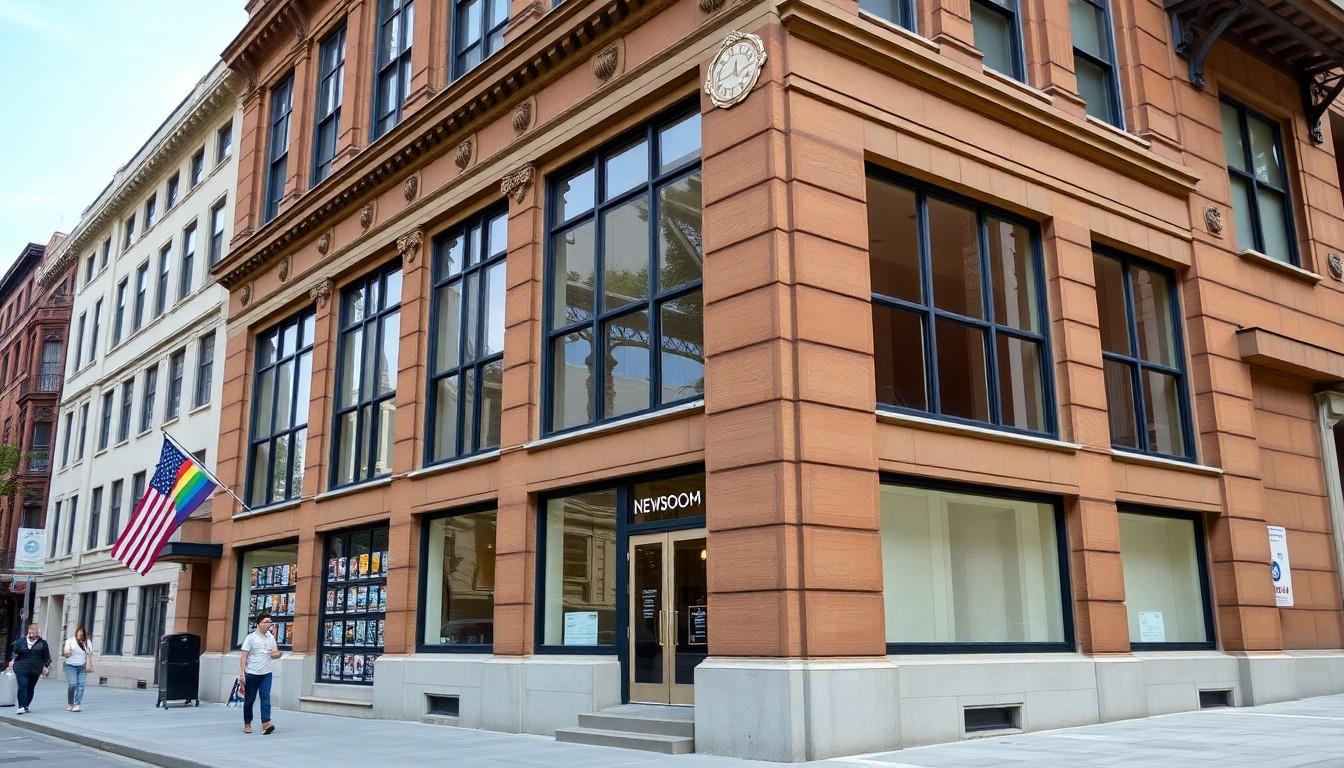
Readers are revisiting the San Francisco Bay Times’ LGBTQ+ journalism history through the story of Randy Alfred, a founding news editor whose work connected communities, challenged media bias and documented a turbulent era. His reflections offer a vivid reminder of why independent queer media still matters, especially when accurate representation can feel harder to protect.
Essential Takeaways
- A pioneering publication: The San Francisco Bay Times began as a joint project by lesbians and gay men in 1978.
- History on the front page: Its early years coincided with Harvey Milk’s election, the Briggs Initiative and the assassinations of Milk and Mayor George Moscone.
- Radio reached beyond the city: Alfred’s work on The Gay Life helped listeners in rural areas hear LGBTQ+ stories and find community.
- Accuracy remains central: His campaign against a misleading CBS broadcast highlighted the damage caused by deceptive editing.
- The next generation matters: Alfred sees mentoring, collaboration and community media as essential to journalism’s future.
A newspaper born into a remarkable year
Some years arrive with so much history packed into them that even experienced reporters struggle to keep pace. For Randy Alfred, 1978 was exactly that kind of year: the Rainbow Flag appeared, Harvey Milk took office, the Briggs Initiative was defeated, and San Francisco was shaken by political assassinations.
Against that backdrop, Alfred helped launch the San Francisco Bay Times as its founding news editor. According to the publication’s historical accounts, the early newspaper was unusual for bringing lesbian and gay male journalists together in one newsroom, even if its first run lasted only three issues.
The paper later returned under the name Coming Up before reclaiming its original identity. That stop-start beginning feels familiar to anyone who has watched community media survive on determination, volunteer energy and whatever funding can be found. Yet the publication endured, becoming a lasting record of LGBTQ+ life in the Bay Area.
Why community media mattered so much
Before social media, podcasts and instant online publishing, a community newspaper or radio programme could be a lifeline. Alfred recalls hearing from people outside San Francisco who had few local sources of LGBTQ+ information and no nearby publication reflecting their lives.
That gap was especially meaningful for lesbians, people of colour and anyone who didn't fit the narrow images often presented by mainstream media. The San Francisco Bay Times and related projects offered something simple but powerful: evidence that people like you existed, were contributing and weren't alone.
The paper's history, documented by the San Francisco Bay Times and other accounts, also shows how community journalism can do more than report events. It can preserve language, relationships and memories that larger outlets may overlook. A compact newspaper can become a kind of collective scrapbook, only with sharper headlines and considerably more urgency.
Radio opened another door
Alfred also produced and hosted The Gay Life on KSAN-FM, a programme that brought LGBTQ+ issues into the open at a time when many broadcasters avoided them or treated them sensationally. Over six years, the show recorded more than 250 hours of interviews and community coverage.
According to KALW's history of queer Bay Area radio, broadcasting played a crucial role in creating connection before digital platforms made niche communities easier to find. Alfred's programme covered debates over public health, community policy and identity, while also speaking with figures involved in the early response to AIDS.
That archive now has particular value. It captures people thinking aloud during a crisis, before the terminology and public understanding had settled. Listening back can be moving, but it also underlines a practical truth: journalism isn't only about the news that makes the next day's headlines. It's about leaving future generations a clearer account of what people knew, feared and fought for.
When fair reporting became a public fight
Alfred's journalism wasn't limited to covering the LGBTQ+ community. In 1980, he challenged CBS Reports over its treatment of San Francisco politics and LGBTQ+ activists. He argued that the programme had manipulated the sequence of remarks and applause, creating impressions that did not match what had actually happened.
The dispute led to a public apology from CBS, a rare outcome that Alfred remembered with understandable satisfaction. His criticism was rooted in more than partisan disagreement. It was about editing practices that could make real people appear dishonest, unpopular or absurd.
That concern remains strikingly current. Video clips can now be shortened, rearranged and shared at extraordinary speed, often without context. The tools have changed, but the responsibility hasn't: journalists must represent what people said and did fairly, rather than shaping reality to fit a convenient storyline.
The lesson younger journalists should keep
Alfred's account of founding the National Lesbian and Gay Journalists Association, now NLGJA: The Association of LGBTQ+ Journalists, reflects another side of the movement: building professional networks alongside publications and campaigns. The organisation provided support, guidance and a way for journalists to push for fairer hiring, language and coverage.
The San Francisco Bay Times' anniversary coverage also points to the importance of continuity. Activists, editors, contributors and photographers who helped shape the paper's early years have been able to reunite and revisit that work, turning institutional memory into something shared rather than hidden away.
Alfred's outlook is hopeful, but not complacent. He sees connections with other journalist organisations, mentoring and a more diverse profession as reasons to keep going, even while worrying about the wider financial and civic pressures facing journalism. His three-word summary, connect, support, communicate, is a useful blueprint for any community trying to keep its voice heard.
A living history, not a finished chapter
The San Francisco Bay Times' story is ultimately about more than one newspaper or one journalist. It shows how LGBTQ+ journalism grew from a need for basic visibility into a broader commitment to truth, dignity and community memory.
For readers discovering this history now, the most important message may be the simplest one: representation doesn't happen by accident. It takes people willing to report, publish, archive and mentor, often when the work is underfunded and the audience is still finding its voice.
The archive is a reminder that every generation inherits both progress and responsibility.
Source Reference Map
Story idea inspired by: [1]
Sources by paragraph: