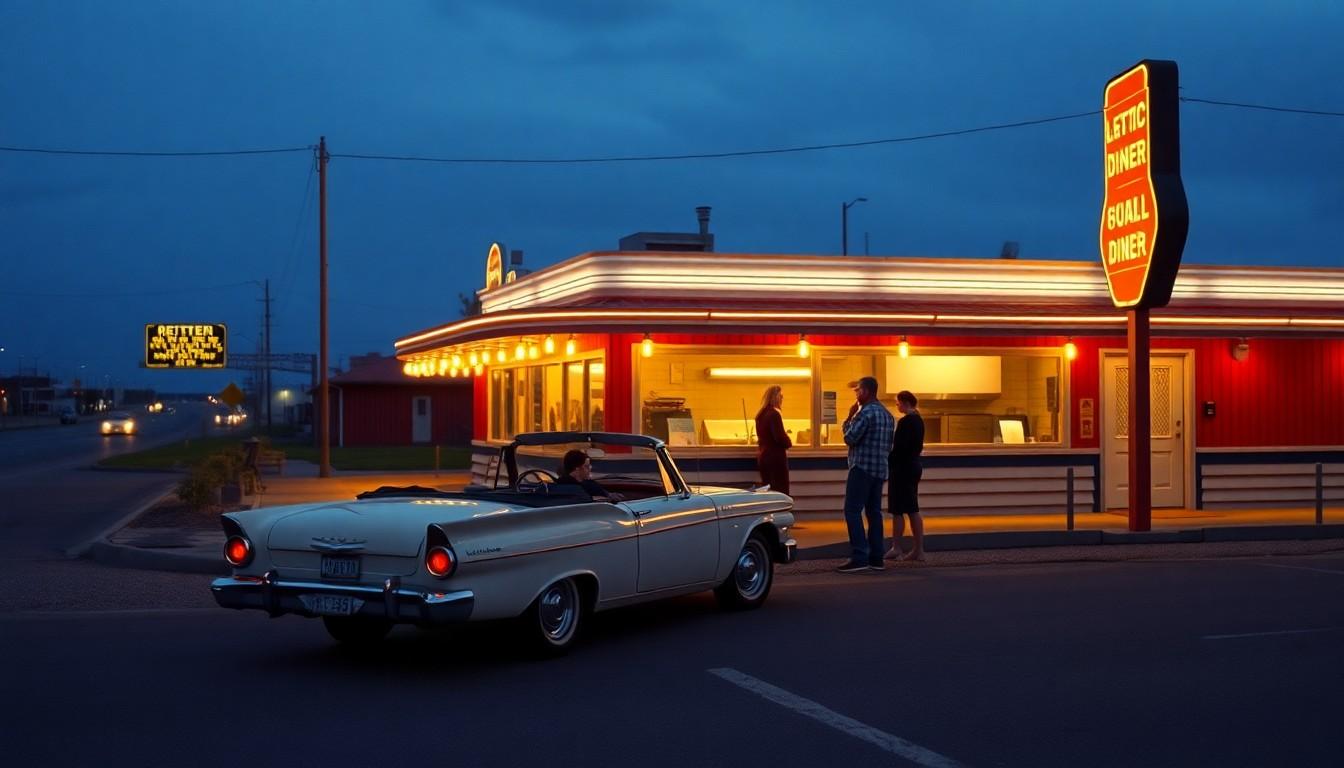
Readers are turning to queer road trip books for more than escapism. From reissued classics to tender sapphic romances, these stories use highways, roadside stops and faraway cities to explore freedom, identity and the search for somewhere to belong.
Essential Takeaways
- Road stories with emotional mileage: These books pair physical journeys with coming-out stories, grief, romance and self-discovery.
- A wide LGBTQ+ shelf: The selection spans gay, lesbian, bisexual, trans and non-binary characters across fiction, memoir and narrative non-fiction.
- History matters: Several titles revisit earlier queer eras, from 1970s gay culture to lesbian pulp fiction and 1990s sapphic life.
- Not every book is a pure road trip: In some, the drive is central; in others, it simply opens the door to a larger story.
- Choose by mood: Expect everything from warm romantic comedy and YA adventure to punk realism, mystery and angry, darkly comic fiction.
Why queer road trip books feel so freeing
The best queer road trip books understand that leaving town can mean far more than changing scenery. A car, train or motorbike becomes a moving little zone of possibility, where characters can loosen old expectations and imagine a different version of themselves.
That emotional pull is especially strong in stories about people who haven't felt fully seen at home. The road offers uncertainty, certainly, but it also offers choice. You can stop somewhere new, meet people who understand you and, occasionally, take a very scenic route towards becoming yourself.
Start with a classic journey across America
Joe Westmoreland's Tramps Like Us is a natural starting point for readers interested in queer history and open-road storytelling. Its 1970s journey follows Joe as he hitchhikes across the United States, with New Orleans and San Francisco providing vivid encounters with early gay culture.
The book's carefree energy is gradually shadowed by the arrival of HIV, giving the adventure a deeper historical weight. A newly reissued edition includes an introduction by Eileen Myles and an afterword by Westmoreland, making it an appealing choice for readers who want both a cult classic and a little extra context. Details of the edition are listed by Apple Books and Goodreads.
For a softer, more contemporary contrast, Alison Cochrun's Here We Go Again sends former best friends across the country in a large van. They're fulfilling a dying mentor's final wish, so the journey combines romantic tension with grief, affection and some properly big feelings. Cochrun's official site and Apple Books both present it as a sapphic road-trip romance with emotional heft.
Sapphic romance, grief and the long way round
Road-trip romance works particularly well when the journey forces people to share cramped spaces and unresolved history. In Here We Go Again, old wounds have nowhere to hide, while the changing landscape gives the characters room to reconsider what they thought they knew about one another.
That mix of warmth and sadness is worth noting before you choose it for a breezy holiday read. There are jokes, attraction and adventure, but the story also makes room for death and mourning. Sometimes the most memorable travel companions are the ones who make you laugh just after they've made you reach for a tissue.
Readers wanting a different sapphic mood can try Girls Girls Girls by Shoshana Von Blanckensee, which looks back to 1996. Two closeted girlfriends drive from New York towards San Francisco, hoping to build an out life together, but the promised fresh start proves more complicated than expected.
The book's journey continues into questions of money, work, desire and self-invention. It's less a neat escape story than a messy portrait of being young, queer and short on options, which gives the romance a rougher, more lived-in feel.
Queer America is bigger than the map suggests
Samantha Allen's Real Queer America: LGBT Stories from Red States takes the road-trip format into non-fiction. Rather than simply racing between destinations, Allen stops to meet LGBTQ+ people building communities and campaigning for change in places often dismissed as hostile or unsafe.
That slower approach is the point. The book asks readers to look beyond easy assumptions about red states and to notice the organisers, friends and local networks doing the everyday work of making queer life possible. It may be especially rewarding for anyone who tends to treat small towns as places to pass through.
For a more targeted historical journey, Rachel Karp's The Lesbian Bar Chronicles visits lesbian bars across the United States. Based on extensive interviews with patrons, staff and owners, it explores how sapphic spaces are adapting rather than simply disappearing.
It would make a good companion for travellers planning queer stops along the way. Just don't assume every useful destination will appear on a standard tourist map. Some of the most meaningful places are tucked behind an unshowy frontage, serving community alongside drinks.
Dark roads, strange detours and plenty of attitude
Not all queer road trip books are gentle. Zee Carlstrom's Make Sure You Die Screaming follows a non-binary narrator who steals a car and heads from Chicago to Arkansas with a goth friend, searching for a missing MAGA father. The result is a furious, unstable trip shaped by class anger, substance use and resentment.
That isn't a flaw if you're in the mood for something jagged. This is the sort of book to choose when a polished feel-good journey sounds less appealing than a sharp-edged confrontation with the status quo.
Aaron Wang's Memoir of an Innocent Brat takes a similarly chaotic route through dark comedy and mystery. After an online clash, Pete drives from Brooklyn to Chicago to confront a troll, only to become entangled in romance, murder and the problem of needing an alibi from someone he has just antagonised.
Meanwhile, Erika Lopez's Flaming Iguanas offers a more playful escape. Its queer Latina protagonist crosses America by motorbike, with illustrations and visual flourishes adding to the book's cheeky, exuberant personality. Pick it when you want road dust, flirting and a little more sparkle than solemn self-discovery.
Young love, trans journeys and stories of belonging
For a YA option, Better Catch Up, Krishna Kumar by Anahita Karthik follows a bisexual teenager travelling through India before university. A delayed flight sends Krishna towards an impromptu wedding adventure, where her plans for a kiss become tangled with unexpected feelings.
It sounds light on the surface, but the appeal lies in its combination of humour, cultural setting and queer South Asian representation. It's a bright choice for readers who want a coming-of-age story that feels mobile without losing its sense of home.
Imogen Binnie's Nevada is a very different kind of journey. Maria, a punk trans bookseller, sets off alone after a breakup and meets someone she suspects may be trans. The novel is gritty and complicated, with a road trip that becomes part of a wider reckoning with identity, responsibility and the limits of being someone's guide.
Readers interested in queer travel beyond fiction can also look to Out On the Road: The Radical Joy of Queer Travel by Lindsey Danis. It combines personal experience with practical discussion of budgeting, advocacy, gender-diverse travel and planning safer, more confident journeys. That makes it a useful pick for anyone who wants inspiration that might eventually leave the page and reach the glovebox.
How to choose your next queer road trip read
Start with the emotional destination rather than the mileage. Choose Here We Go Again for romance and grief, Real Queer America for community reporting, Nevada for trans literary fiction, or Flaming Iguanas for a flamboyant blast of movement and humour.
It also helps to check how central the road actually is. Some titles are built around a cross-country route, while others use travel as the spark for a larger story about relationships, work, history or reinvention. That small distinction can save you from expecting a travelogue and getting a more domestic novel instead.
Most importantly, let the variety do its work. Queer road stories don't all promise the same kind of freedom, and they shouldn't. Some are tender, some furious, some funny and some bruised around the edges. Together, they suggest that finding yourself rarely happens in a straight line, which is rather fitting for a good road trip.
Explore the title that matches your mood, then let the journey take an unexpected turn.
Source Reference Map
Story idea inspired by: [1]
Sources by paragraph: