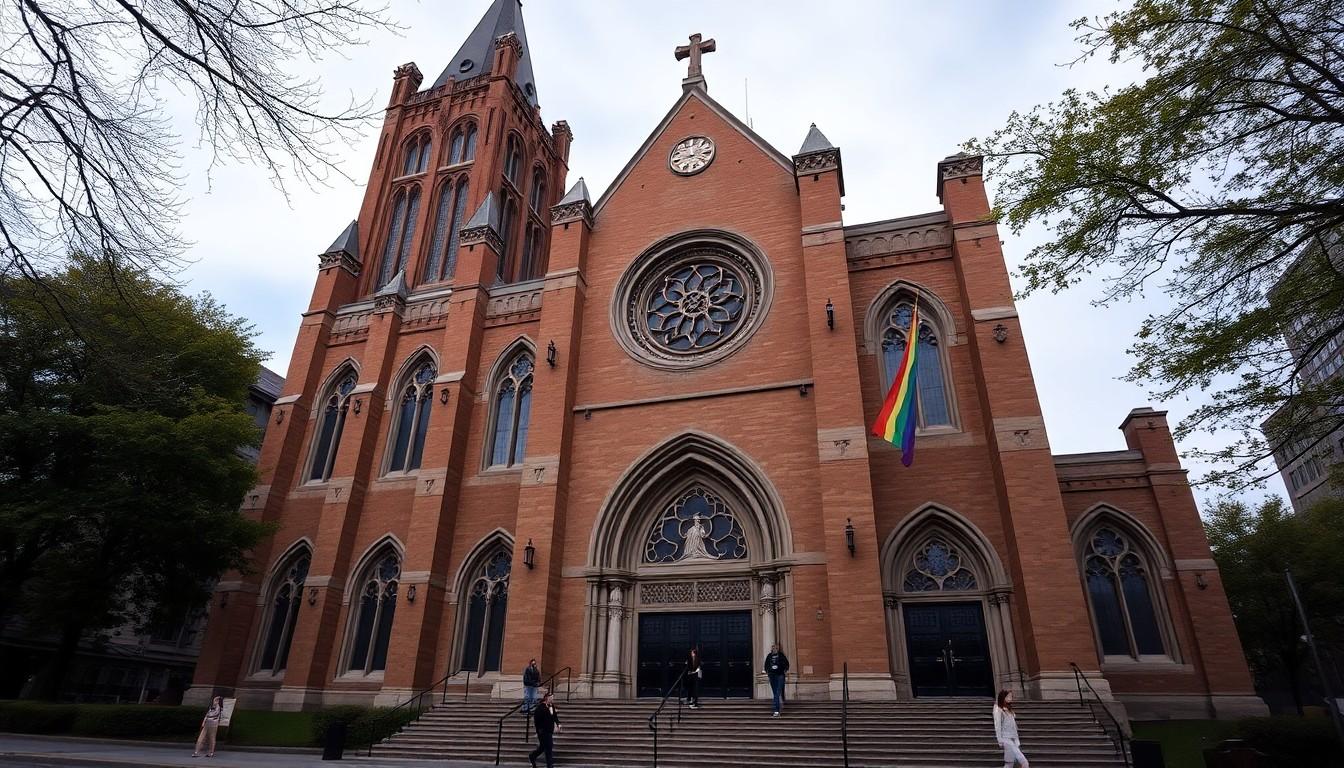
Church members are reflecting on 50 years of LGBTQ+ inclusion after a major Episcopal conference in Minneapolis brought together worshippers, leaders and advocates. Through stories, prayer and practical discussion, the gathering explored how a historic 1976 resolution changed the church, while asking what full and equal welcome should look like today.
Essential Takeaways
- A landmark anniversary: The Episcopal Church is marking 50 years since Resolution A069 affirmed LGBTQ+ people’s full and equal place in the church.
- Storytelling took centre stage: Workshops and plenary sessions focused on queer history, lived experience and the work still ahead.
- A national gathering: Episcopalians met in Minneapolis for three days of discussion, worship and networking.
- The message remains active: The anniversary is being treated not only as a celebration, but also as a prompt for continued advocacy and inclusion.
- Hope needs work: Speakers connected dreams of equality with the patient, sometimes difficult effort required to make change real.
A 1976 resolution set the direction
The story begins with Resolution A069, passed at The Episcopal Church’s 65th General Convention in Minneapolis in 1976. Its central message was clear: gay people were children of God and entitled to the church’s love, acceptance, pastoral concern and care.
That wording was significant for its time, particularly within a major Christian denomination. The Episcopal Archives records the resolution as an early formal statement against exclusion, giving institutional weight to a principle many LGBTQ+ Episcopalians had long needed to hear.
Fifty years on, the language still has a steadying force. It also raises a useful question: how does a church move from declaring welcome to making sure people can feel it in everyday parish life?
Minneapolis turned history into conversation
The anniversary conference brought together people from across The Episcopal Church for three days of workshops, networking and worship. According to Episcopal Church materials, the event was designed to look back at the progress made since 1976 while considering how the promise of inclusion could be carried forward.
The setting mattered, too. Returning to Minneapolis linked the current gathering with the convention where the original resolution was passed. It gave the anniversary a sense of place, rather than leaving it as an abstract date in a church history book.
Among the speakers were Presiding Bishop Sean Rowe, the Rev. Canon Susan Russell and the Rt. Rev. Gene Robinson, whose election as the first openly gay bishop in the Anglican Communion became a defining moment in the wider debate about LGBTQ+ leadership.
Why queer stories remain central
Storytelling was the conference's unifying theme. Sessions invited participants to share accounts of resistance, faith, change and belonging, while also making space for prayer and reflection.
That approach is more than a warm piece of conference programming. Personal stories can show what policy language often misses: the anxiety of entering a church, the relief of being recognised, or the quiet significance of seeing someone like yourself in a position of leadership.
The Episcopal Church's wider anniversary plans have also connected the 1976 resolution with advocacy. Government relations guidance has encouraged members to treat the milestone as an opportunity to support LGBTQ+ rights and challenge discrimination, rather than simply remember a past victory.
The work goes beyond a commemorative year
The anniversary arrives at a time when debates over LGBTQ+ equality remain unsettled in many communities. Christian organisations may affirm inclusion publicly, yet congregations can still vary widely in how welcome is experienced on the ground.
That is why practical questions matter. Are LGBTQ+ people represented in leadership? Can families expect respectful pastoral care? Do church policies match the warmth of Sunday services? And are queer members being invited to help shape the future, rather than being asked only to tell stories about the past?
Recent Episcopal commentary has framed the anniversary as part of an ongoing commitment to full and equal participation. The message is encouraging, but it also puts responsibility on local churches to turn principle into habits, policies and relationships.
A dream that requires steady courage
At the closing worship at St Mark's Cathedral in Minneapolis, Bishop Gene Robinson reflected on the story of Peter walking on water. The image offered a fitting way to think about LGBTQ+ equality: stepping towards a hoped-for future can be frightening, and progress rarely arrives without moments of doubt.
Robinson's journey as the first openly gay bishop in the Anglican Communion gave the reflection particular weight. His story also underlined how much change depends on people willing to take the next step before the outcome is guaranteed.
For many attendees, the gathering appears to have been both a celebration and a commissioning. The past was honoured, but the invitation was forward-looking: preserve the stories, widen the welcome and keep working towards a church where equality is not merely promised, but experienced.
A half-century later, the promise is still unfinished, but it has never been without power.
Source Reference Map
Story idea inspired by: [1]
Sources by paragraph:
- Paragraph 1: [2], [6]
- Paragraph 2: [5], [7]
- Paragraph 3: [4], [6]
- Paragraph 4: [3], [5]
- Paragraph 5: [2], [4]
- Paragraph 6: [3], [7]
- Paragraph 7: [4], [5]
- Paragraph 8: [2], [3]
- Paragraph 9: [5], [6]
- Paragraph 10: [2], [4]
- Paragraph 11: [3], [7]
- Paragraph 12: [2], [5]
- Paragraph 13: [4], [6]
- Paragraph 14: [2], [3]