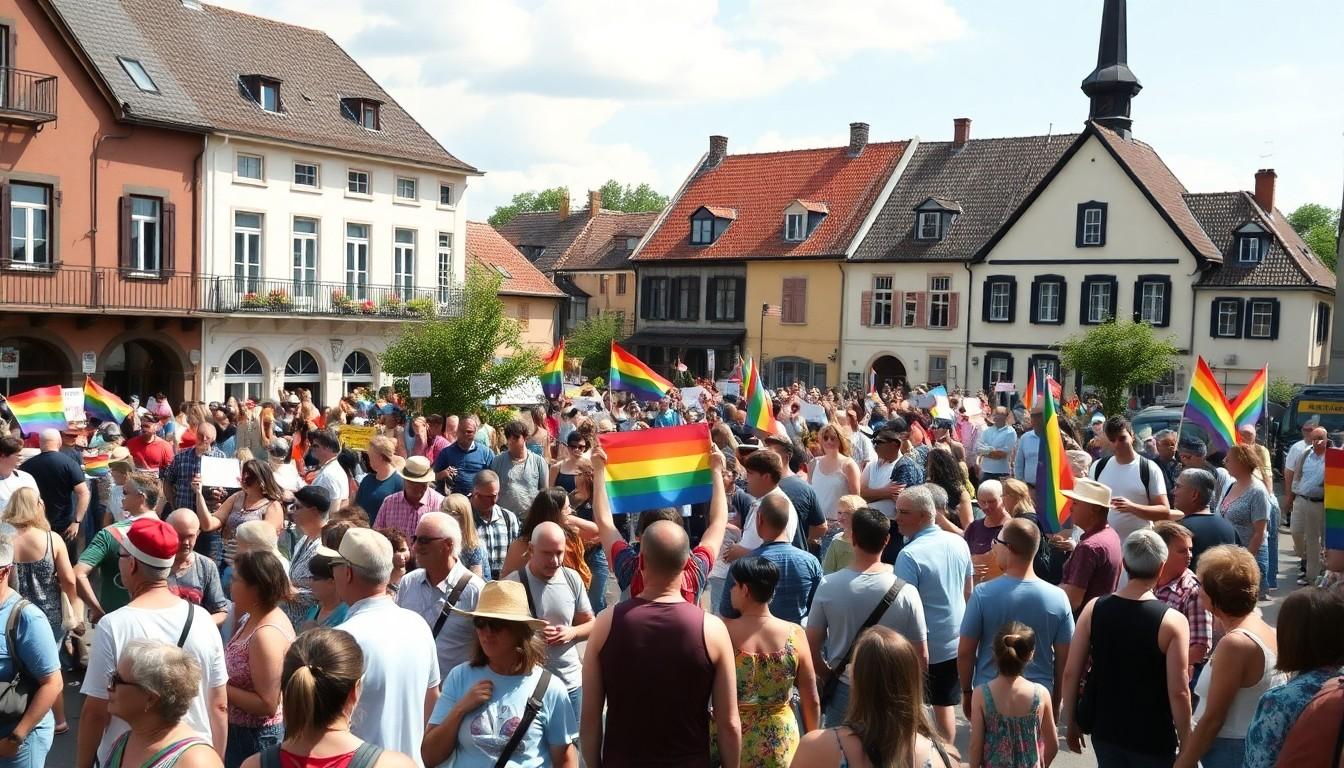
A colourful CSD in Neustrelitz has highlighted both the warmth and the gaps in rural queer life. With around 1,000 people gathering in Mecklenburg-Western Pomerania, organisers are showing why local LGBTQ+ networks matter, especially where dedicated meeting spaces and visible support remain in short supply.
Essential Takeaways
- A strong turnout: Around 1,000 people joined the Neustrelitz demonstration, turning visibility into a public statement.
- Local support matters: Queer Strelitz creates social opportunities in an area where queer structures are limited.
- Community comes first: Activities range from readings and film nights to river trips, walks and seasonal celebrations.
- Visibility can shift attitudes: Organisers use personal contact and education to challenge prejudice.
- The long-term hope: Activists want equality to become ordinary enough that CSD events are no longer necessary.
A bright, busy CSD brings rural queer life into view
Outside Neustrelitz station, the scene was hard to miss. Pride umbrellas, rainbow flags, black vests and sequinned clothing filled the square as people gathered to march and celebrate LGBTQ+ rights. It was joyful, but there was a serious point underneath the music: queer people in smaller towns deserve to live openly, safely and without having to relocate.
NDR's coverage of the Neustrelitz CSD also underlines the event's importance in the region. Large gatherings like this don't just attract existing supporters. They make queer life visible to neighbours, families and passers-by who might otherwise have little contact with LGBTQ+ communities.
That visibility can feel especially powerful outside major cities. In Berlin or Hamburg, queer venues and organisations may be easier to find. In a smaller town, a single public event can become a rare moment when people realise they're part of something much bigger.
Why local queer groups make such a difference
Queer Strelitz was established to build precisely that sense of connection. Its work isn't limited to one annual parade. The organisation brings people together through social, cultural and outdoor activities, creating opportunities to meet without the pressure of a protest or formal support appointment.
The group's own information presents it as a local network for queer people and allies. That practical, welcoming approach matters because community isn't built only through campaigns. Sometimes it starts with a film, a shared meal, a walk or a conversation that makes someone feel less alone.
Trans Jugend lists Queer Strelitz among regional support options, reflecting the wider need for accessible networks beyond the biggest cities. For young people in particular, a nearby organisation can provide reassurance that doesn't require a long journey or an immediate move to an urban centre.
Rural isolation still shapes everyday experience
The challenge isn't simply a lack of events. Rural LGBTQ+ residents can also face fewer specialist services, less anonymity and closer social scrutiny. When everyone knows one another, coming out can feel more exposed, while hostile behaviour can be harder to escape.
That helps explain why organisers have focused on both visibility and education. Queer Strelitz has been involved in talks for schools and the police, aiming to replace assumptions with direct contact. It's a patient strategy, but often a necessary one: people are more likely to rethink prejudice when queer lives stop being an abstract idea.
Regional organisations such as LSVD Queer Mecklenburg-Vorpommern provide another layer of support and advocacy. Together, these groups show that rural queer life isn't absent. It simply needs stronger links, reliable resources and places where people can gather safely.
From social events to meaningful change
The programme associated with Queer Strelitz is deliberately broad. Outdoor trips, beach volleyball, readings, cinema evenings and festive gatherings offer different ways to take part, which is important because not everyone wants their community life to revolve around activism.
There's also a useful lesson here for anyone trying to build an LGBTQ+ network: regular, low-pressure contact often does more than a single high-profile event. A welcoming room, a familiar face and a simple hello can gradually turn a gathering into a community.
CSD Nord's overview of Pride events across northern Germany places Neustrelitz within a wider regional movement. The events differ in size and character, but they share the same basic purpose: to make equality visible while giving people a chance to meet in public without apology.
The future should be ordinary, not defensive
For the organisers, the most moving outcome isn't simply the size of the crowd. It's the possibility that contact can change minds. Stories of people who once held openly extremist views becoming regular CSD attendees may be unusual, but they point to the human power of welcome and encounter.
That doesn't mean communities should underestimate the risks. Pride flags have been damaged, hostile stickers have appeared and queer organisations still need to think carefully about where they meet. Visibility can be empowering, but it also requires support, security and persistence.
The hope is that one day nobody will need to march simply to prove that queer people belong. Until then, Neustrelitz offers a convincing reminder that rural LGBTQ+ communities aren't waiting for permission. They're building their own spaces, one gathering at a time.
A thriving queer community can begin with something as simple as people meeting, talking and refusing to disappear.
Source Reference Map
Story idea inspired by: [1]
Sources by paragraph:
- Paragraph 1: [3], [7]
- Paragraph 2: [3], [6]
- Paragraph 3: [2], [4]
- Paragraph 4: [2], [5]
- Paragraph 5: [4], [5]
- Paragraph 6: [5], [6]
- Paragraph 7: [2], [7]
- Paragraph 8: [2], [4]
- Paragraph 9: [6], [7]
- Paragraph 10: [5], [7]
- Paragraph 11: [2], [4]
- Paragraph 12: [3], [6]
- Paragraph 13: [5], [6]
- Paragraph 14: [2], [7]