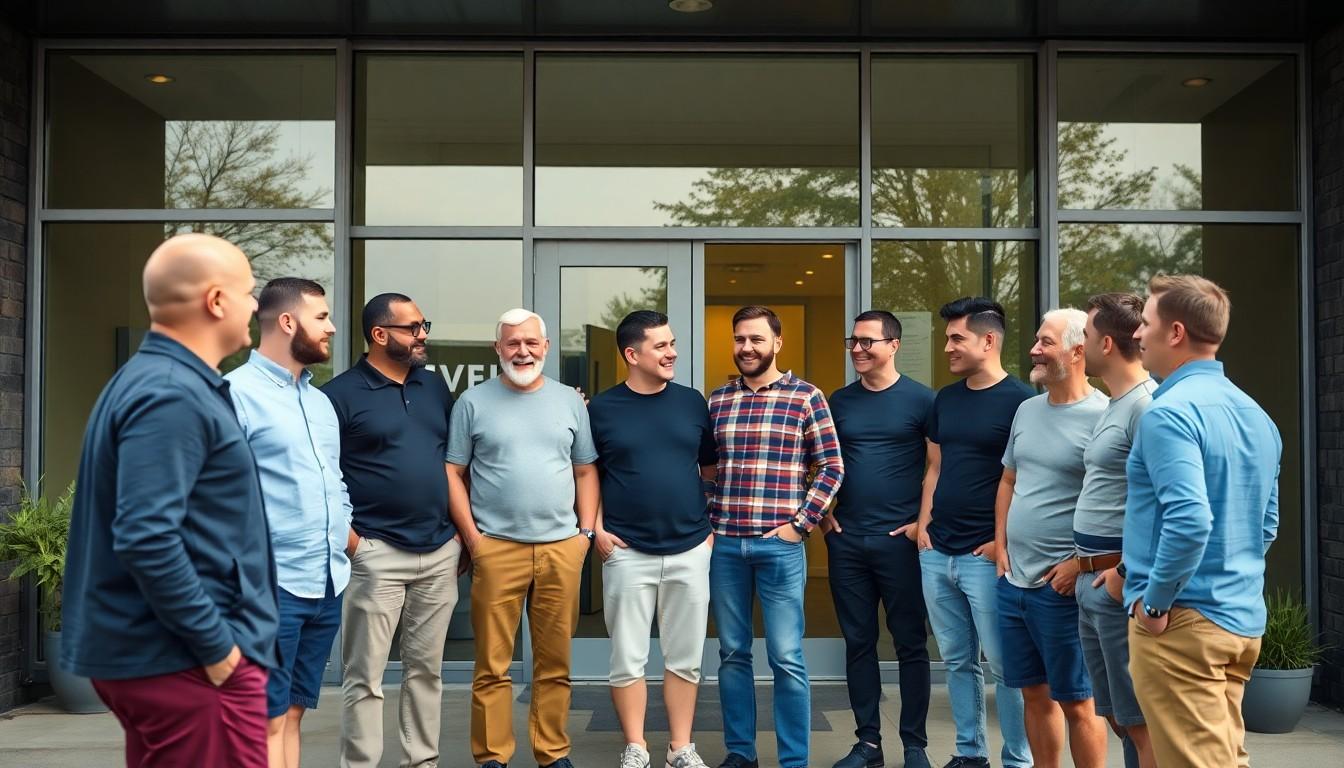
Gay men are looking beyond dating, sex and approval for something quieter but more lasting: genuine friendship, emotional safety and a place to show up without performing. Across community projects and gatherings, organisers are creating spaces where connection comes first, helping people feel less isolated and more fully themselves.
Essential Takeaways
- Friendship matters: Many gay men want close male friendships without sexual pressure or rivalry.
- Safety encourages honesty: Welcoming spaces can make it easier to express different sides of your personality.
- Belonging beats fitting in: Real inclusion doesn't depend on age, body type, confidence or presentation.
- Community needs intention: Groups such as Unite, GMC Community and Gay Spirit Visions focus on connection and acceptance.
- Small rituals help: Regular meet-ups, sober dancing and shared activities can turn an introduction into a friendship.
The missing ingredient isn't desire
Dating apps, nightlife and social media have made it easier to meet people, but they haven't necessarily made gay men feel less lonely. In many spaces, a friendly conversation can carry an immediate question: is this flirtation, a potential date or something more? That uncertainty can make ordinary friendship feel surprisingly complicated.
The result is a strange emotional gap. Someone might have plenty of contacts, matches and familiar faces, yet still lack the warm, low-pressure friendship that lets you send a silly message or sit quietly beside someone without needing to impress them. Community initiatives such as Unite present connection as a central need rather than an accidental by-product of dating. (Unite)
That distinction matters. Wanting to be attractive or desired is perfectly human, but it doesn't replace having people who know you beyond your image. A good friend can be less glamorous than a night out, but often far more sustaining.
Why platonic friendship can feel so difficult
Gay social life has often been organised around romance, sex, nightlife or shared identity. Those experiences can be joyful, but they don't always provide the structure needed for friendships to grow slowly. Without clear signals that platonic connection is welcome, men may hold back or assume the other person wants something else.
This is where intentional groups can make a difference. GMC Community describes itself as a space built around bringing people together, offering a framework where men can meet through community rather than relying on chance encounters. (GMC Community)
There is also a practical advantage to regular gatherings. Seeing the same people repeatedly lowers the pressure of making an instant impression, while shared routines create easy openings for conversation. Sometimes friendship begins with a familiar face, a cup of tea and the relief of not having to perform.
A safe space lets people drop the act
Many people learn to edit themselves in social settings. They may soften their voice, exaggerate confidence, hide vulnerability or lean into a particular version of masculinity because it seems safer. That constant adjustment can be exhausting, especially when acceptance feels conditional.
Safe-space guidance from Gay Spirit Visions places emphasis on respect, personal boundaries and an environment where people can participate without fear of judgement. (Gay Spirit Visions) The principle is simple, but powerful: people are more likely to connect when they don't have to audition for acceptance first.
That doesn't mean every group must feel solemn or therapeutic. Music, dancing, humour and shared celebration can all create safety too. The key is whether the atmosphere allows different personalities to coexist, from the loudest storyteller to the man who needs half an hour before he joins the conversation.
Belonging is more than fitting in
Fitting in usually asks people to decode the room. Who gets noticed? What should you wear? How confident should you seem? Which interests, bodies or identities are treated as normal? Belonging works differently because it doesn't require people to shrink themselves into a preferred template.
That broader view of inclusion appears across community-focused organisations. Qlub Chi highlights connection and support within a shared community, while Kind Warrior Project centres personal development and collective encouragement. (Qlub Chi; Kind Warrior Project) Their approaches differ, but both reflect a wider shift towards spaces that value the whole person rather than a single social role.
For anyone looking for gay male friendship, this is a useful test: do you leave feeling energised, or relieved that you survived? The right space won't be perfect, and no group can suit everyone, but it should make room for difference without turning it into a problem.
How to find a genuinely welcoming community
Start by looking for clear information about the group's purpose, expectations and boundaries. A good organiser should explain whether an event is social, sober, discussion-led, movement-based or focused on a particular age range or interest. That clarity helps you choose somewhere that matches your comfort level.
Check how the group handles accessibility, privacy and behaviour. The Safe Space Alliance's overview emphasises the importance of environments where people can participate with dignity and reduced fear of discrimination. (Safe Space Alliance) It is worth asking whether newcomers are greeted, whether consent is taken seriously and whether there is an obvious way to raise concerns.
Then give it more than one visit if you can. The first evening may feel awkward because everyone is new to you. Friendship tends to grow through repetition, so a twice-monthly gathering or regular community event can be more useful than a single spectacular night out.
The future may be softer, slower and more social
The appeal of these spaces isn't that they reject dating, sex or nightlife. It's that they make room for needs those settings can't always meet. A man can want romance and still need friendship; he can enjoy being desired and still crave somewhere he isn't being assessed.
That balance is increasingly visible in community work, from inclusive gatherings to groups designed around mutual support. The strongest spaces aren't promising instant transformation. They're offering something more believable: a room where people can return, be recognised and gradually relax.
And that may be the most valuable kind of social progress. Not another place to be seen, but a place where you can finally stop trying so hard to be seen correctly.
It's a small shift in focus, but it can make friendship feel possible again.
Source Reference Map
Story idea inspired by: [1]
Sources by paragraph:
- Paragraph 1: [2], [3]
- Paragraph 2: [4], [7]
- Paragraph 3: [5], [6]
- Paragraph 4: [2], [3]
- Paragraph 5: [4], [7]
- Paragraph 6: [5], [6]
- Paragraph 7: [2], [4]
- Paragraph 8: [3], [5]
- Paragraph 9: [6], [7]
- Paragraph 10: [2], [3]
- Paragraph 11: [4], [7]
- Paragraph 12: [5], [6]
- Paragraph 13: [2], [4]
- Paragraph 14: [3], [7]
- Paragraph 15: [5], [6]