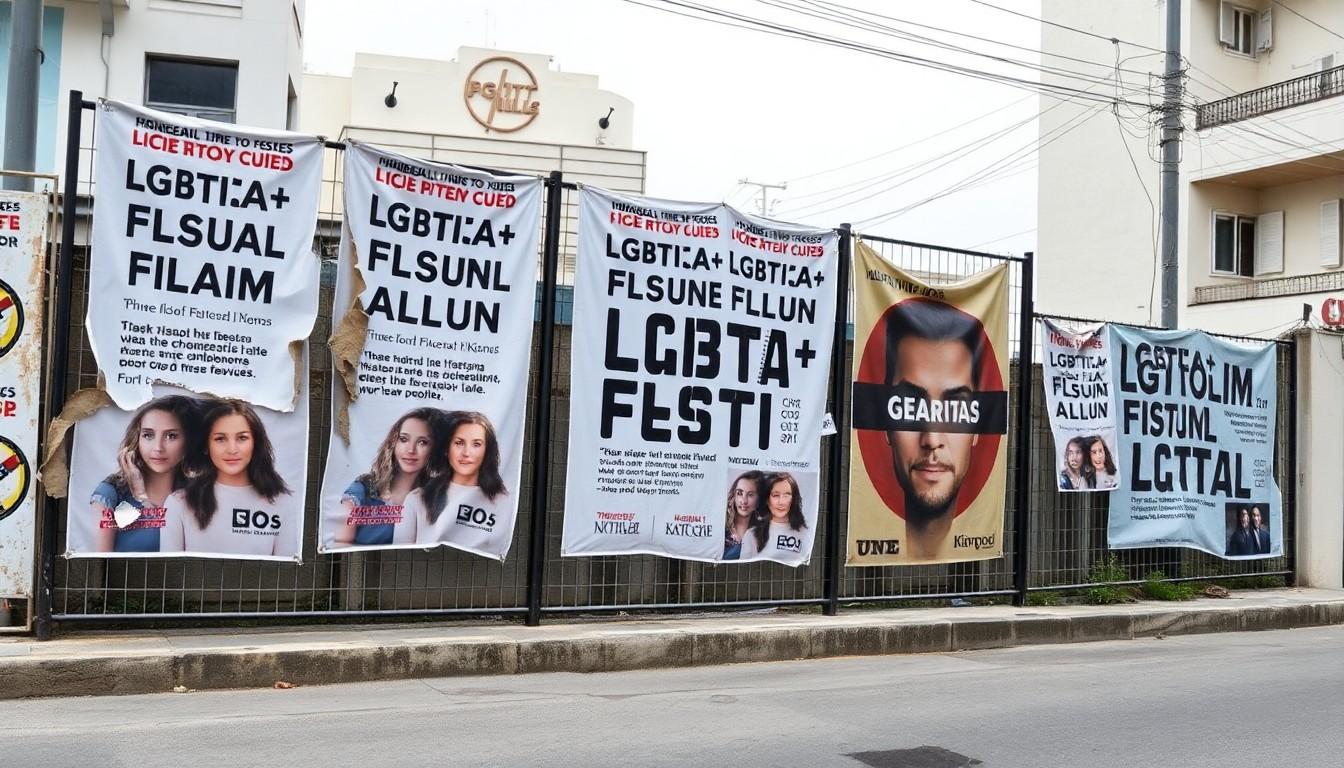
Organisers of Cyprus’s Queer Wave film festival say vandalised banners in Nicosia represent an attack on queer visibility, but the 2026 event will go ahead with screenings, performances and community events at NiMAC from 18 to 27 September.
Essential Takeaways
- Banners damaged: Promotional signs for Queer Wave were vandalised in Nicosia’s Kaimakli area.
- Organisers’ response: The festival team says the incident targets LGBTQIA+ visibility in public spaces.
- Festival dates: Queer Wave 2026 runs from 18 to 27 September at NiMAC.
- What’s planned: The programme includes films, performances and work by Cypriot and international artists.
- A wider purpose: Organisers present the festival as both a cultural event and a place for community and queer expression.
Vandalised banners turn visibility into the story
A few damaged banners can look like a minor act of street vandalism. For Queer Wave, though, the location and message make the incident feel sharper: these were public signs advertising an LGBTQIA+ film festival in Nicosia’s Kaimakli district.
The organisers described the damage as an attack on queer visibility in public space. Their argument is straightforward. When a community’s cultural events are targeted in the street, the issue isn’t only the cost of replacing printed material; it’s the message that someone wants that community to be less visible.
That gives the festival’s return an added emotional weight. A banner is temporary, but public visibility is harder won and much more meaningful. Sources including Cyprus Mail have previously presented Queer Wave as an important part of Cyprus’s growing LGBTQIA+ cultural scene. [2], [7]
Queer Wave says intimidation won’t decide its future
In a social media statement, organisers said they wouldn’t allow intimidation to silence the festival. They pledged to keep claiming space, sharing stories and building community, a defiant response that puts persistence at the centre of the event.
That stance fits Queer Wave’s wider identity. Since its launch in 2020, the festival has brought queer cinema and artistic work into a public cultural setting, creating room for stories that can still be overlooked or treated as controversial elsewhere.
The organisers also stressed that the vandalism shouldn’t be dismissed as an isolated incident. That framing matters because public-facing cultural events depend on feeling welcome, not merely being technically permitted to take place. [2], [3]
What’s happening at the Nicosia festival?
Queer Wave 2026 will run for 10 days at the NiMAC exhibition spaces in Nicosia, from 18 to 27 September. The programme is expected to combine film screenings with performances and other events involving local and international filmmakers and artists.
The festival focuses on LGBTQIA+ experiences and queer expression, giving audiences a chance to see work that ranges beyond familiar mainstream narratives. For visitors, that means the event is likely to feel less like a conventional cinema programme and more like a lively meeting point between film, performance and contemporary culture.
NiMAC’s involvement also places the festival within Nicosia’s established arts infrastructure. Previous Queer Wave editions hosted through the institution have included film and archival projects exploring queer histories, spaces and memory. [3], [5], [6]
Why public queer culture still matters
Festivals such as Queer Wave do more than screen films. They make identity visible in real places, with real audiences, and they offer a social setting where people can meet without having to explain or defend their presence.
That combination of art and belonging is especially important for smaller communities. A screening can be entertaining, challenging or beautifully strange, but the quiet moment afterwards, when people talk in the foyer or walk home together, can be just as valuable.
Previous coverage of Queer Wave’s fifth edition described the festival as a platform for LGBTQIA+ cinema in Cyprus. Its continued return suggests there’s a sustained audience for that platform, as well as a need for cultural spaces where queer stories are treated as part of public life rather than kept at the margins. [3], [4], [7]
A defiant return with more than films on the programme
The festival is organised by non-profit company Queer Wave LTD and funded by Cyprus’s Deputy Ministry of Culture and Department of Contemporary Culture. That institutional support helps underline the event’s place in the country’s cultural landscape, even as the vandalised banners reveal that visibility can remain contested.
For attendees, the practical message is simple: the festival is going ahead. The damage may have changed the mood around its promotion, but it hasn’t altered the organisers’ stated plans or their determination to keep the event public.
There’s something quietly powerful about that. Replacing a banner is easy enough; continuing to gather, create and tell queer stories is the part that carries real meaning.
Queer Wave’s return shows that public culture can be both vulnerable and remarkably resilient.
Source Reference Map
Story idea inspired by: [1]
Sources by paragraph: